Blog
Plastic Bowl Mould
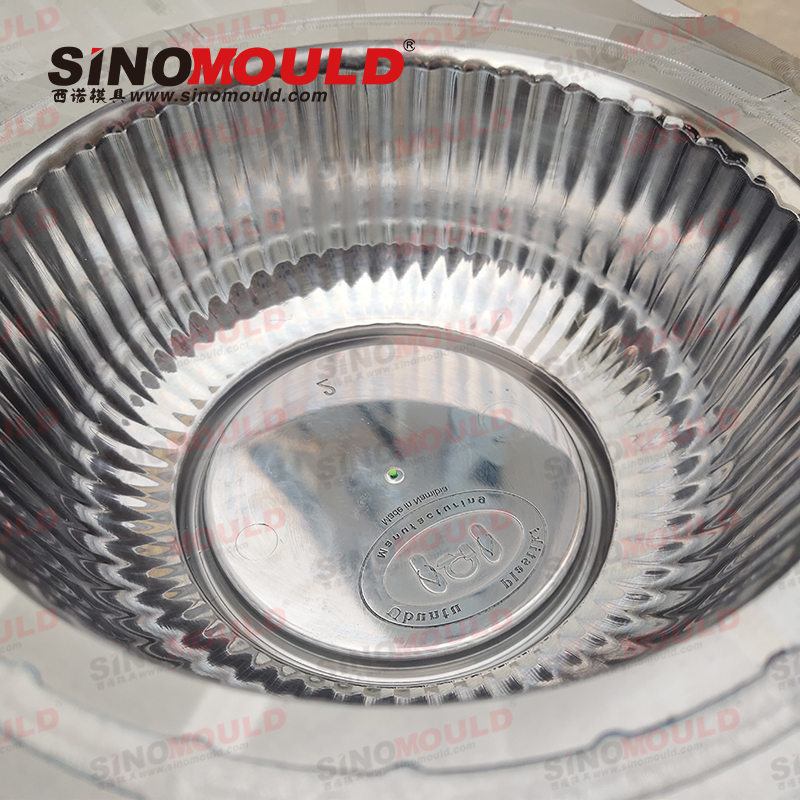
Plastic bowls are among the most common household and food service items, requiring moulds that deliver both aesthetic quality and functional reliability. Unlike ordinary containers, bowls feature deep cavities, smooth curved surfaces, and often demand transparency or food-contact compliance. Moulding challenges include achieving a mirror-like inner surface, ensuring uniform wall thickness for stacking stability, and enabling clean demoulding from deep cavities without deformation.
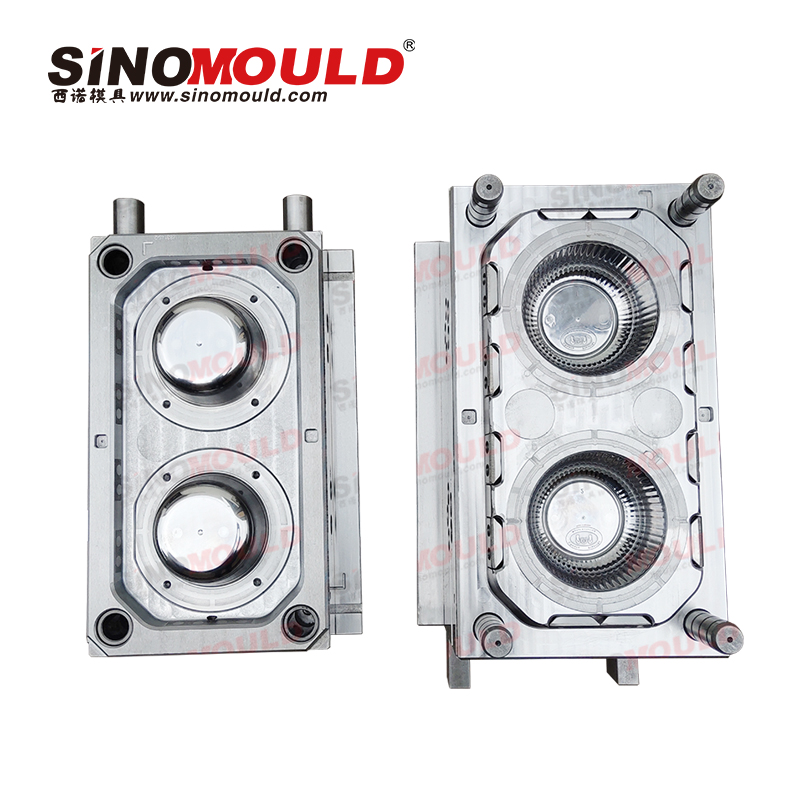
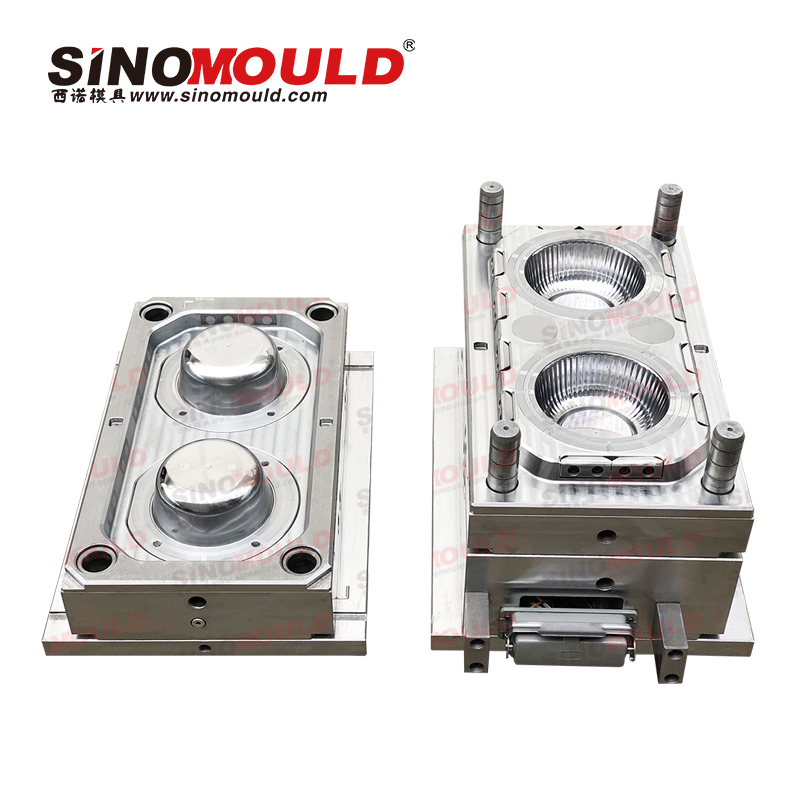
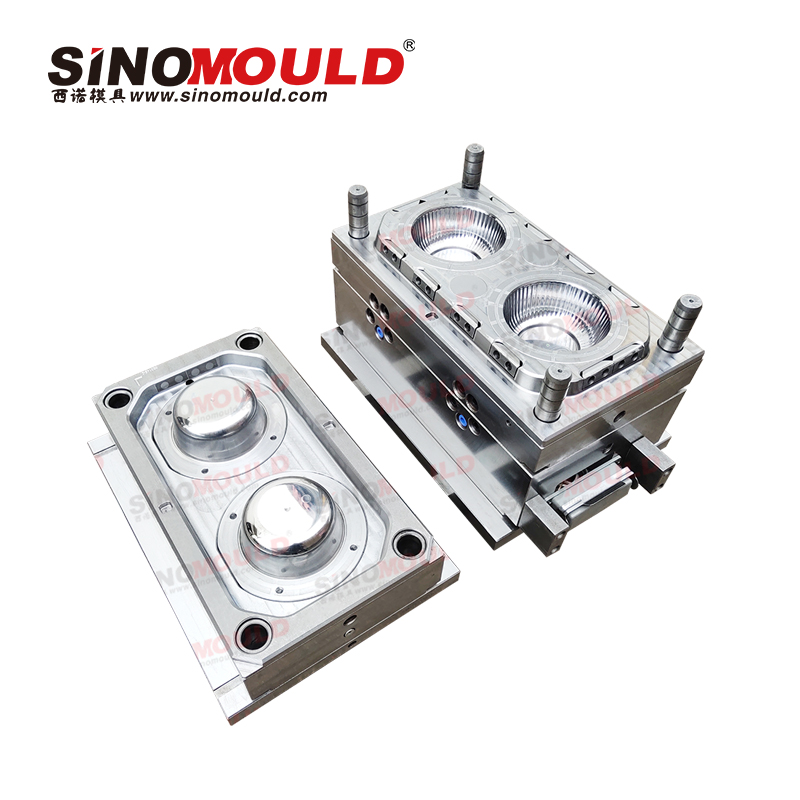
At SINOMOULD, we combine precision machining with specialised ejection and cooling designs to produce durable, high-cavity bowl moulds. The following outlines our mould specifications, quality priorities, and manufacturing approach.
Plastic Bowl Mould Parameters
| Centrifuge Tube Mould Cavity Steel | S136, 718H, NAK80, 2316 | Recommended Injection Machine | 160T – 650T |
|---|---|---|---|
| Centrifuge Tube Mould Core Steel | S136, 718H, P20, 2738 | Plastic Material | PP, PS, PET, ABS, Tritan, PC |
| Mould Base Standard / Steel | LKM standard / S50C, P20 | Ejection System | Stripper plate + ejector pins, optimized draft angle |
| High‑strength tool steel, nitrided | High-strength tool steel with surface hardening treatment | Precision injection molding, mould temperature control ±2°C | High-speed injection, short cycle time, precise temperature control |
| Number of Cavities | 1-8 cavities | Injection Cycle Time | 15 – 45 seconds |
| Hot Runner System | Valve‑gated / YUDO / HASCO (optional) | Mould Manufacturing Lead Time | 30–65 days |
Plastic Bowl Mould Quality Control Points
- Wall Thickness Uniformity and Stacking Consistency
Wall thickness deviation in bowl products directly affects stacking stability and heat resistance. Cavity‑to‑core fit clearance is controlled within ±0.02 mm to ensure uniform wall thickness across all areas, preventing warpage caused by uneven shrinkage. In multi‑cavity production, part weight deviation between cavities is kept within ±0.3%, ensuring consistent dimensions and neat stacking – suitable for automated packaging lines.
- Zero Tolerance for Appearance Defects
Flow marks, sink marks, bubbles, and other defects directly affect the perceived quality and consumer trust. Balanced gate design and optimized cooling systems eliminate filling defects, ensuring crystal‑clear or evenly coloured products.
Plastic Bowl Mould Manufacturing Highlights
- Mirror Polishing Process
Bowl cavities undergo multi‑stage fine polishing – rough polish → medium polish → fine polish → mirror polish – achieving a final mirror finish of Ra ≤ 0.05 μm. For transparent PP/PS bowls, cores are also high‑gloss polished to ensure finished products are as clear as glass.
- Deep‑Cavity Demoulding Design
Demoulding deep‑cavity bowls is a challenge in the industry. We optimize draft angles (typically 1.5°–3°), combined with a stripper plate and evenly distributed ejector pins – ensuring balanced ejection force and smooth demoulding, completely eliminating sticking and deformation issues, and adapting to automated high‑efficiency production.
- High‑Efficiency Cooling System
Heat is concentrated in deep‑cavity areas – uneven cooling can easily cause deformation. We layout conformal cooling channels at the bottom and side walls, combined with local beryllium copper inserts (thermal conductivity 4–5 times that of mould steel) – achieving uniform and rapid cooling, shortening cycle time, and increasing output.
- Precision Machining and Quality Control
Cavities and cores are machined by high‑speed CNC milling and wire EDM, with critical tolerances ≤ ±0.01 mm. Full dimensional inspection is performed using CMM to ensure profile and positional accuracy of each cavity.
- Multi‑Cavity Balanced Design
High‑cavity moulds adopt radial or H‑type runner layouts, combined with mould flow analysis optimisation – ensuring cavity filling pressure difference ≤3% and part weight deviation between cavities ≤0.3% – achieving stable mass production.
- Mould Trial Verification
Each mould undergoes continuous trial runs in our in‑house injection workshop before delivery, simulating mass production conditions to verify dimensions, appearance, and demoulding reliability. Only after passing inspection is the mould delivered – ensuring the customer can immediately start production upon receipt.