Blog
Long Cable Tie Mould
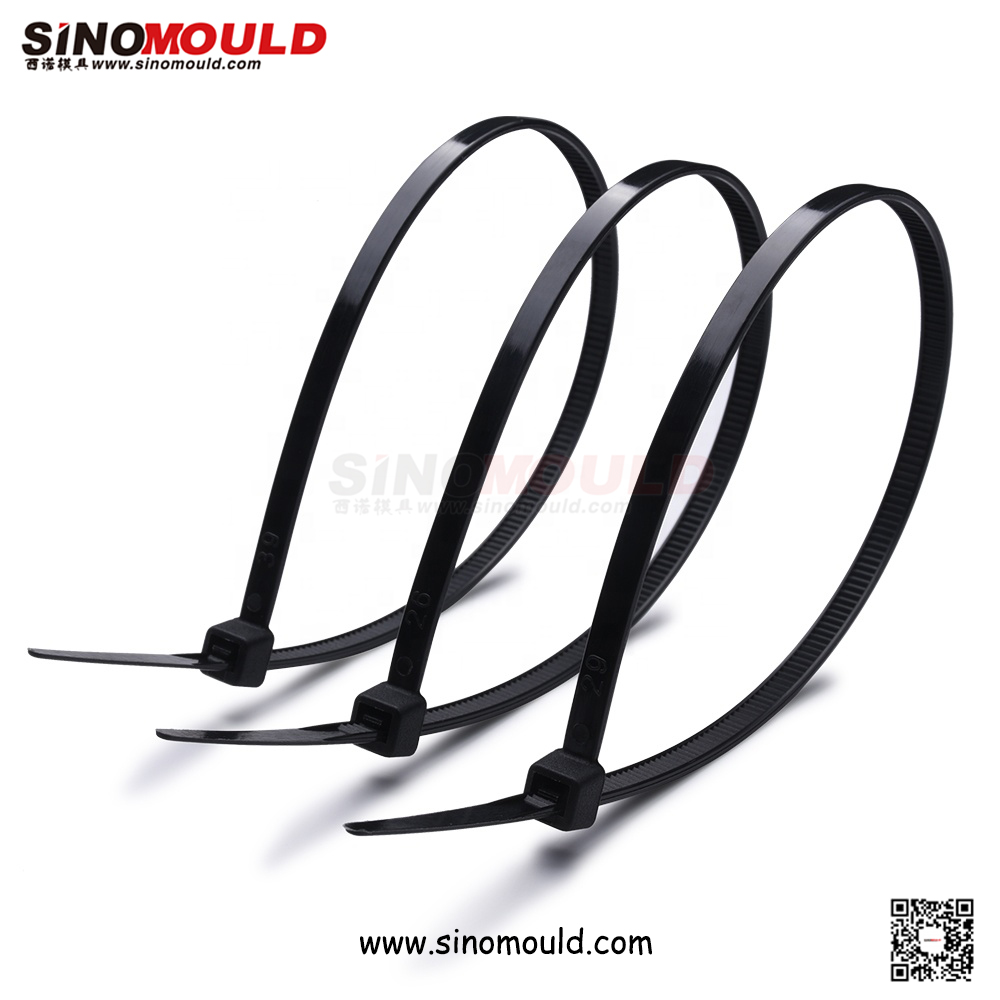
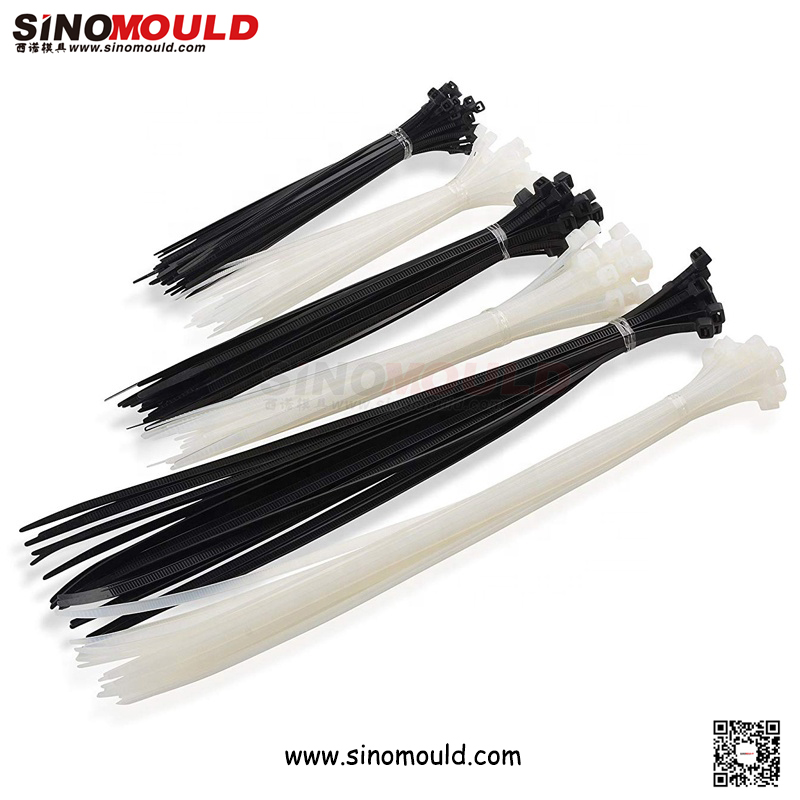
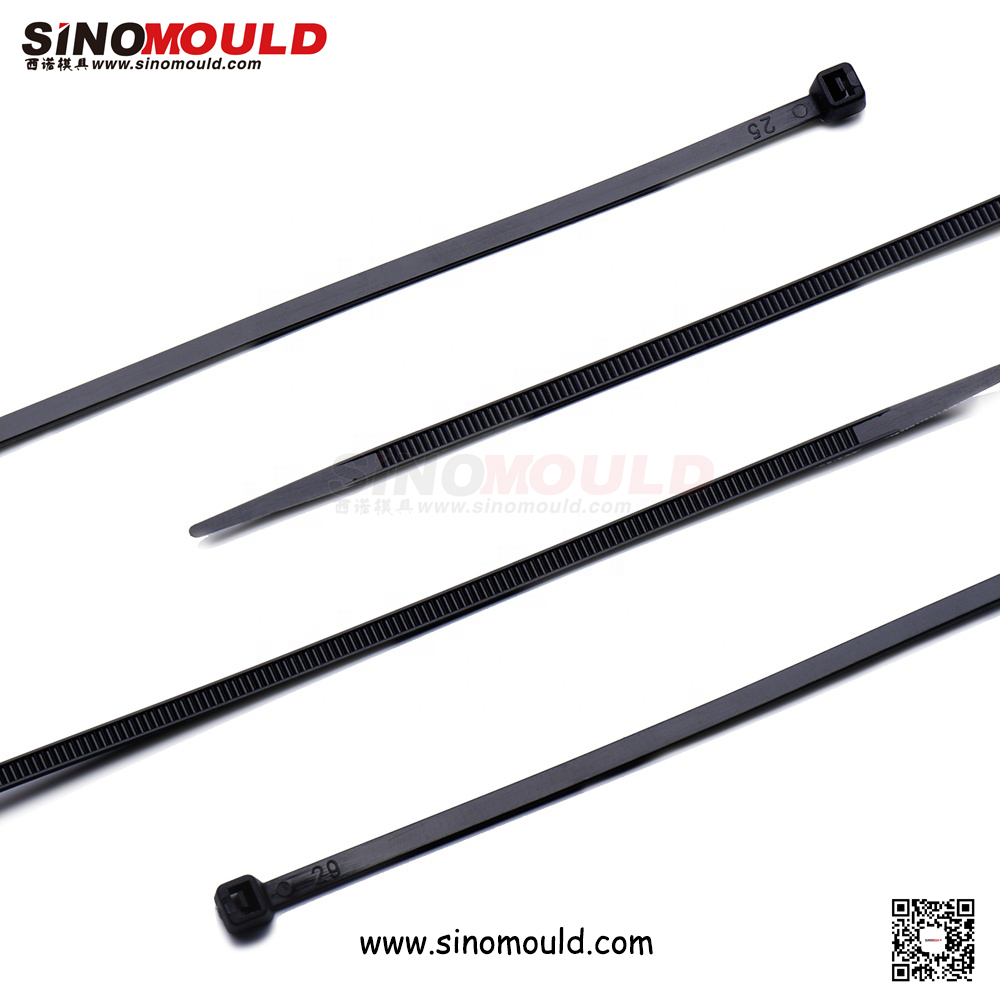
The long cable tie—typically 500mm to 1500mm in length—is used for bundling cables in electrical cabinets, outdoor installations, and heavy-duty industrial routing where standard 200mm ties cannot reach. Unlike short ties, long ties are extremely slender: a 1000mm tie may be only 7–8mm wide and 1.2–1.5mm thick, giving it an aspect ratio that makes straightness, flatness, and tooth uniformity the dominant quality parameters rather than simple dimensional accuracy.
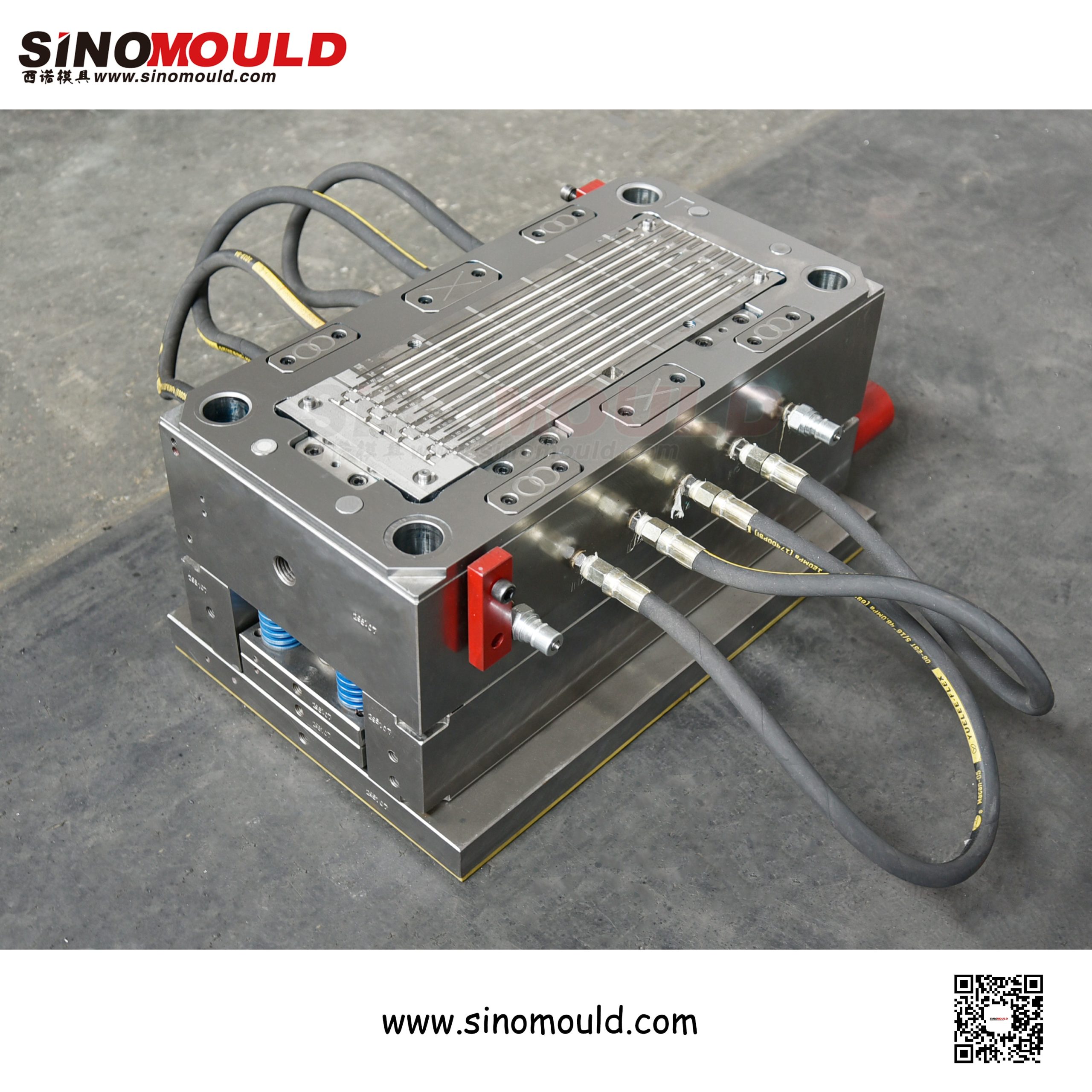
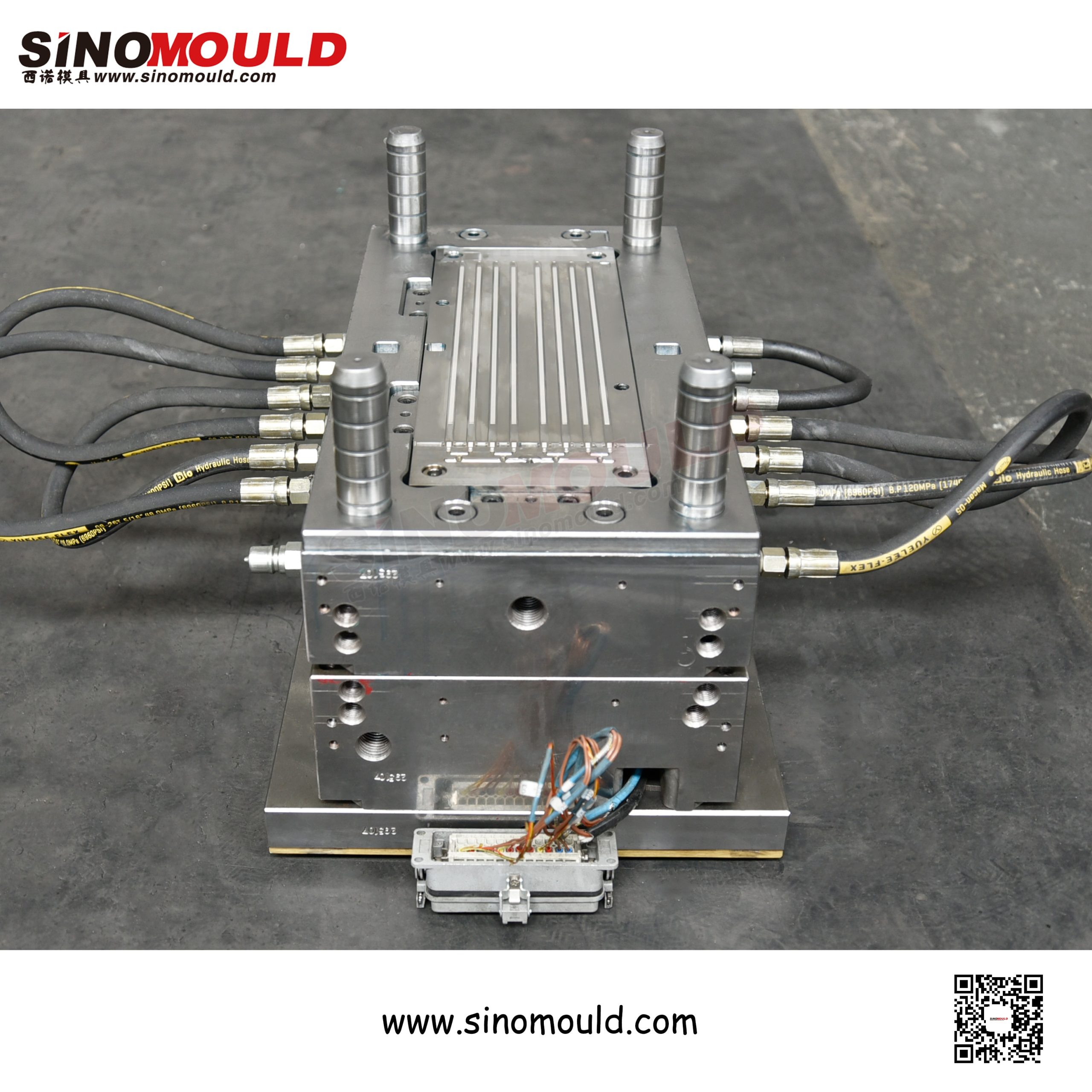
Moulding long ties introduces problems that short-tie moulds do not face. The long, thin cavity is prone to filling imbalance—melt may reach the far end before the near end is packed—and the slender core is vulnerable to deflection under injection pressure, causing thickness variation along the length. The ratchet teeth at the tail and the locking pawl in the head must engage reliably after moulding, which means tooth pitch and pawl geometry must be held to tolerances far tighter than the tie’s overall dimensions. At SINOMOULD, we address these through balanced multi-point gating, rigid core support design, and dedicated tooth-insert machining. The following outlines key specifications, quality priorities, and manufacturing essentials.
Long Cable Tie Mould Parameters
| Mould Cavity Steel | S136, 718H, NAK80, DIN 1.2316 | Compatible Injection Machine | 250T – 650T |
|---|---|---|---|
| Mould Core Steel | S136, 718H, P20 | Plastic Material | PA66 (nylon), PP, PA6 |
| Mould Base Standard / Steel | LKM Standard / S50C, S45C | Ejection System | Ejector plate + evenly distributed pins + optional air assist |
| Slides, Inserts Steel | High-strength tool steel, nitrided tooth inserts | Injection Process | Precision injection, mould temperature control ±2°C |
| Number of Cavities | 8–48 cavities | Injection Cycle Time | 25–50 seconds |
| Hot Runner System | Valve gate hot runner / multi-point direct gating | Mould Manufacturing Lead Time | 40–60 days |
Long Cable Tie Mould Quality Control Points
- Tooth Accuracy & Locking Force Consistency
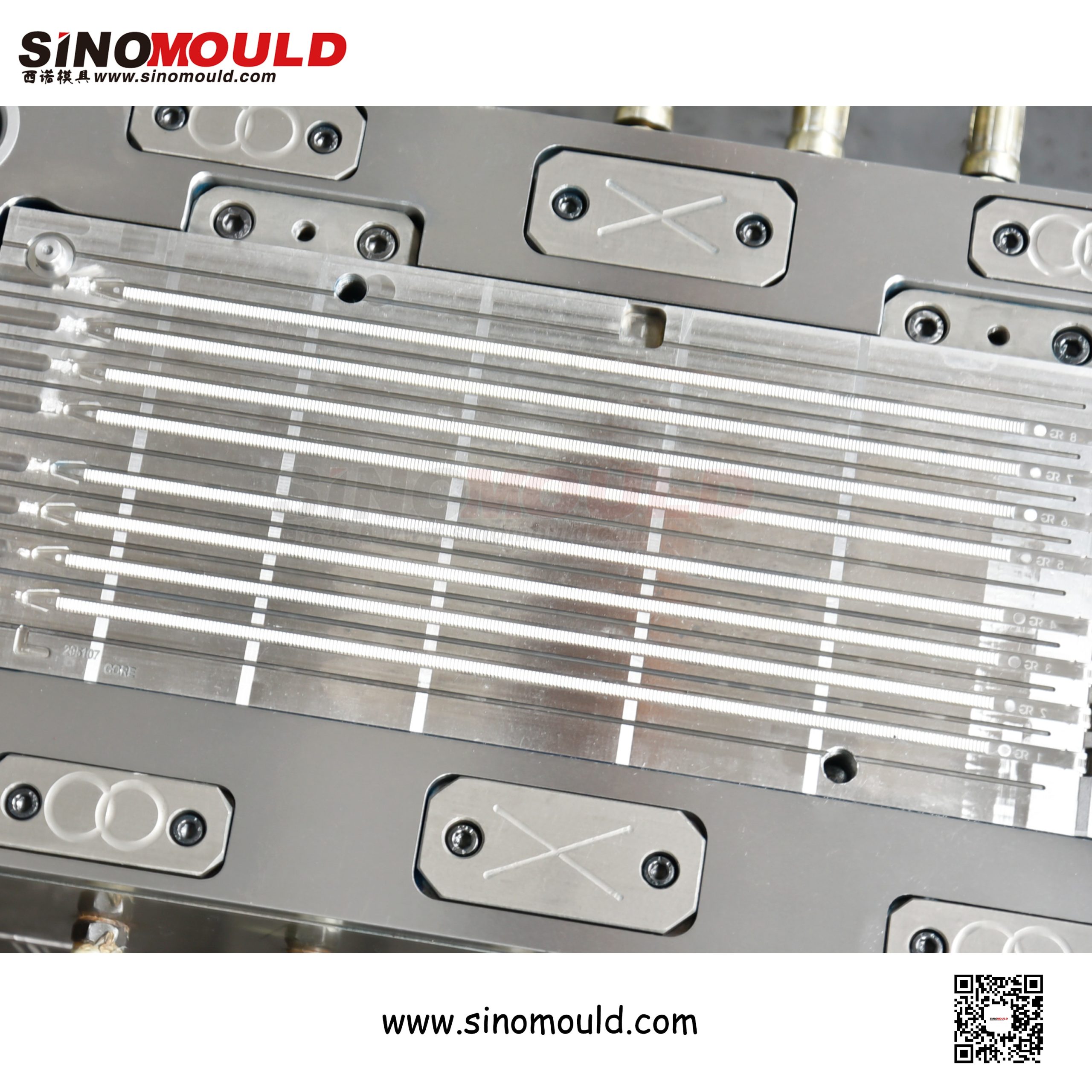
The core function of a cable tie is locking, and locking force depends on the fit between ratchet tooth pitch, tooth height, and the locking pawl. Tooth pitch tolerance is held within ±0.02mm and tooth height deviation ≤0.015mm. Tooth inserts are wire-EDM cut as a single piece to ensure tooth consistency, and locking force is sampled per cavity during trial moulding to confirm smooth insertion and no slippage after locking.
- Straightness & Flatness
Long ties are slender, and uneven cooling shrinkage easily causes longitudinal bowing or lateral warpage. For 1000mm规格, straightness is held within 2mm/m and flatness within 1.5mm. Zoned water circuits along the length combined with closed-loop mould temperature control equalise cooling rates across the entire tie, suppressing deformation at the source.
- Thickness Uniformity Along Length
The slender core deflects under injection pressure, causing the middle section to run thin and the ends thick. Cavity-to-core matching clearance is controlled to ±0.03mm, auxiliary core supports are added at mid-length, and the packing profile is optimised through mould flow analysis, ensuring thickness deviation ≤0.05mm along the full length and preventing weak spots that reduce tensile strength.
- Head Locking Structure & Tail Engagement
The locking hole and insertion channel in the tie head must precisely match the toothed tail. An oversized hole weakens locking force, while an undersized one makes insertion difficult. Locking hole dimensions are controlled to ±0.02mm, and the insertion channel is polished to Ra ≤ 0.4μm, ensuring smooth insertion and no back-off after locking.
Long Cable Tie Mould Manufacturing Highlights
- One-Piece Wire-EDM Tooth Inserts
Ratchet teeth are the highest-precision feature in a cable tie mould. Rather than assembling individual teeth, we start from a single hardened steel block, wire-EDM all teeth in one pass, and jig-grind the tooth flanks. One-piece cutting eliminates assembled tool marks, ensures identical pitch, height, and tooth angle, and prevents tooth misalignment from insert shifting in service.
- Multi-Point Sequential Gating & Filling Balance
The long cavity creates a lengthy flow path, and a single gate cannot ensure complete filling along the full length. We arrange multi-point valve gates along the length, with sequential control keeping the melt front advancing steadily, avoiding end-of-fill short shots and mid-section over-packing. Gate locations avoid the tooth zone to prevent gate vestige from affecting locking fit.
- Rigid Core Support for Slender Cores
Long tie cores are slender and deflect under injection pressure. We add auxiliary support points at mid-length and incorporate internal rib reinforcement to increase bending stiffness. Core-to-cavity mating surfaces are jig-ground to ensure uniform clearance along the full length, holding thickness deviation within 0.05mm.
- Zoned Cooling Along Length
Cooling conditions differ significantly between the ends and the middle of a long tie. We arrange multiple independent water circuits along the length, each individually temperature-controlled, equalising cooling rates across the entire tie. The thicker head locking zone receives intensified cooling to prevent sink marks, while the toothed tail zone runs slightly warmer to ensure complete tooth filling.
- Ejection & Deformation Prevention
Long ties are prone to bending or tooth damage during ejection. We use an ejector plate combined with pins distributed along the length, positioned on the thicker body sections and away from teeth and locking holes. Optional air assist ensures balanced force and smooth release, preventing whitening and bowing.
- Trial Moulding & Validation
Every mould is trial-run continuously in our in-house injection workshop under simulated production conditions. Straightness, thickness uniformity, tooth dimensions, locking force, and ejection reliability are inspected. Only after passing these checks is the mould shipped.