博客
45° Elbow Pipe Fitting Mould
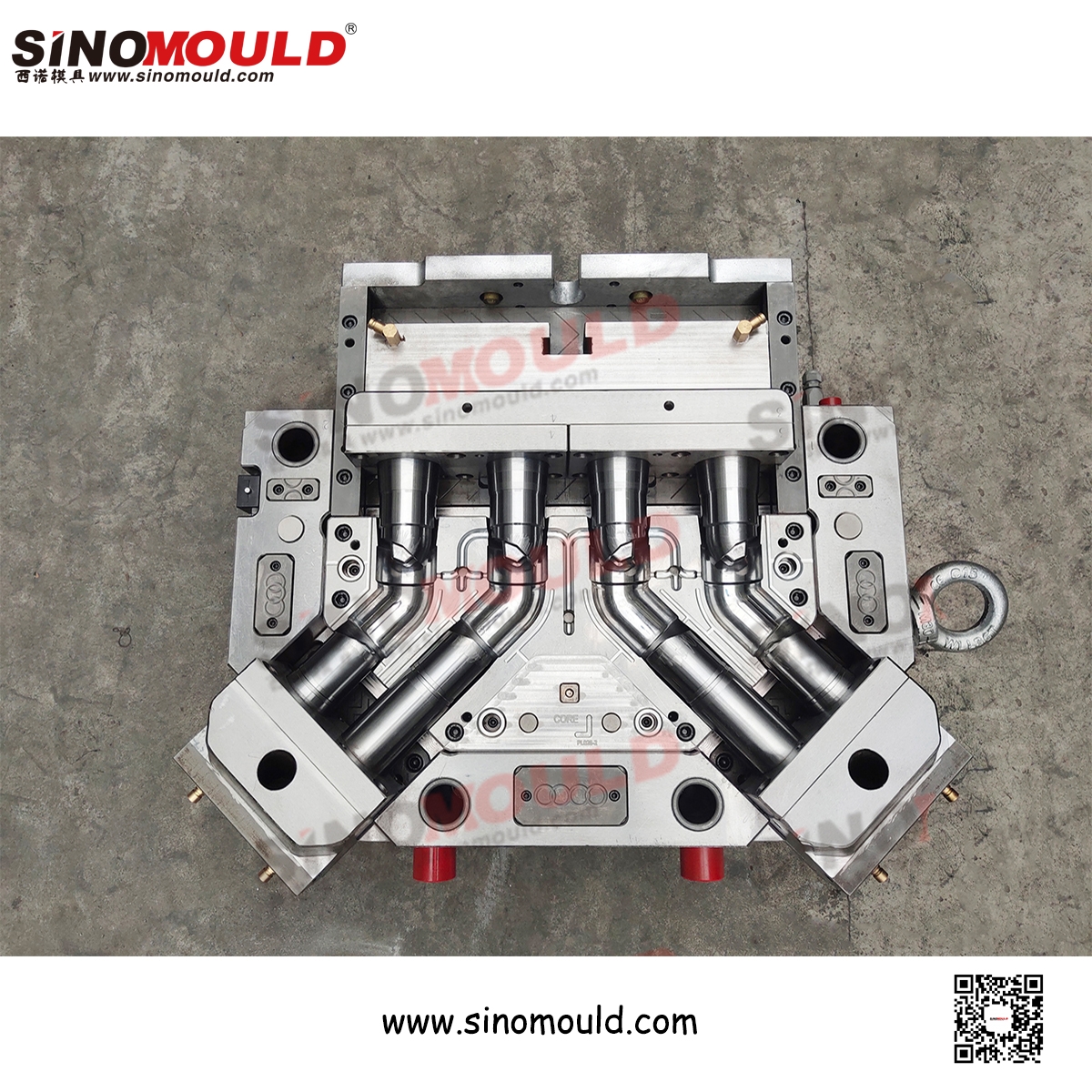
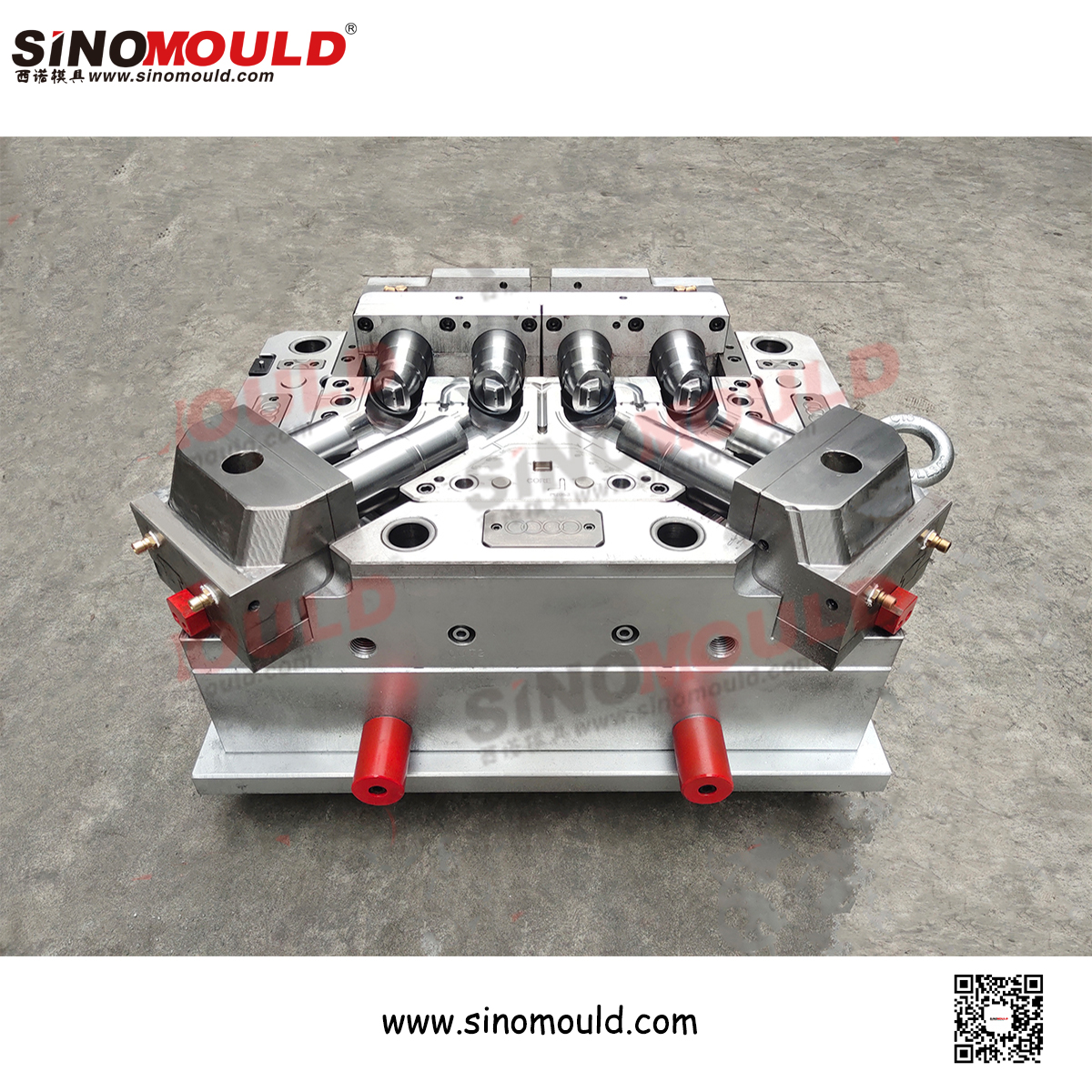
The 45° elbow is a fundamental component in plumbing and irrigation systems, distinguished by its curved geometry that demands specialized mould engineering. Unlike standard fittings, the internal bend requires a collapsible core mechanism for smooth demoulding, while the socket ends must meet strict dimensional standards for leak-proof joining. At SINOMOULD, we combine advanced core-pulling systems with optimized multi-cavity layouts to deliver high-efficiency, long-life moulds for pipe fitting manufacturers. Below are the key specifications, quality focus areas, and manufacturing essentials.
45° Elbow Pipe Fitting Mould Parameters
| Cavity Steel | DIN 1.2316, S136, 4Cr13 | Recommended Injection Machine | 160T – 650T |
|---|---|---|---|
| Mould Core Steel | DIN 1.2316, S136, P20 | Plastic Material | PVC, PP, PE, PA |
| Mould Base Standard / Steel | LKM standard / S50C, S45C | Ejection System | Ejector pins + stripper plate + hydraulic core‑pulling |
| Sliders, Inserts, Lifters Steel | High‑strength tool steel, nitrided | Injection Process | Precision injection molding, cold / hot runner (optional) |
| Number of Cavities | 1-4 cavities | Injection Cycle Time | 15 – 45 seconds |
| Hot Runner System | Hot runner + local cold runner (PVC‑specific design) | Mould Manufacturing Lead Time | 35 – 60 days |
45° Elbow Pipe Fitting Mould Quality Control Points
- Socket & Spigot Dimensional Accuracy
The socket and spigot ends of the 45° elbow are critical for sealing fit. We strictly control the mating dimensions between core and cavity, ensuring socket depth, inner diameter, and taper comply with international pipe fitting standards – eliminating issues of loose or overly tight installation.
- Inner Wall Smoothness and Parting Line Control
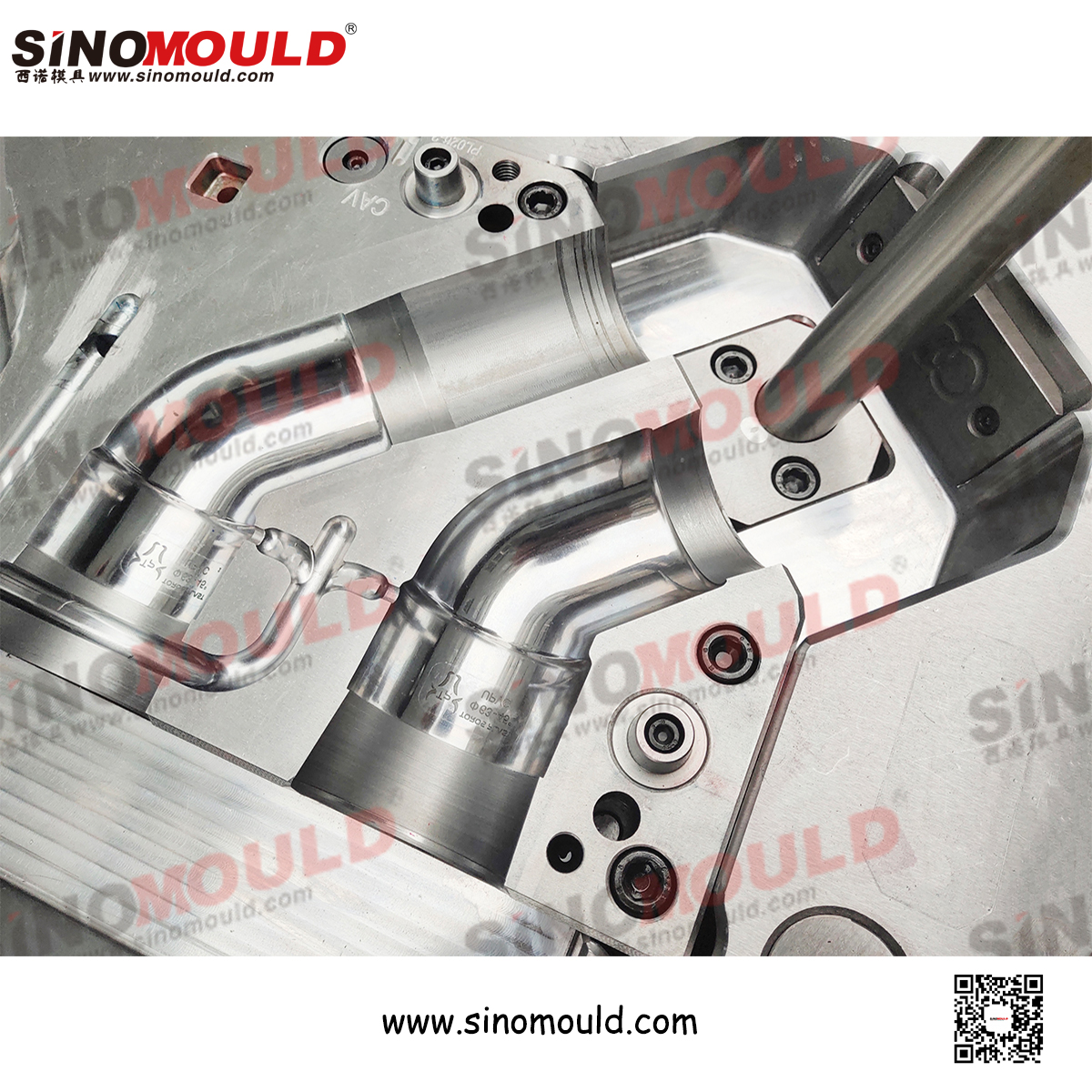
Fluid resistance is directly related to inner wall smoothness. Through a high‑precision core‑pulling mechanism and optimized parting line design, we minimize inner wall witness lines, with flash height at the parting line controlled to ≤0.03 mm – ensuring a smooth inner wall with no flow obstruction risks.
- Multi‑Cavity Consistency
In multi‑cavity production, part weight deviation between cavities is controlled within ±0.3%. Through runner balance analysis and independent valve‑pin adjustment, we ensure consistent dimensions and appearance across all elbows.
- PVC Material Process Compatibility
PVC is temperature‑sensitive and prone to thermal degradation. We adopt a combined “hot runner + cold runner at the end” design in the mould – maintaining a cold runner near the cavity to prevent material carbonization during machine stops, while enabling rapid production restart and reducing scrap.
- Core‑Pulling Mechanism Operational Reliability
The rack‑and‑pinion core‑pulling system must operate repeatedly under high temperature and pressure. We strictly control tooth surface hardness and fit clearance, ensuring smooth, jam‑free core‑pulling action – requiring no frequent maintenance within the mould’s service life.
45° Elbow Pipe Fitting Mould Manufacturing Highlights
- Rack‑and‑Pinion Core‑Pulling System
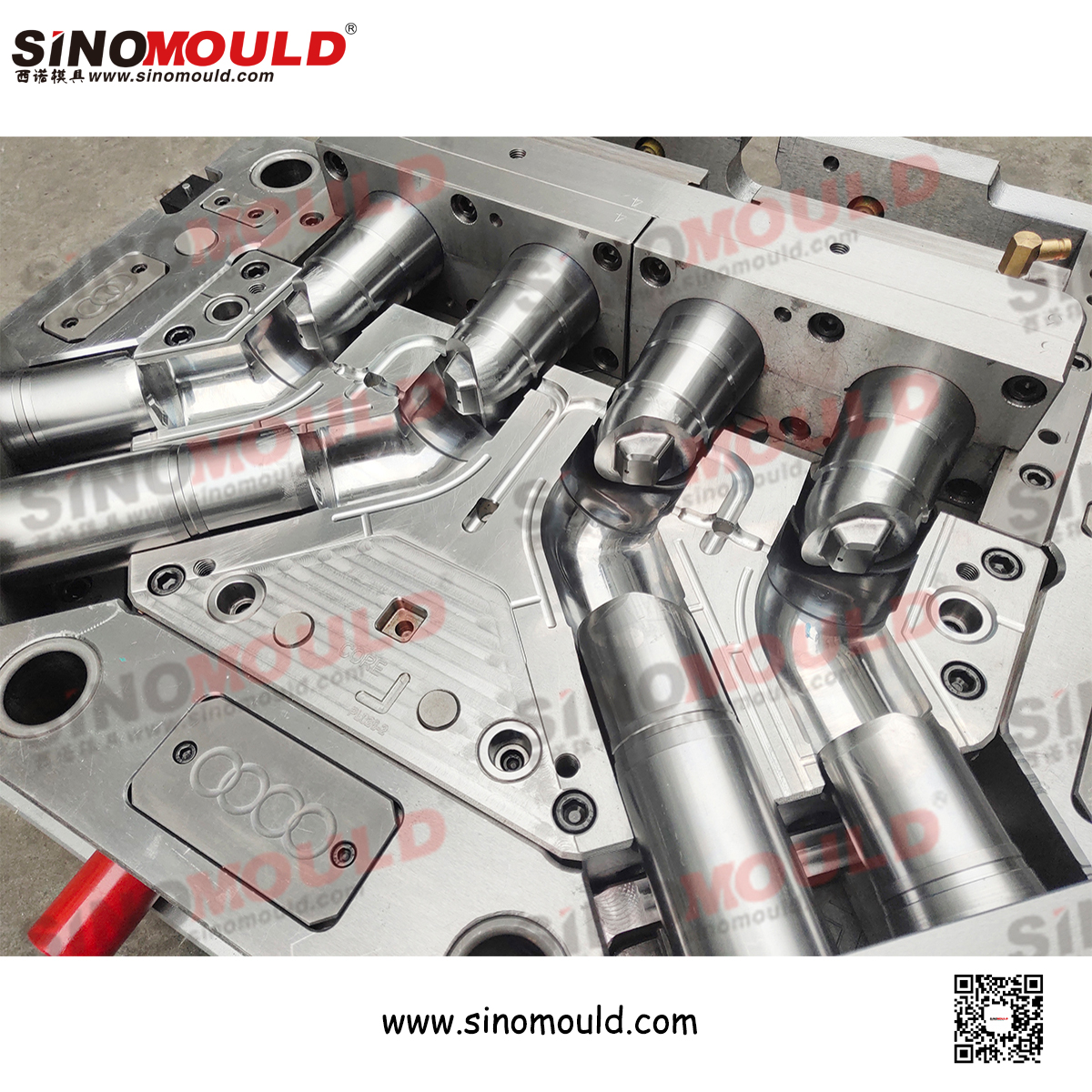
The core of the elbow mould is the core‑pulling mechanism. We adopt a rack‑and‑pinion system driven by a hydraulic motor – offering precise stroke, smooth motion, and compact footprint compared to conventional cylinder‑type core‑pulling. The core‑pulling is completed in two steps: the straight section retracts first, followed by the rotating release of the curved core – without damaging the inner wall of the product.
- Multi‑Cavity Layout Optimisation
For small‑diameter elbows, we use vertically arranged slide mechanisms to achieve up to 32 cavities within a limited mould base space – significantly increasing daily output per machine. For large‑diameter elbows, stability is prioritised, with cavity counts controlled to 2–4 cavities.
- PVC‑Specific Runner Design
The biggest challenge in PVC injection moulding is thermal stability. We add a local cold runner at the end of the hot runner system, allowing the material to cool briefly before entering the cavity – preventing high‑temperature degradation while ensuring complete filling. This design also facilitates purging and colour changes, reducing material waste.
- Precision Machining and Assembly
Cavities, cores, and the core‑pulling rack are all finished by CNC milling and wire EDM, with critical tolerances ≤ ±0.01 mm. During assembly, each component is inspected for fit clearance to ensure smooth, interference‑free movement of all moving parts.
- Mould Trial Verification
Each mould is trial‑run on an injection machine before delivery, simulating mass production conditions to verify product dimensions, appearance, and core‑pulling stability. Only after passing inspection is the mould delivered – ensuring that the customer can immediately start continuous production upon receipt.