
Chair Mould
With over 20 years of experience in chair mould R&D and manufacturing, SINO MOULD specializes in customizing moulds for all key plastic components of various chairs, including seat pans, backrests, chair legs, armrests, and foot covers. SINO MOULD is proficient in formulating exclusive mould solutions according to the plastic material and product performance requirements of chairs for different usage scenarios (office chairs, student chairs, leisure chairs, dining chairs). We innovatively developed a 32-cavity high-efficiency hot runner system for chair moulds, balancing production efficiency and product consistency, and becoming the preferred partner for global mid-to-high-end chair manufacturers. Combined with our parent company DKM’s special all-electric injection moulding machines, we provide integrated turnkey solutions for chair mould + injection moulding production, realizing one-stop efficient implementation from mould R&D, manufacturing to product mass production, adapting to the large-scale production needs of various chairs.
Standard Chair Mould Details
Below are examples of the most common parameters for chair moulds.
| Chair Mold Cavity Steel | P20, 718H, 2344 | Recommended Injection Machine | DKM Servo Series Injection Molding Machine |
|---|---|---|---|
| Chair Mold Core Steel | P20, 718H, 2344 | Plastic Material & MFI | PP/ABS/PC, typical MFI 8–20 g/10 min |
| Mould Base Standard / Steel | 4CR13 | Ejection System | Ejector Pin + Stripper (optional) |
| Sliders, Inserts, Lifters Steel | High-strength tool steel, treated with nitriding or surface hardening, ensures smooth slider movement and wear resistance, adapting to the forming of complex curved surfaces of chairs. | Injection Process | High-speed injection, stable cycle time, precise temperature control, optimized temperature control for thick-walled parts of chairs to reduce sink marks and warpage. |
| Number of Cavities | 1 to 2 cavities | Injection Cycle Time | 15–35 seconds |
| Hot Runner System | Full hot runner or semi‑hot runner (optional), with pin gate or submarine gate to suit the forming of different chair parts. | Mould Manufacturing Lead Time | Ordinary models: 35-55 days; folding models: 45-70 days |
Key Quality Points of Chair Moulds
SINO MOULD implements rigorous quality management protocols for chair moulds. From steel selection to trial mould validation, every step ensures high precision, stability, and extended mould lifespan, adapting to the core usage requirements of chair products such as load-bearing, wear resistance, and impact resistance.
Standardized Design
- Based on the structural characteristics of each chair component (seat pan, backrest, chair legs, armrests, foot covers), especially the moulding needs of the backrest curve and seat bearing surface, the mould structure and runner layout are optimized to reduce defects such as weld lines and sink marks. Utilizes mould flow analysis software to simulate injection processes, ensuring balanced multi-cavity injection and uniform plastic distribution, and guaranteeing the dimensional consistency of each chair component.
- For the combined parts of thick and thin walls of chairs, an optimized hot runner design is adopted to enhance temperature uniformity, reduce deformation and porosity risks, and ensure the structural strength and appearance texture of chair components.
Steel Material Selection
- Core/Cavity: DIN 1.2316 or S136—highly corrosion-resistant and wear-resistant steel. High-precision polishing ensures smooth and flawless forming surfaces of chairs, adapting to the moulding needs of various plastic materials such as PP/ABS.
- Mould Base: 4Cr13 rust-resistant mould base steel offers good strength and toughness, which can bear the long-term high-frequency opening and closing mechanical load of chair moulds, with long service life and low maintenance costs.
- Hot Runner Components: Constructed from corrosion-resistant, high-temperature materials to ensure long-term reliable hot runner operation. According to the gating needs of large-size chair components, the runner diameter is optimized to ensure injection efficiency and moulding quality.
Machining Precision Control
- CNC precision machining with critical dimensional tolerances controlled within ±0.01 mm, especially controlling the hole position, radian, and wall thickness tolerances of chair components to ensure chair assembly precision and avoid loosening, misalignment and other problems.
- Multi-stage inspection: Parallelism, perpendicularity, hole positioning, and cavity dimensions verified through multiple inspection procedures, using professional testing equipment to ensure that the processing precision of each mould component meets the design standards.
- Critical areas undergo mirror polishing. For the mould cavities corresponding to the visible surfaces of chairs, mirror polishing is performed to ensure that the forming surfaces of chairs are smooth, scratch-free, and non-shrinking, improving the product appearance grade.
Assembly and Mould Trial
- Precision assembly of critical components like slides, inserts, and ejector pins. For the core-pulling mechanism required for the moulding of complex curved surfaces of chairs, precise debugging is carried out to ensure smooth closure and stable core-pulling, avoiding jamming and scratching of products.
- During trial moulding, through scientific injection moulding process debugging, combined with the load-bearing and impact resistance requirements of chair products, even minor issues—such as warpage, sink marks, voids, or dimensional deviations—are accurately identified and adjusted in a timely manner, ensuring that the dimensions, appearance, weight, and mechanical properties of chair components meet the standards.
Validation and Continuous Optimization
To guarantee high reliability post-delivery, we conduct extended stability testing before shipment—typically no less than 8 hours—simulating actual production rhythms and high-intensity operations, focusing on verifying the stability of chair moulds in high-frequency production. This process validates not only dimensional accuracy and injection consistency but also assesses the overall stability of the mould’s hot runner system, cooling system, and mechanical actions, ensuring that the mould can be quickly put into mass production after delivery.
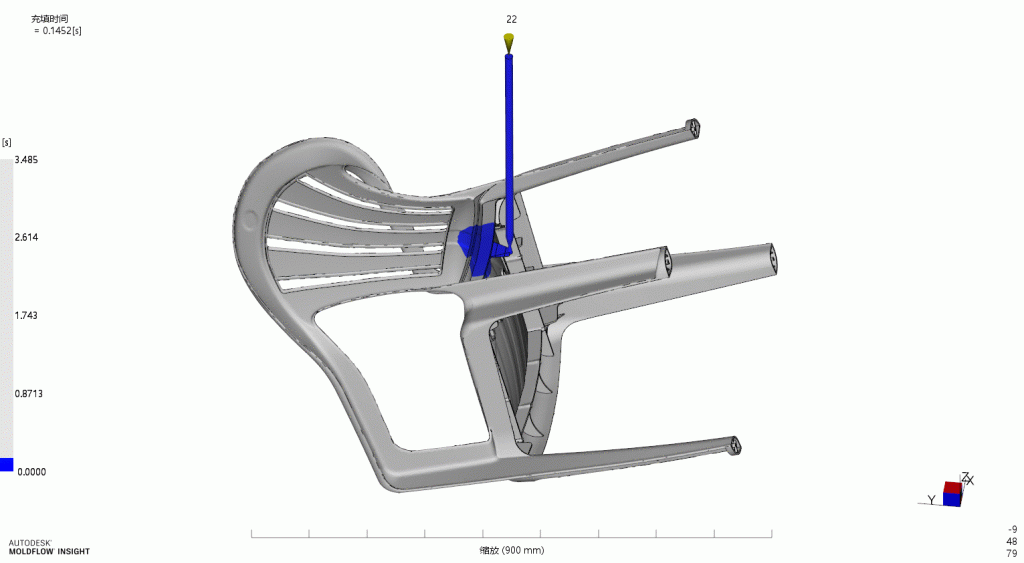
Mould Flow Analysis for Chair Moulds
Using Mouldflow analysis software, the injection process of chair components is simulated. For the complex curved surfaces and thick-walled parts of chair seats and backrests, the cavity structure, runner layout, and temperature control system are optimized to ensure balanced multi-cavity filling and uniform plastic distribution of chair moulds, effectively solving common problems in chair moulding such as obvious weld lines, sink marks, warpage, and air traps, and reducing mould trial costs and production defect rates.
As it shows in the picture, the optimized hot runner and runner layout allow independent temperature control for each cavity, keeping plastic flow and temperature consistent, especially adapting to the filling needs of thick-walled parts of chairs, reducing deformation and air traps, and greatly improving injection stability and mould longevity, ensuring uniform dimensions and intact appearance of each chair component.
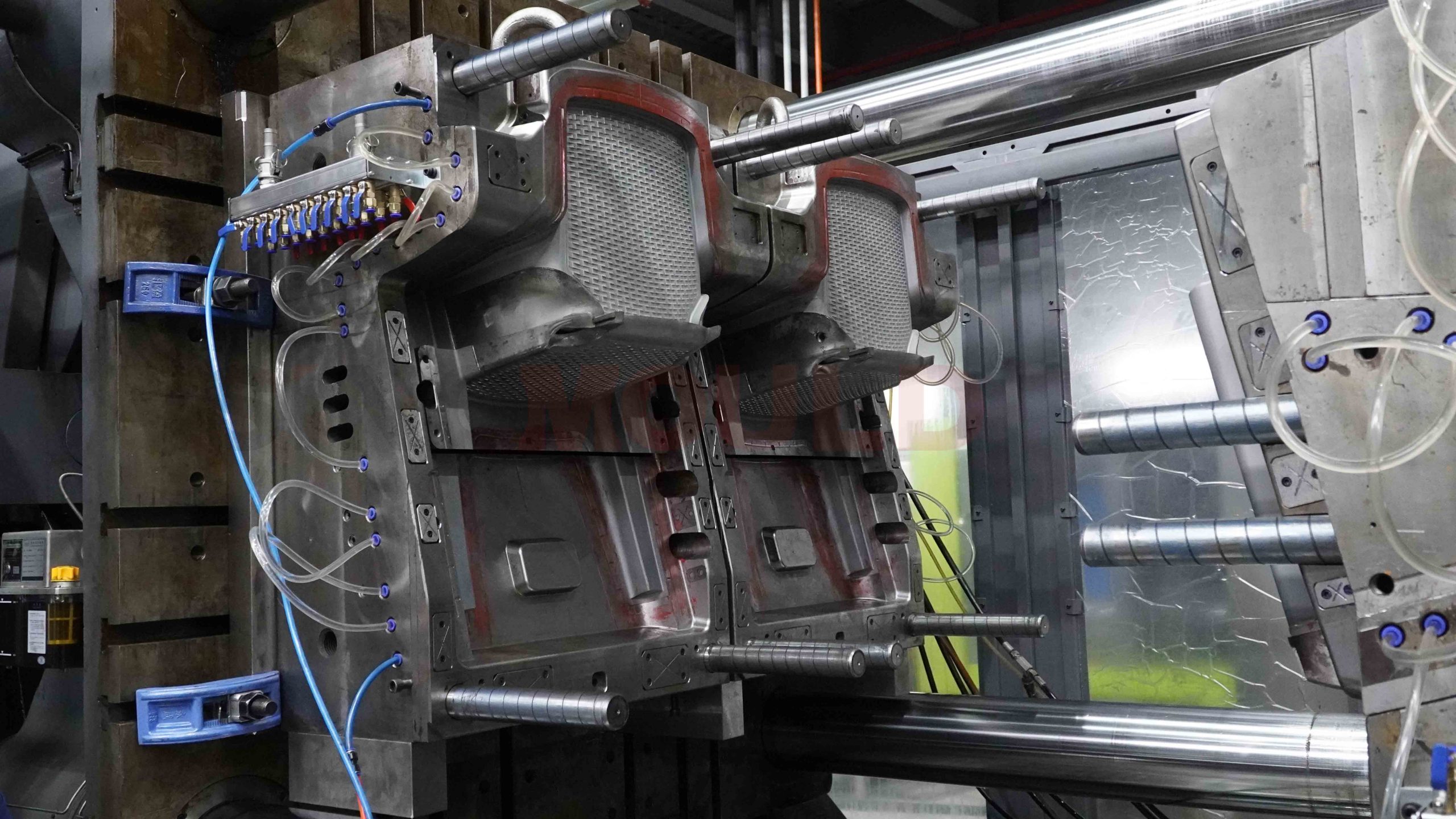
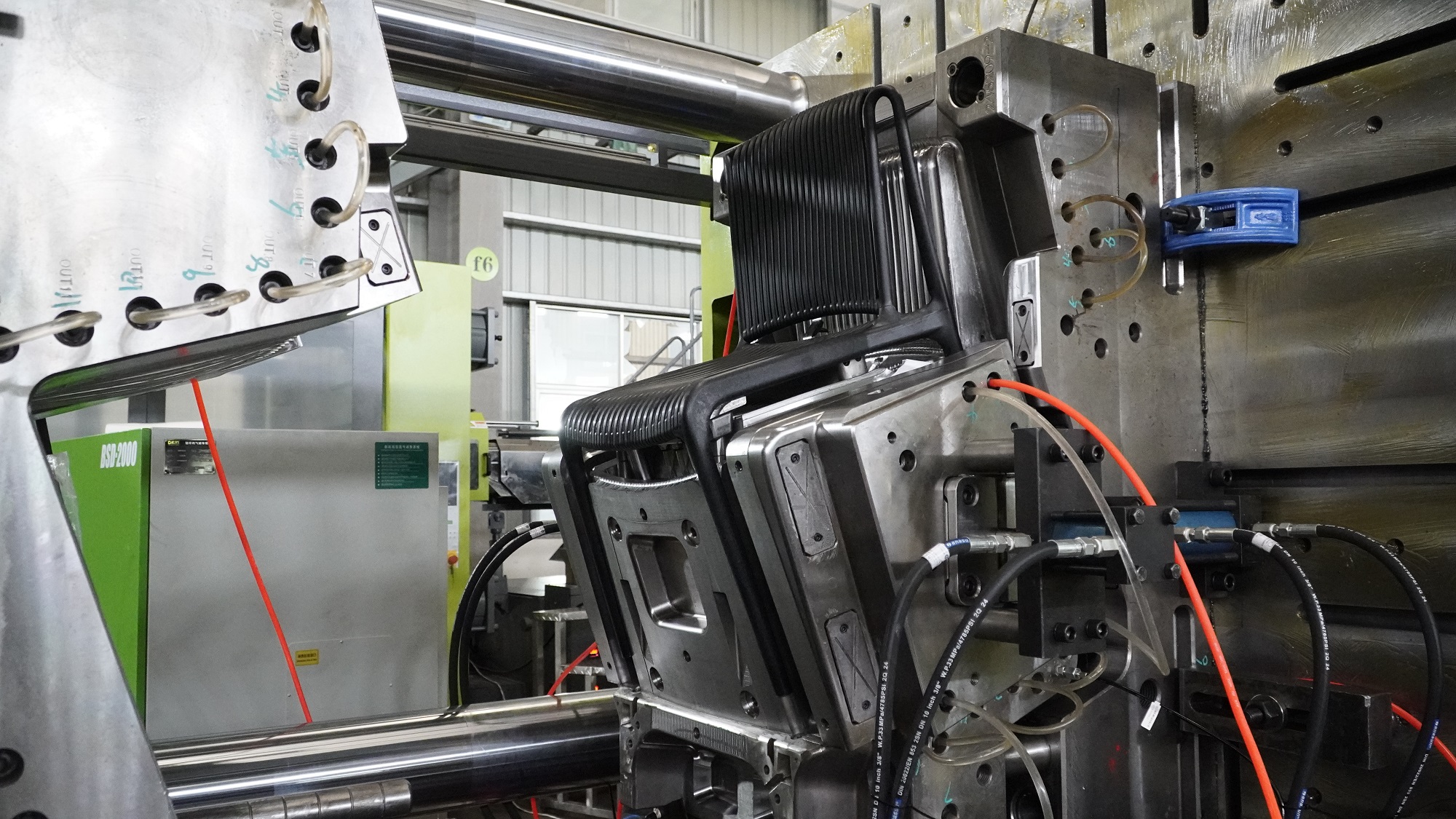
Chair Part Sample Images
Sample parts from mould trials, covering core plastic components of various chairs such as office chairs, student chairs, and leisure chairs, demonstrating multi-cavity consistency, surface finish, and moulding stability, and showing the smooth appearance and structural integrity of chair components.
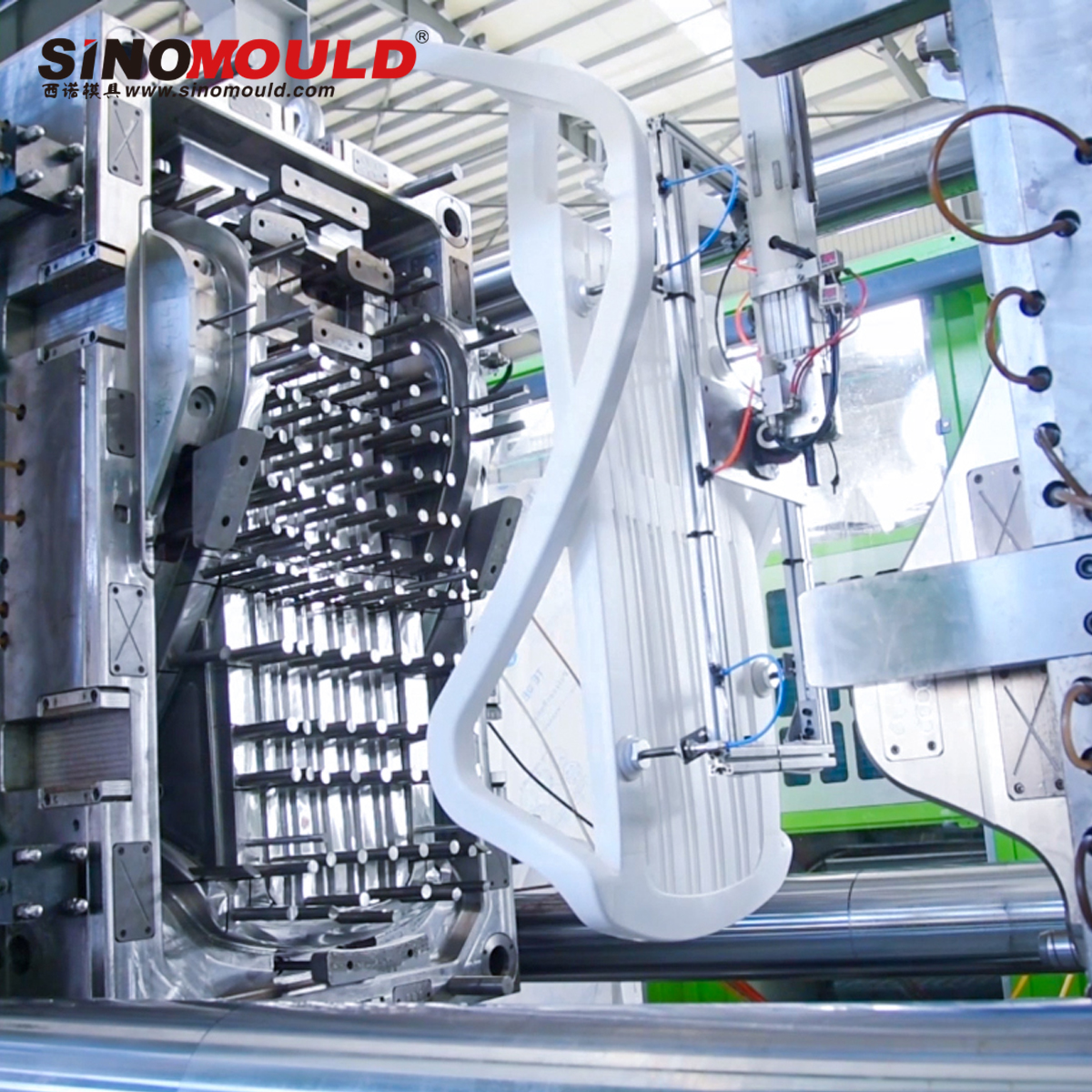
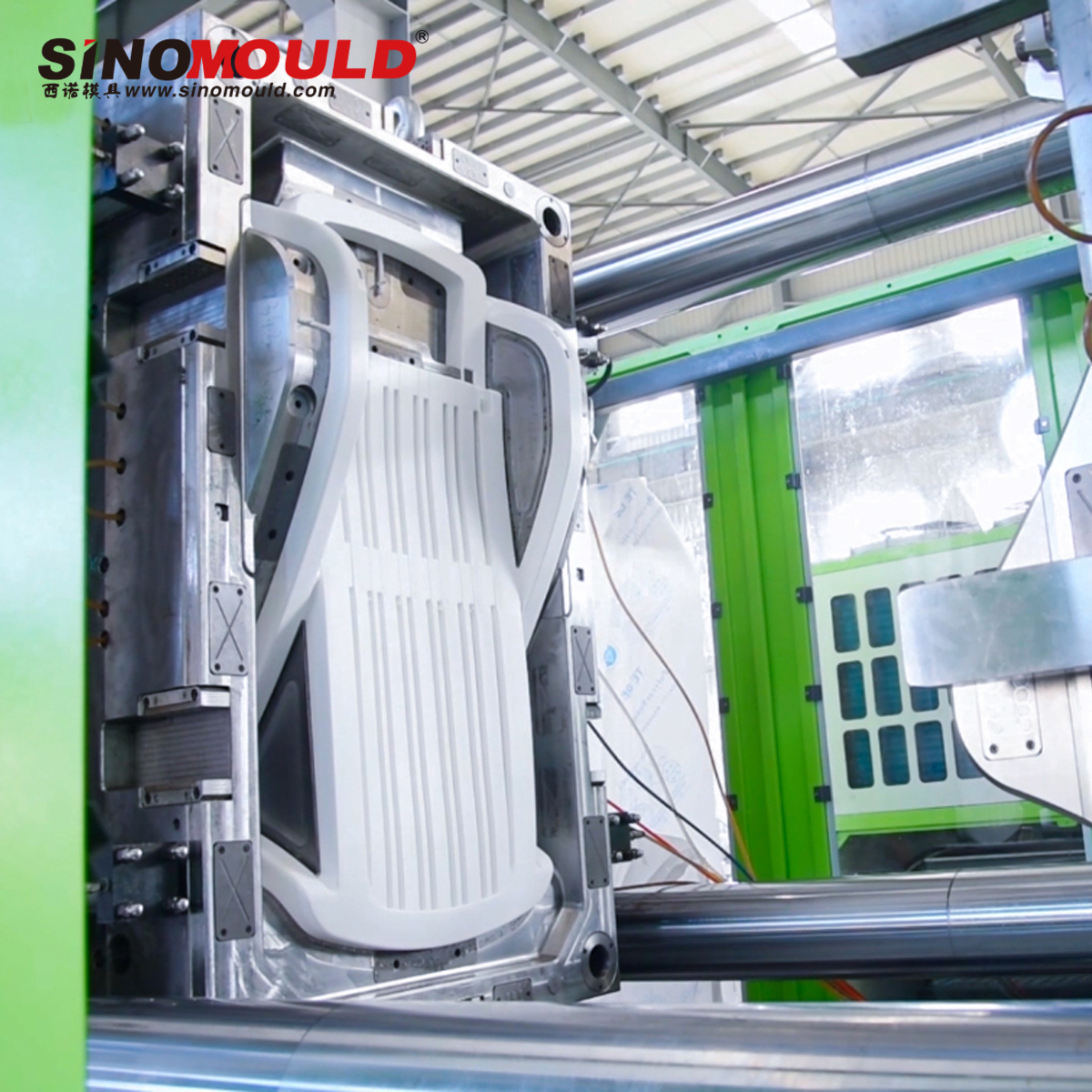
Chair Mould Testing Video
Video demonstrating mould performance and stability under medium and high-speed injection conditions, showing the smoothness of mould opening and closing, the precision of core-pulling mechanism actions, and the continuous moulding effect of chair components, intuitively presenting the high-efficiency production capacity of the mould.