Blog
Trash Can Grille Mould
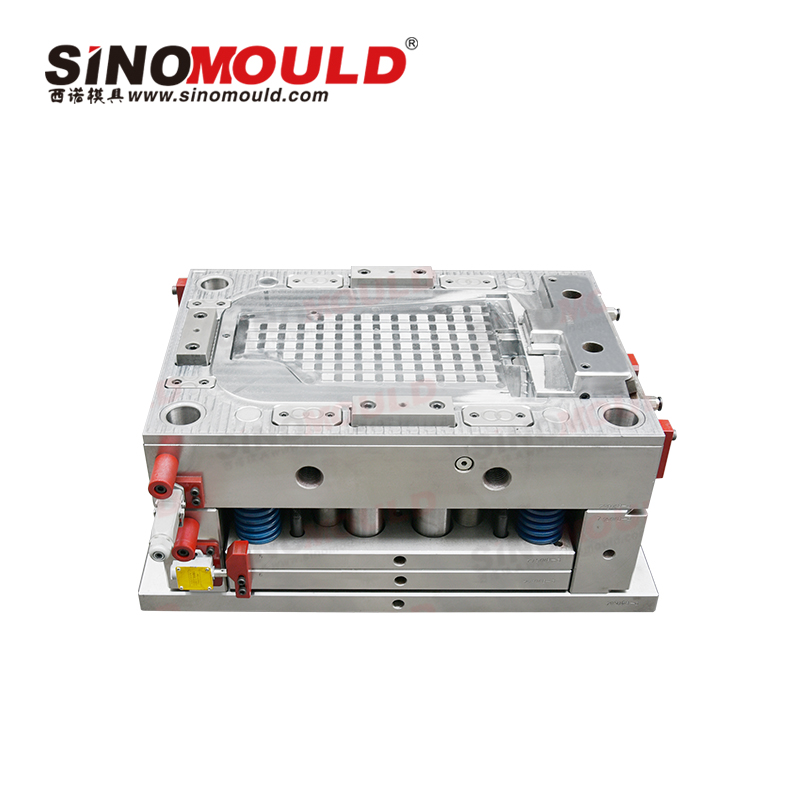
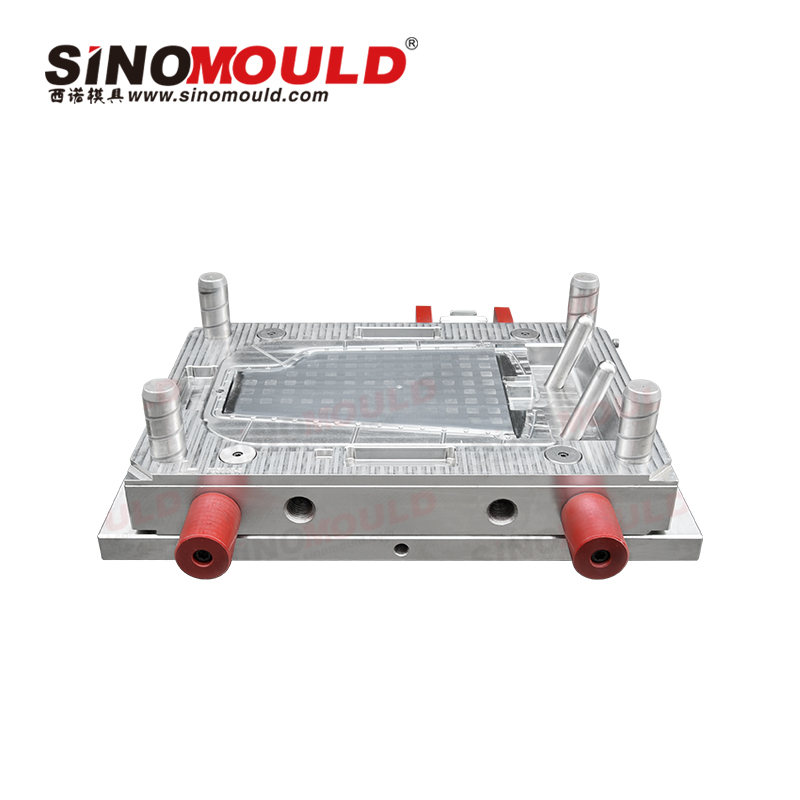
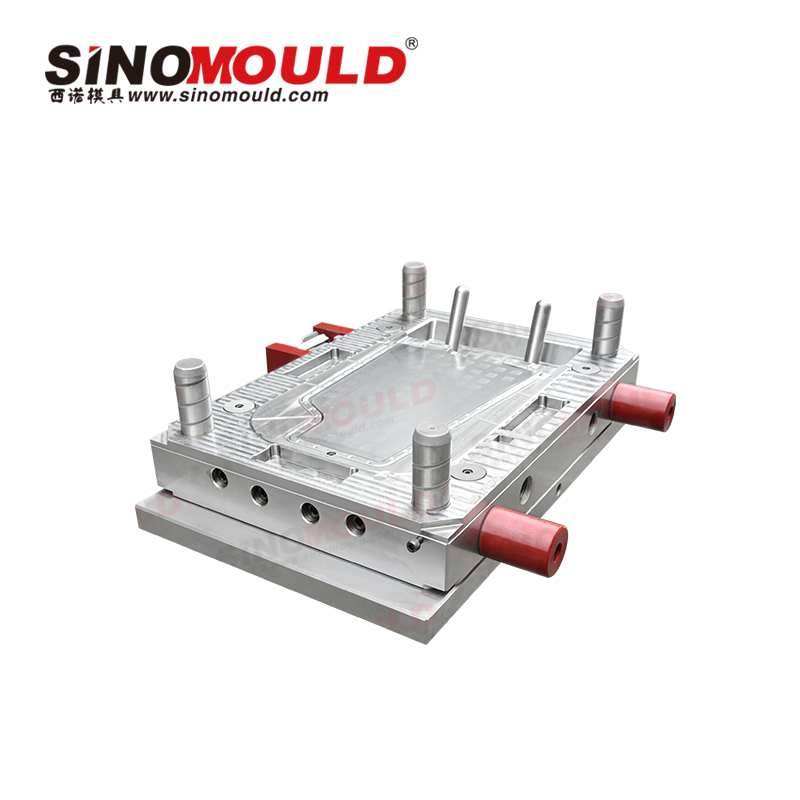
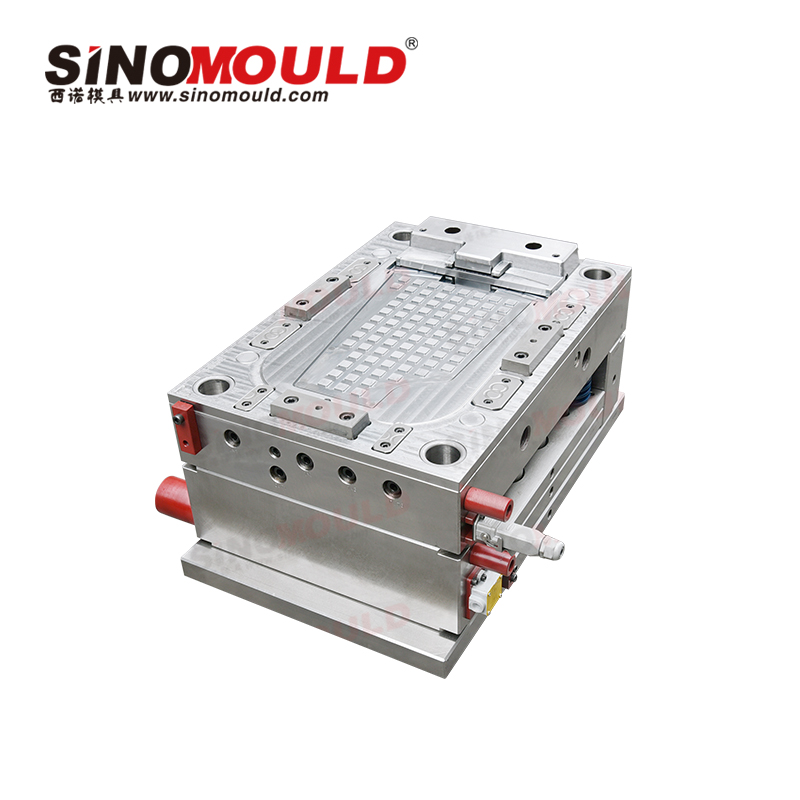
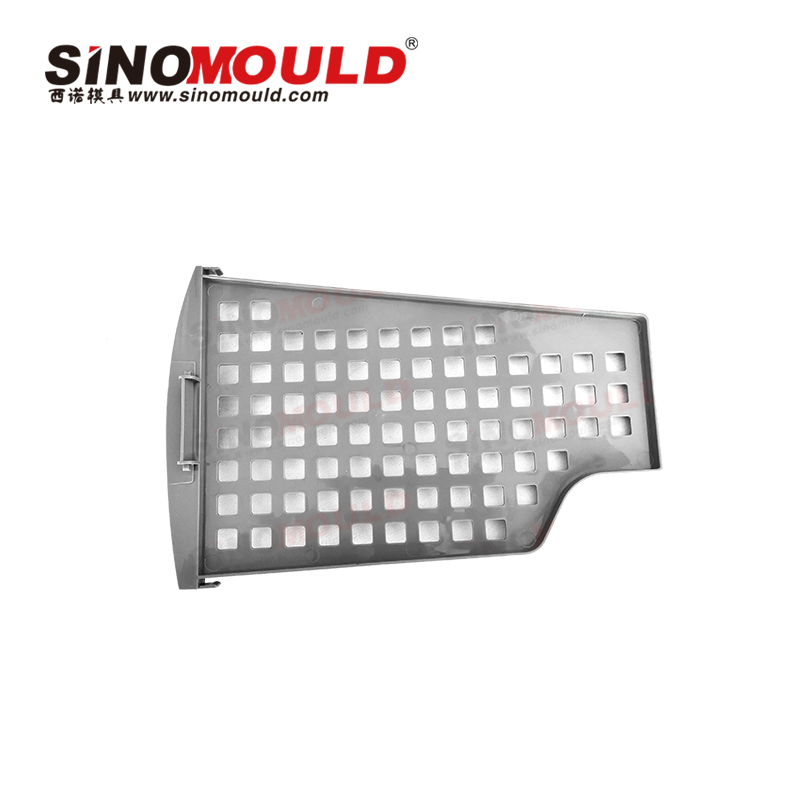
The trash can grille—also referred to as a mesh bin, lattice waste basket, or ventilated trash liner—is a hollow-walled component whose open grid structure provides airflow, drainage, and visual lightness while retaining structural rigidity. Unlike solid-wall bins, the grille’s performance depends entirely on the precision of its mesh: uneven rib thickness causes weak spots that crack under load, while poorly placed weld lines create visible sink marks and stress concentrations across the grid.
Moulding this geometry presents a specific set of challenges. Deep-cavity mesh structures are prone to uneven cooling—the dense grid retains heat while the open areas cool faster—and thin lattice walls are easily deformed or whitened during ejection. PVC-style thin-wall strategies do not transfer directly, because the grille’s strength comes from the grid itself rather than uniform wall thickness. At SINOMOULD, we address these issues through balanced gating, zoned cooling around the mesh zone, and staged ejection designed for open lattice geometry. The following outlines key specifications, quality priorities, and manufacturing essentials.
Trash Can Grille Mould Parameters
| Mould Cavity Steel | 718H, S136, NAK80, DIN 1.2316 | Recommended Injection Machine | 250T – 800T |
|---|---|---|---|
| Mould Core Steel | 718H, S136, P20 | Plastic Material | PP (homopolymer / copolymer), HDPE |
| Mould Base Standard / Steel | LKM Standard / S50C, S45C | Ejection System | Staged ejection + ejector plate + evenly distributed pins across mesh zone |
| Sliders, Inserts, Lifters Steel | High-strength tool steel, nitrided; beryllium copper inserts optional in mesh zone | Injection Process | Precision injection, zoned mould temperature control ±2°C |
| Number of Cavities | (recommended for deep-cavity mesh), 1×2 | Injection Cycle Time | 45–60 seconds |
| Hot Runner System | Direct gate / valve gate hot runner | Mould Manufacturing Lead Time | 40–65 days |
Trash Can Grille Mould Quality Control Points
- Mesh Opening Uniformity & Rib Integrity
The function and appearance of a grille depend on the dimensional consistency of every mesh opening. Cavity mesh inserts are wire-EDM cut as a single piece, holding opening tolerance within ±0.15mm and rib thickness deviation ≤0.1mm, ensuring orderly grid alignment with no short shots or fused ribs. A single blocked cell compromises airflow and drainage while creating a structural weak point
- Weld Line Positioning
In deep-cavity mesh structures, melt fronts converge at multiple rib intersections, making weld lines unavoidable. The quality objective is not to eliminate weld lines but to confine them to non-critical zones. Moldflow simulation optimises direct gate position and filling paths so weld lines land on the back of the mesh or non-load-bearing ribs, with no visible marks on the front face and weld strength meeting drop and stacking requirements.
- Deep-Cavity Cooling Uniformity & Warpage Control
Deep-cavity mesh bins are among the most cooling-intensive geometries: dense rib zones retain heat while large open areas dissipate it quickly, and the temperature differential directly drives uneven shrinkage and warpage. We use zoned independent temperature-controlled circuits, intensifying cooling in dense mesh zones (with beryllium copper inserts where necessary), holding the overall part temperature differential within ±2°C and maximum warpage within 2.5mm, meeting stacking and assembly requirements.
- Damage-Free Ejection of Thin Mesh Walls
Grille walls are thin and open, and uneven ejection force easily causes rib bending, whitening, or fracture. We use a staged ejection strategy: an ejector plate first releases the deep-cavity holding force as a whole, followed by a second-stage ejection through pins distributed at mesh intersection nodes, balancing load across each rib and preventing stress-concentration whitening and cracking.
- Material Flow & Process Window
Grille moulds typically run PP and HDPE. PP has a relatively high shrinkage rate (1.5%–2.5%), requiring packing profiles and mould temperature compensation to control mesh dimensional stability. HDPE offers good toughness but its flow behaviour is temperature-sensitive—excessive melt temperature causes flash, while insufficient temperature causes short shots in the mesh. We establish separate process windows for each material to ensure complete mesh filling without flash.
Trash Can Grille Mould Manufacturing Highlights
- One-Piece Precision Cutting of Mesh Inserts
The heart of a grille cavity is the mesh insert. Rather than assembling individual cells, we start from a single hardened steel block, wire-EDM all mesh openings in one pass, and then jig-grind the rib flanks. One-piece cutting eliminates assembled seams, ensures every opening is dimensionally identical with no tool marks on ribs, and prevents insert shifting or misalignment in service.
- Direct Gating & Filling Path Optimisation
Deep-cavity mesh parts prioritise direct gating, allowing melt to spread evenly from a bottom-centre or designated gate point across the surrounding mesh, shortening flow length and reducing pressure loss. Moldflow analysis guides gate size and position so melt fronts reach the mesh extremities simultaneously in all directions, avoiding local over-packing or end-of-fill short shots. For multi-cavity layouts, runner balancing ensures consistent mesh filling across cavities.
- Conformal & Zoned Cooling for the Mesh Zone
Heat in dense mesh zones cannot be effectively removed by conventional straight-drilled circuits. We route conformal cooling channels on the back of the mesh insert, closely following the rib roots, and embed beryllium copper inserts at high-heat nodes to accelerate dissipation. Open areas use separate low-temperature circuits to avoid uneven shrinkage from over-cooling. The two circuit sets are independently controlled, narrowing the temperature differential between mesh and open zones at the source.
- Venting & Gas Trapping Prevention
Rib intersections and the deep-cavity base are prone to gas trapping, which causes local burning, incomplete filling, or reduced weld strength. We incorporate graded venting at the parting line, mesh extremities, and cavity base, with vent depths precisely controlled at 0.02–0.03mm to allow gas escape while preventing flash. For enclosed mesh regions, insert venting or porous steel is added to ensure gas has an escape path during high-speed filling.
- Staged Ejection Design & Validation
The holding force of a deep-cavity mesh concentrates on the contact surface between mesh and core; a single forceful ejection stroke can fracture ribs. The staged ejection mechanism first loosens the deep-cavity grip with the ejector plate as a whole, then completes final demoulding through pins positioned at mesh nodes. Pin locations avoid thin unsupported wall sections and land exclusively on thicker rib intersection nodes. During trial moulding, ejection speed is incrementally increased to validate release reliability, ensuring no sticking or whitening in production.
- Trial Moulding & Validation
Every mould is trial-run continuously in our in-house injection workshop under simulated production conditions. Mesh opening dimensions, rib integrity, weld line position, warpage, and staged ejection reliability are inspected. Only after passing these checks is the mould shipped.