Blog
Trash Bin Lid Mould
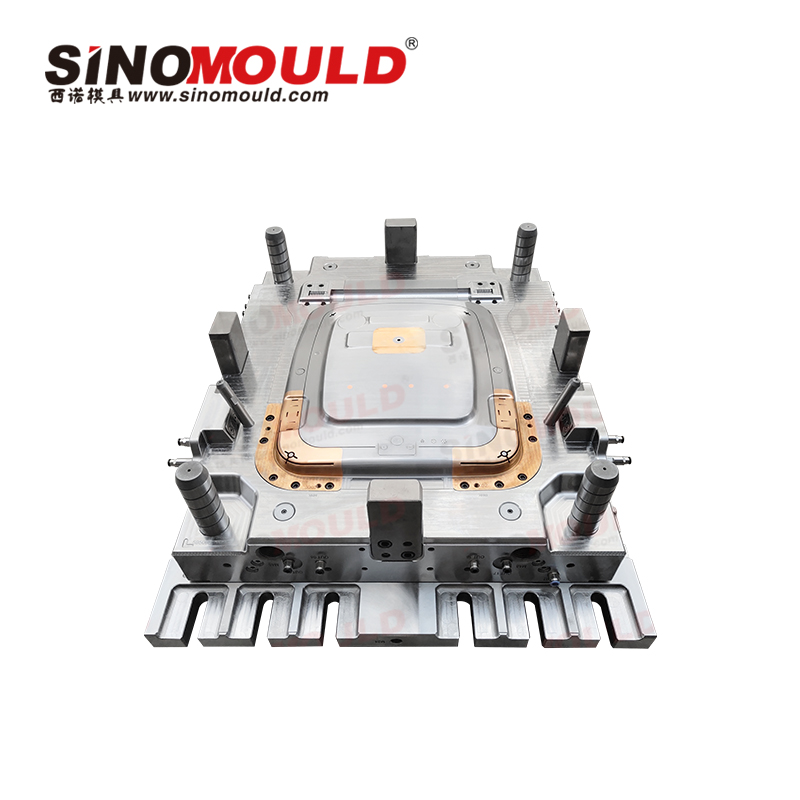
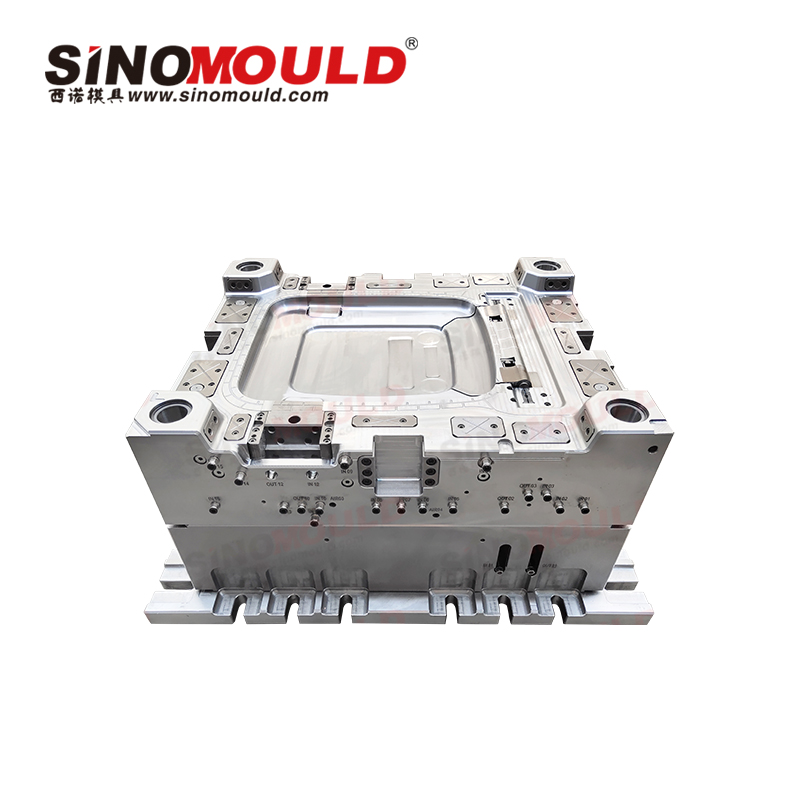
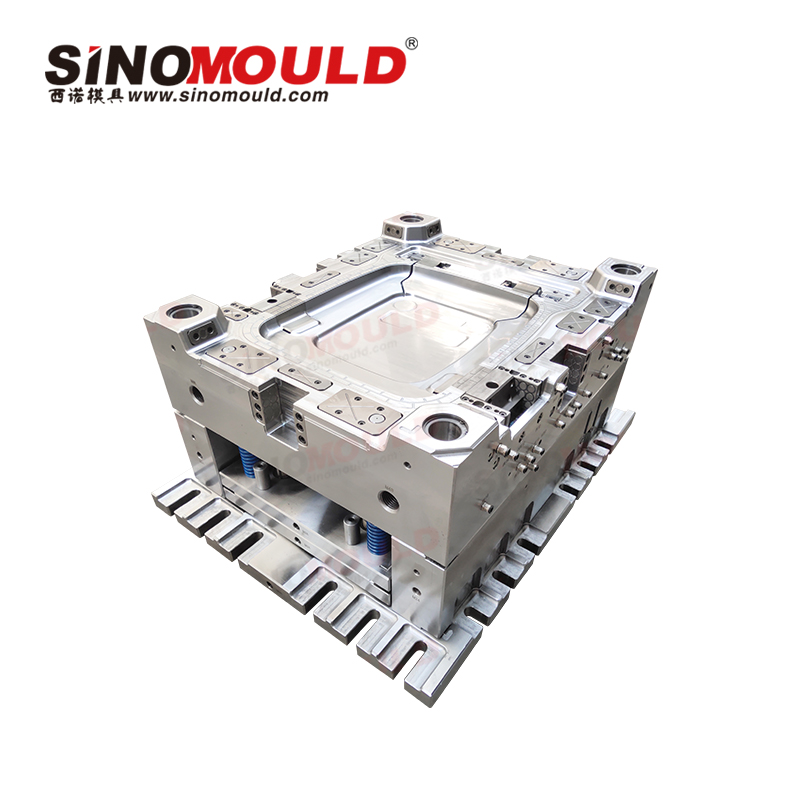
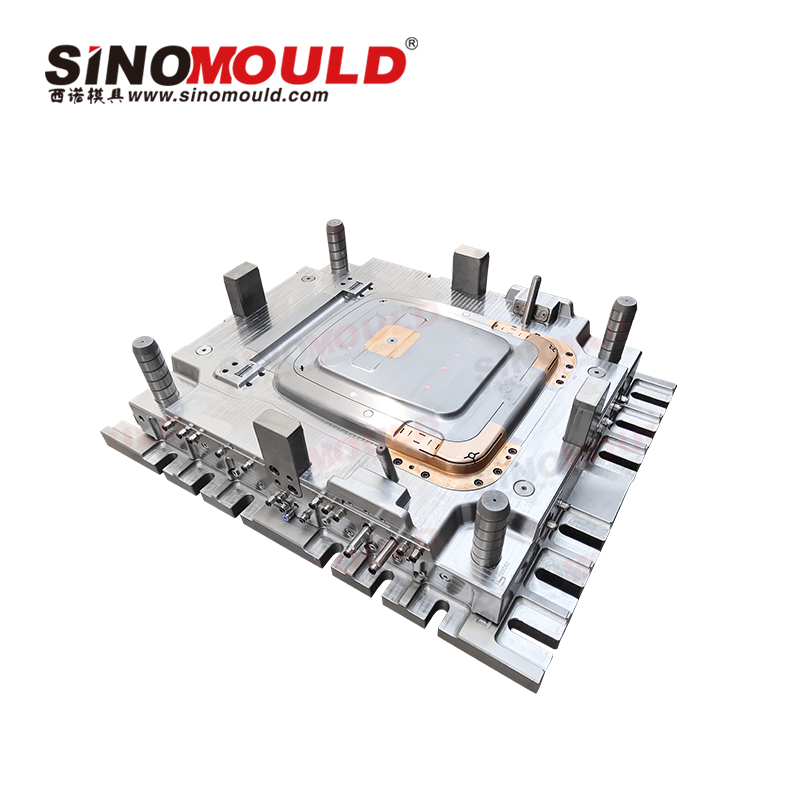
The trash bin lid is a visible, frequently handled component that must combine structural rigidity, hinge durability, and a clean appearance. Unlike the bin body, the lid often incorporates undercuts for snap-fit hinges, handle openings, and reinforcing ribs—features that complicate mould design and demoulding. A Trash Bin Lid Mould must therefore balance filling efficiency with reliable ejection, especially for large lids where warpage and sink marks are common failure modes.
Trash Bin Lid Mould Parameters
Parameter | Specification |
Cavity Steel | P20 / 718H / NAK80 (polished for visible surfaces) |
Core Steel | P20 / 718H |
Mould Base | 45# Steel / Thick Plate Reinforced |
Sliders, Inserts, Lifters | High-strength tool steel, nitrided or quenched |
Number of Cavities | 1×1, 1×2 (larger lids typically single cavity) |
Hot Runner Type | Open or Needle Valve Hot Runner |
Compatible Injection Machine | 250T–650T (depending on lid size) |
Plastic Material | PP, HDPE (recycled material compatible) |
Ejection System | Stripper plate + ejector pins + optional air assist |
Key Quality Points of Trash Bin Lid Mould
1. Lid-to-Body Fit and Hinge Alignment
The lid must close flush with the bin body and rotate smoothly on its hinge. Mating surfaces are held to tight tolerances to prevent gaps or interference. Hinge bore concentricity is critical—misalignment causes binding or premature wear. For snap-fit hinge designs, the undercut geometry must be precisely machined so that the lid can be assembled without cracking.
2. Warpage Control for Large Flat Surfaces
Trash bin lids are typically broad, relatively thin-walled parts. Uneven cooling between the lid’s top surface and its reinforcing ribs causes bowing or twisting, which prevents proper sealing against the bin rim. Zoned cooling circuits and balanced rib layout are used to equalize shrinkage. For large lids, mould temperature control units maintain uniform cavity surface temperature within ±2°C.
3. Sink Mark Prevention on Visible Surfaces
The lid’s exterior surface is visible and often textured or polished. Thick sections at handle bosses, hinge mounts, or rib intersections are prone to volumetric shrinkage that appears as sink marks. Localized cooling at these hot spots, combined with adequate holding pressure, minimizes surface depression. Mould flow analysis is used during design to predict and eliminate sink-prone regions.
4. Demoulding of Undercut Features
Many trash bin lids incorporate integral hinges, handle openings, or snap-fit tabs that create undercuts. These features require sliders, lifters, or side-core mechanisms to release the part without deformation. A Chinese utility patent for a large garbage bin lid mould describes side handle forming cylinders and front handle forming cylinders that retract during demoulding, eliminating the need for manual rocking and enabling automated production . Another patent for a lid mould with fixing buckles uses inclined demoulding rods to release the buckle features smoothly .
Manufacturing Highlights for Trash Bin Lid Moulds
1. Precision Machining of Hinge and Undercut Areas
Hinge bores and undercut-forming inserts require high positional accuracy. CNC machining followed by wire EDM for critical fit surfaces ensures that sliders and lifters move without binding. Surface finish on hinge pin bores is controlled to reduce friction during lid operation.
2. Gating Strategy for Balanced Filling
Large, flat lids are challenging to fill without flow marks or weld lines. A single gate may cause uneven filling at the far end, leading to short shots or high internal stress. Multi-point hot runner systems with sequential valve gates allow the melt front to advance uniformly, reducing weld line visibility and improving dimensional consistency. For smaller lids, a fan gate positioned on a non-visible edge is often sufficient.
3. Cooling Circuit Layout for Flat Parts
Cooling channels are arranged to follow the lid’s contour, with denser circuits near thick sections (hinge mounts, handle bosses). Baffles or bubblers are used in core-side areas where standard drilling cannot reach. Efficient cooling directly reduces cycle time and warpage.
4. Ejection Design for Thin-Walled Lids
Thin-walled lids are easily deformed by localized ejection force. A stripper plate combined with evenly distributed ejector pins—or air-assist ejection—ensures that force is spread across the part. Ejector pin locations are chosen to act on stronger features such as ribs or the lid rim, not on unsupported flat areas.
5. Trial Moulding and Validation
Every mould is trial-run under simulated production conditions. Critical checks include: lid-to-body fit, hinge rotation smoothness, warpage across the lid surface, absence of sink marks on visible areas, and consistent ejection without deformation. Only after these criteria are met is the mould released for shipment.
A Trash Bin Lid Mould succeeds when it addresses three interacting challenges: filling a broad, thin-walled part without defects, releasing undercut hinge and handle features without damage, and maintaining flatness for a proper fit with the bin body. By combining balanced gating, zoned cooling, precision undercut mechanisms, and rigorous trial validation, mould makers deliver tooling that supports stable, high-volume production of garbage bin lids that look good and function reliably.