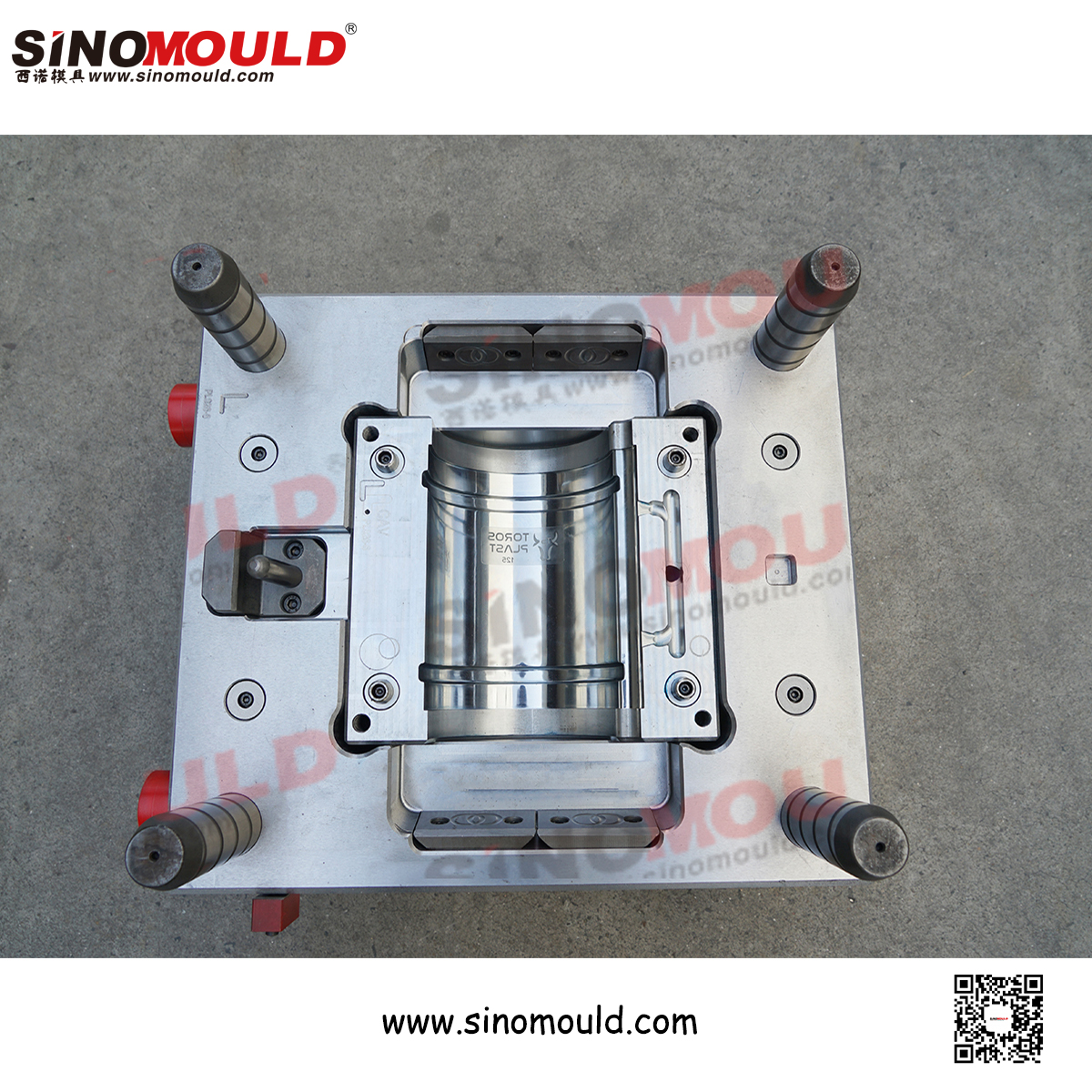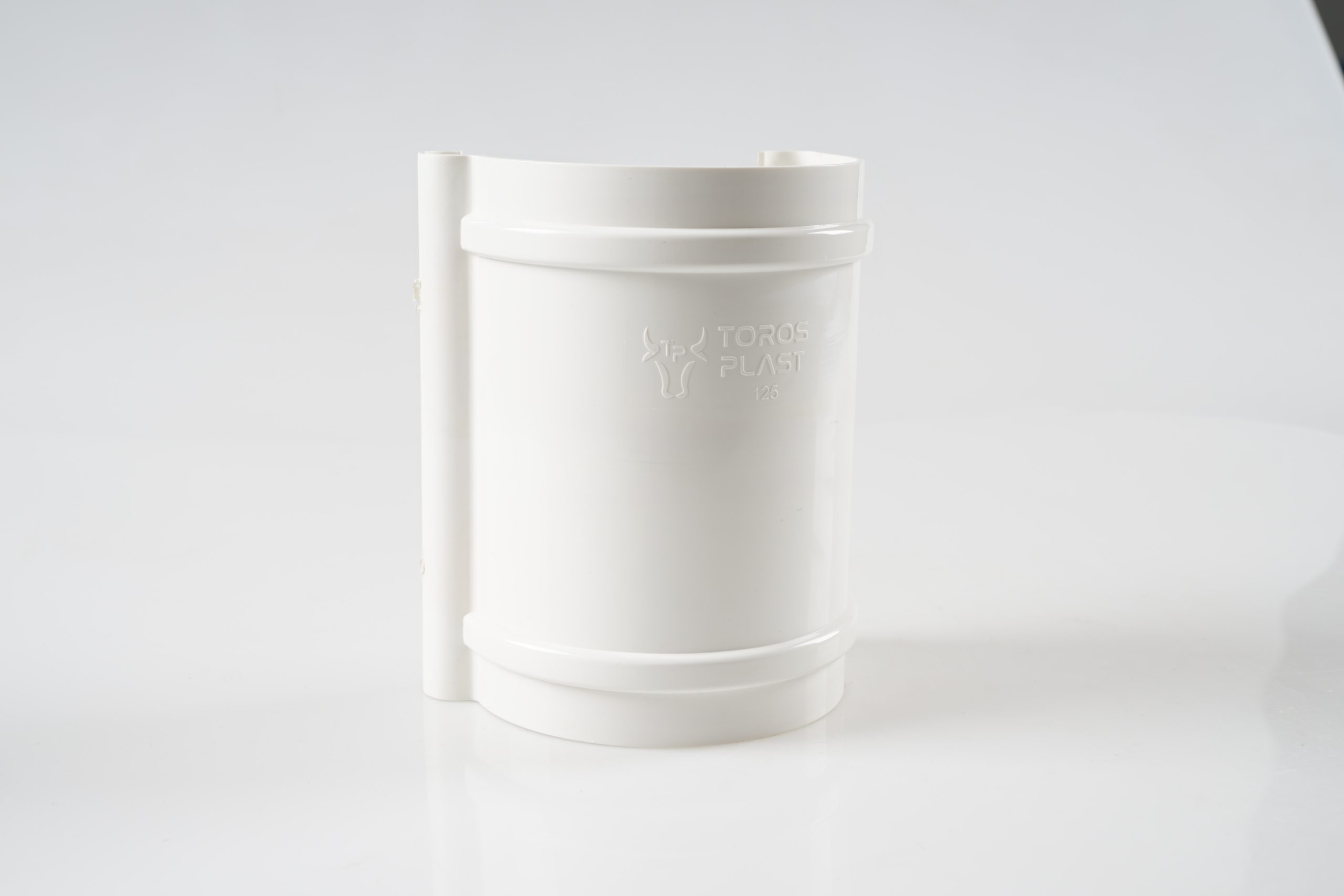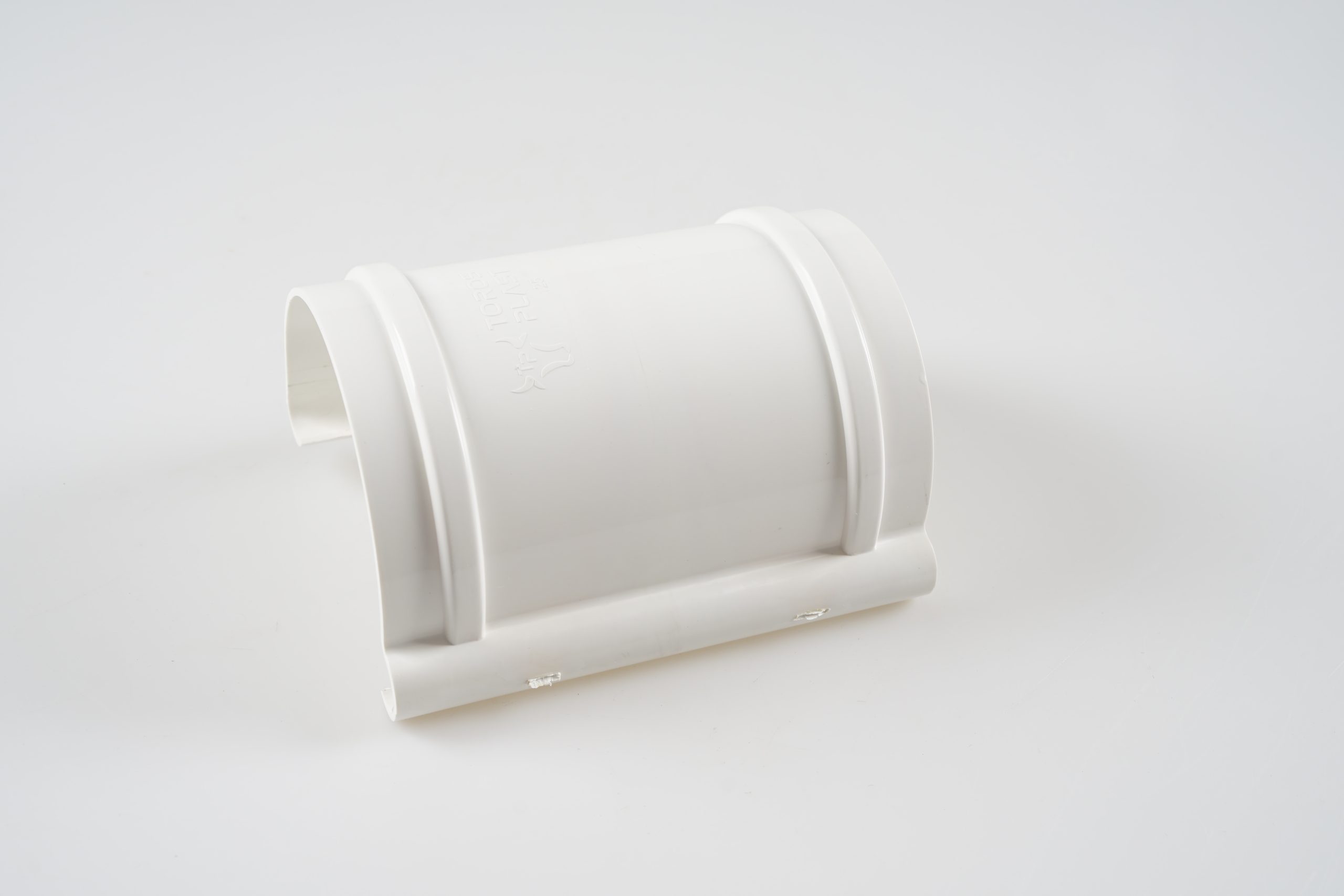
Rain Gutter Mould
The rain gutter is a long, open-profile drainage component installed along roof eaves to collect and redirect rainwater away from building foundations. Unlike closed pipe fittings, gutters feature thin walls, large length-to-width ratios, and an open semicircular or rectangular channel that must remain dimensionally stable along its entire length. Common materials include PVC-U, known for its rigidity, weather resistance, and cost efficiency in exterior applications.
The moulding challenges are distinct: warpage along the long open profile, deformation at the mounting flange, and PVC’s thermal sensitivity during processing. At SINOMOULD, we apply large-part machining expertise, zoned cooling design, and PVC-specific process controls to produce rain gutter moulds with consistent cross-sections and dependable production stability. The following outlines key specifications, quality priorities, and manufacturing essentials.
Rain Gutter Mould Parameters
| Mould Cavity Steel | DIN 1.2316, S136 | Recommended Injection Machine | 350T – 800T |
|---|---|---|---|
| Mould Core Steel | DIN 1.2316, S136 | Plastic Material | PVC-U (rigid / lead-free), PP |
| Mould Base Standard / Steel | LKM Standard / S50C, S45C | Ejection System | Ejector plate + evenly distributed pins + optional air assist |
| Sliders, Inserts, Lifters Steel | High-strength tool steel, nitrided | Injection Process | Precision injection, mould temperature control ±2°C |
| Number of Cavities | 1×1, 1×2 | Injection Cycle Time | 40–80 seconds |
| Hot Runner System | Hot runner + localised cold runner (PVC-specific) | Mould Manufacturing Lead Time | 45–65 days |
Rain Gutter Mould Quality Control Points
- Cross-Section Profile Accuracy & Straightness
The drainage capacity of a gutter depends on accurate cross-section geometry and straightness along its length. Cavity-to-core mating tolerances are held within ±0.1mm, and product straightness is controlled within 1.5mm/m, ensuring smooth, step-free flow when sections are joined and eliminating water-trapping dead zones.
- Warpage Control for Long Open Profiles
With one open side and relatively thin walls, gutters are highly susceptible to longitudinal bowing or opening deformation from uneven cooling shrinkage. We use zoned independent water circuits along the length combined with closed-loop mould temperature control, equalising cooling rates across the entire profile and suppressing warpage at its source.
- Mounting Flange Edge Flatness
The flange is critical for fixing the gutter to the eaves. Edges must be free of flash, short shots, or wavy deformation. Flange area flatness is controlled within 0.3mm, ensuring tight contact with the roof edge after installation and reliable sealant bonding.
- PVC Thermal Stability & Corrosion Control
PVC is temperature-sensitive and degrades at elevated temperatures, releasing hydrogen chloride that corrodes mould cavities. The mould uses a localised cold runner at the hot runner tip to prevent prolonged material dwell. All steels contacting the melt are corrosion-resistant grades (1.2316 or S136), ensuring no rust or material build-up over long production runs.
Rain Gutter Mould Manufacturing Highlights
- Precision Machining of Elongated Cavity & Core
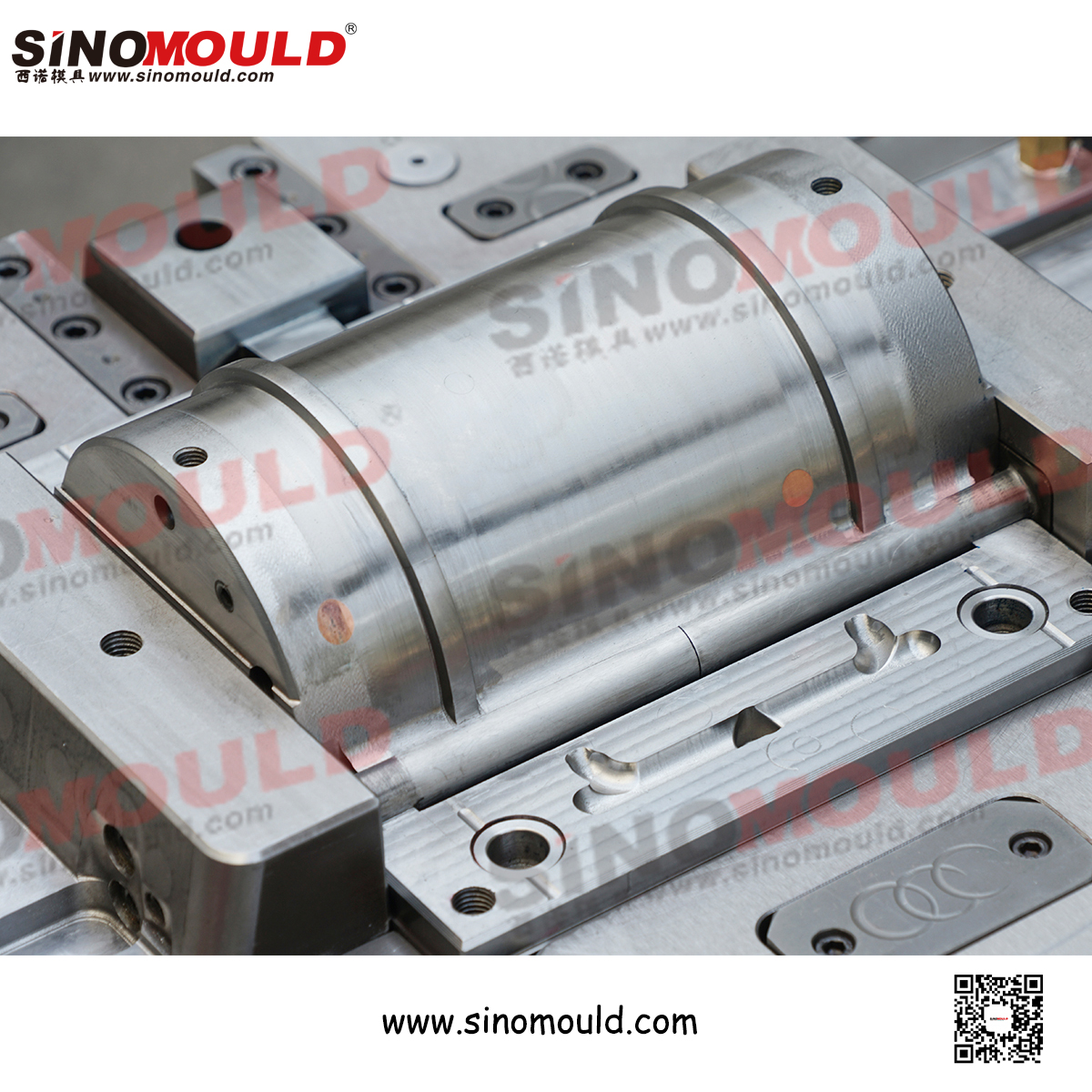
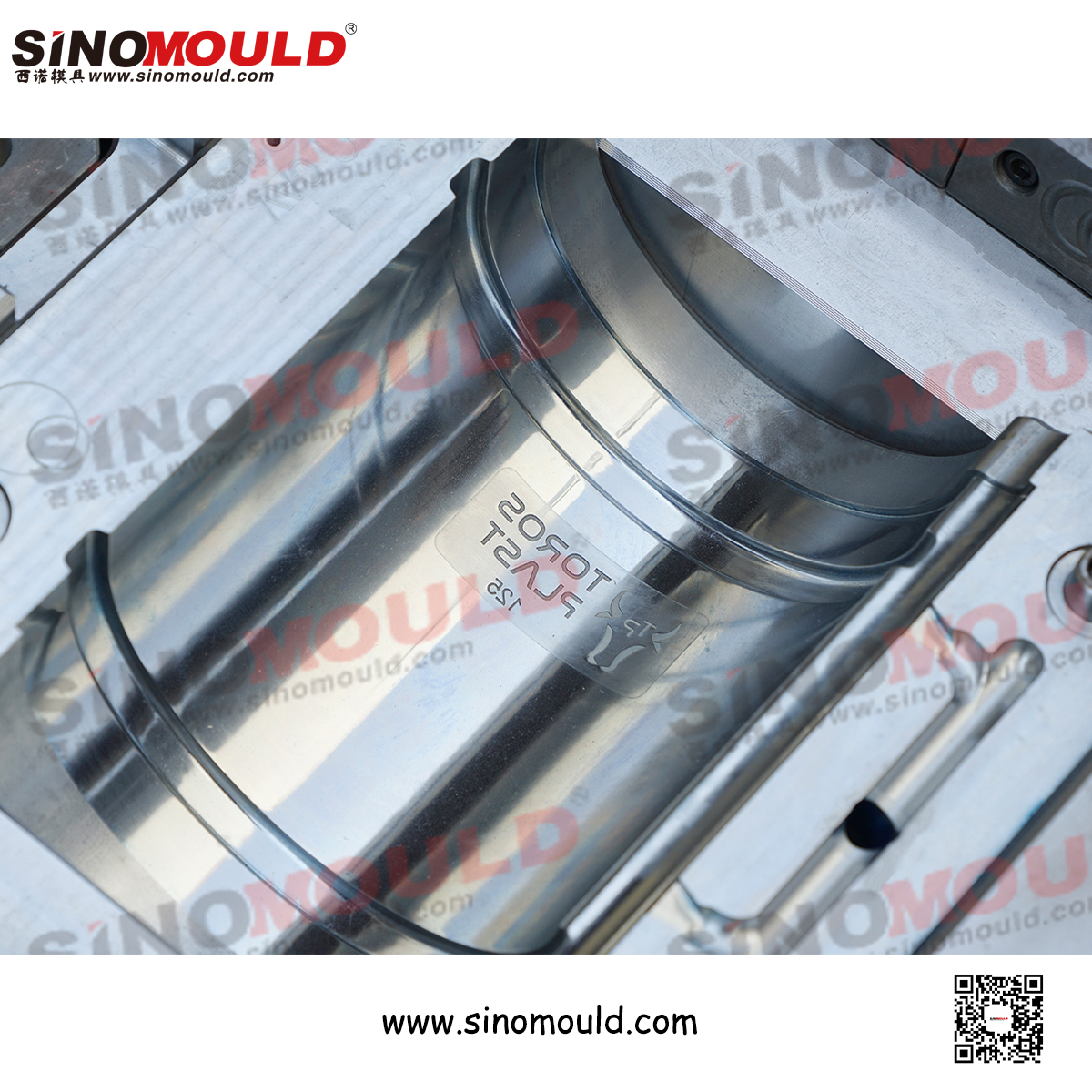
Both cavity and core for rain gutters are elongated components where machining distortion control is critical. We use large gantry CNC precision milling, combined with wire EDM for parting surfaces and critical mating areas, achieving arc profile tolerances ≤ ±0.05mm and surface roughness Ra ≤ 0.4μm, ensuring consistent cross-sections along the entire length.
- Zoned Independent Cooling Circuit Layout
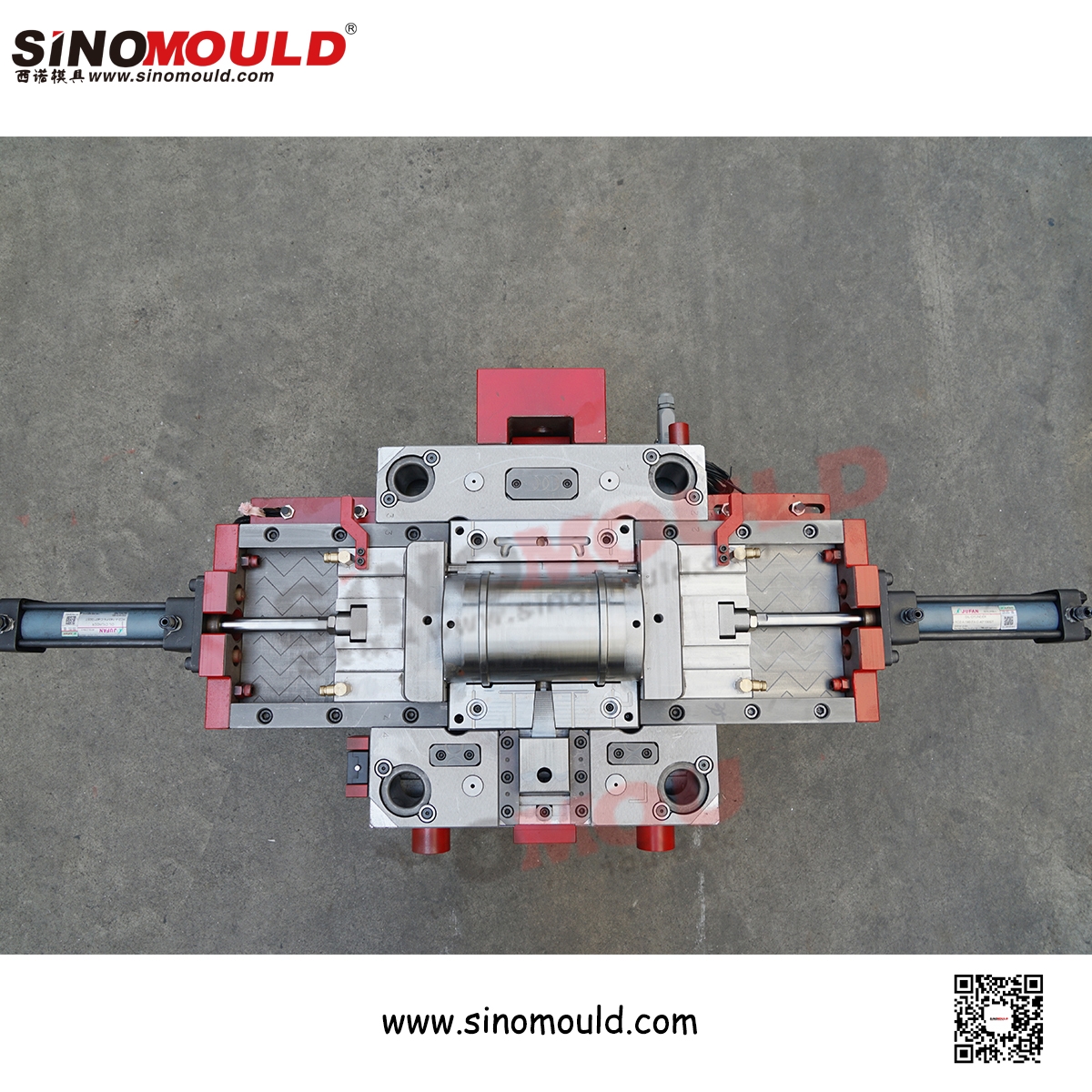
Multiple parallel water circuits are arranged along the part length, each independently temperature-controlled. To address heat distribution differences between the gutter base and side walls, beryllium copper inserts are embedded in heat-concentrated zones to accelerate dissipation, equalising temperature along the profile, shortening the cycle, and reducing internal stress.
- Multi-Point Sequential Gating & Filling Balance
The filling path in rain gutters is long, and a single gate cannot ensure complete filling at the far end. We use multi-point valve gate hot runners with gates evenly distributed along the length, combined with sequential control to keep the melt front advancing steadily, avoiding short shots and weld lines and ensuring consistent quality at both ends of the long part.
- Ejection & Demoulding Mechanism Design
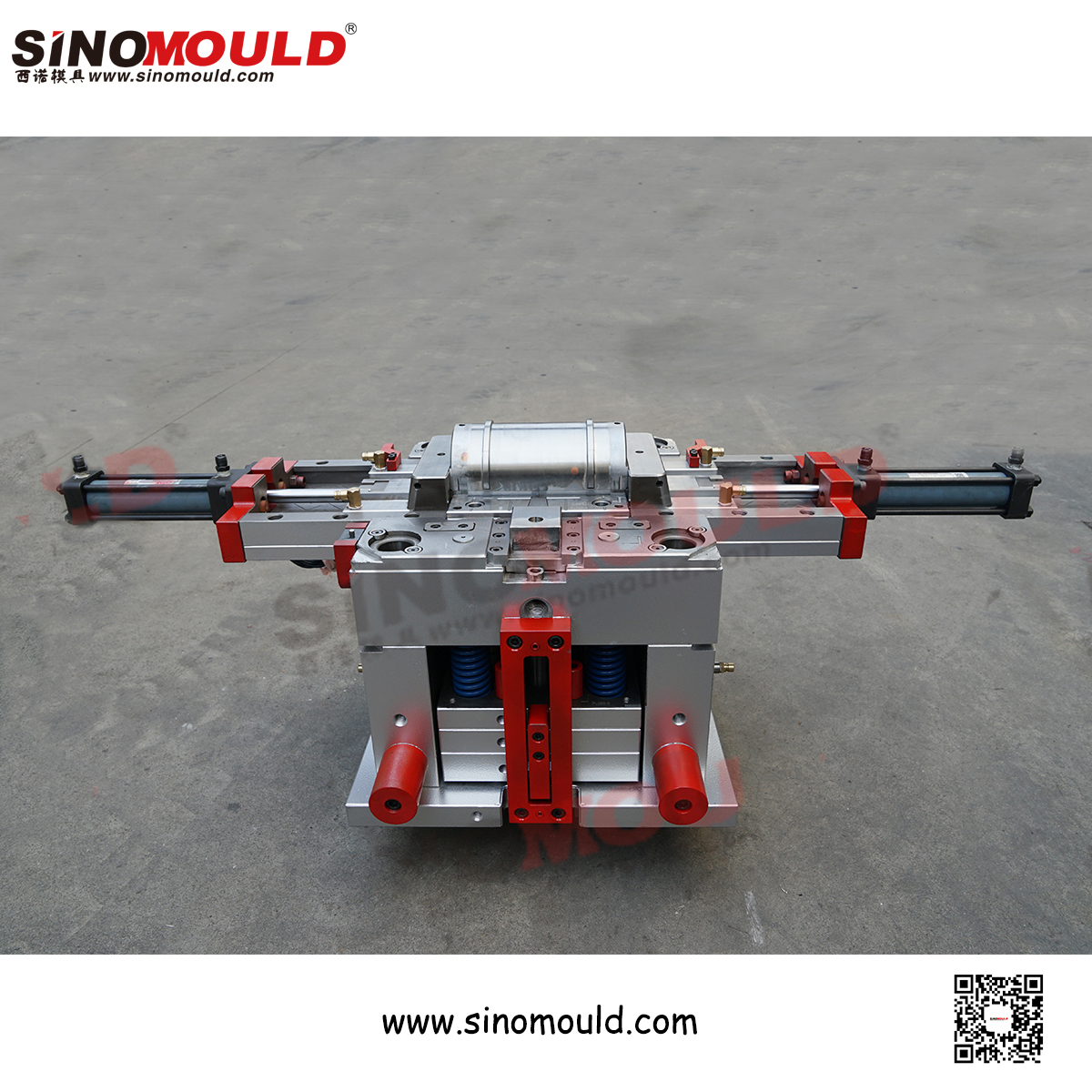
Long, thin-walled parts are prone to bending or cracking during ejection. We use an ejector plate combined with ejector pins evenly distributed along the flange and gutter base, with optional air assist, ensuring balanced force and smooth, deformation-free demoulding.
- Trial Moulding & Validation
Every mould is trial-run continuously in our in-house injection workshop under simulated production conditions. Cross-section dimensions, straightness, flange flatness, and demoulding reliability are inspected. Only after passing these checks is the mould shipped, ensuring stable production from the customer’s first run.