博客
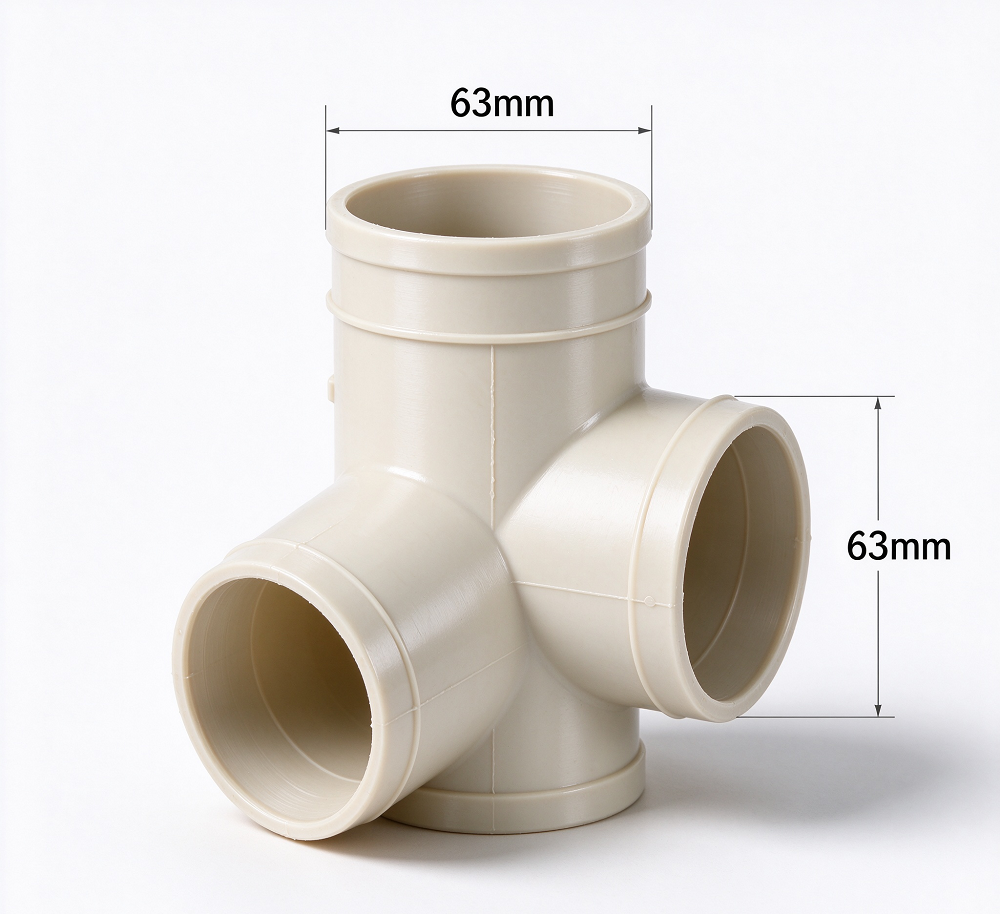
63mm Tee Pipe Fitting Mould
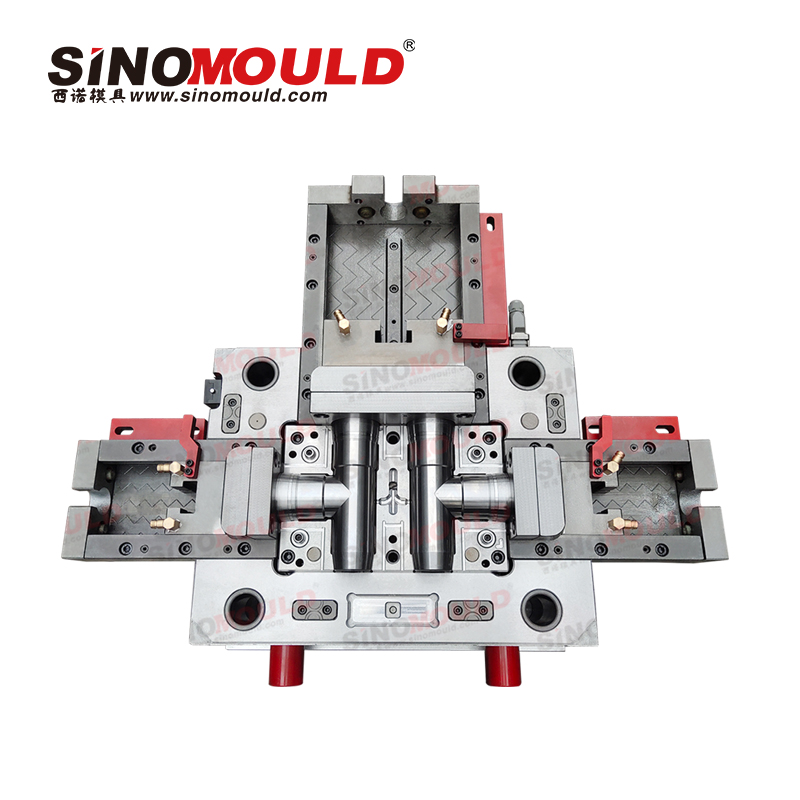
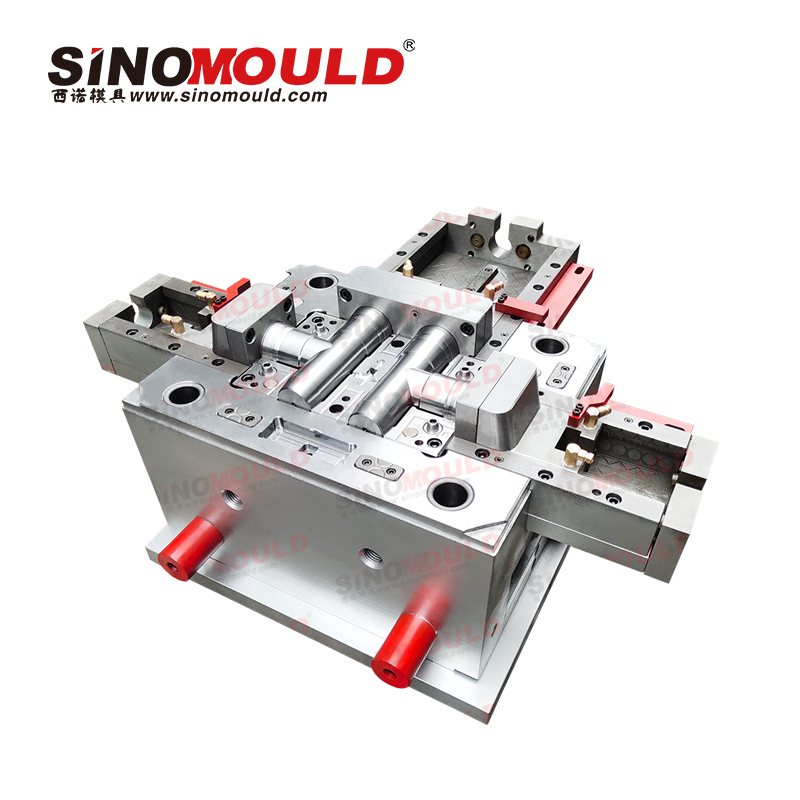
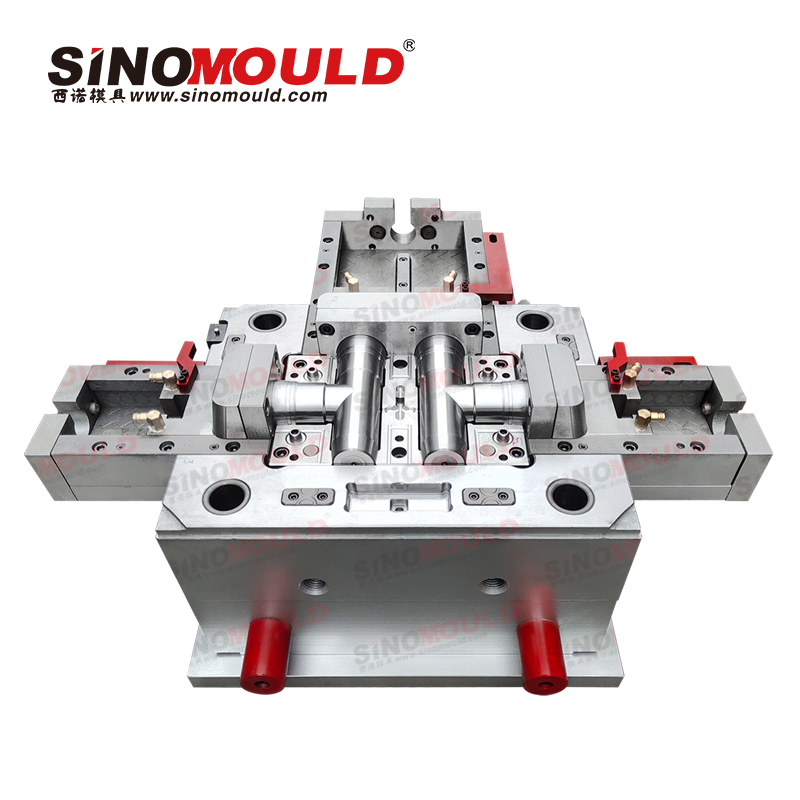
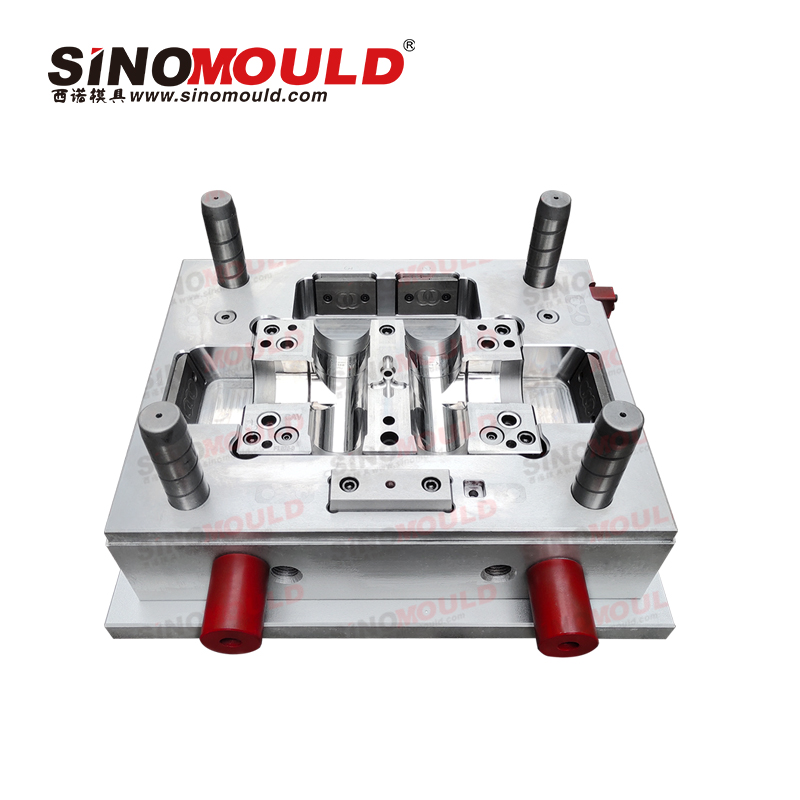
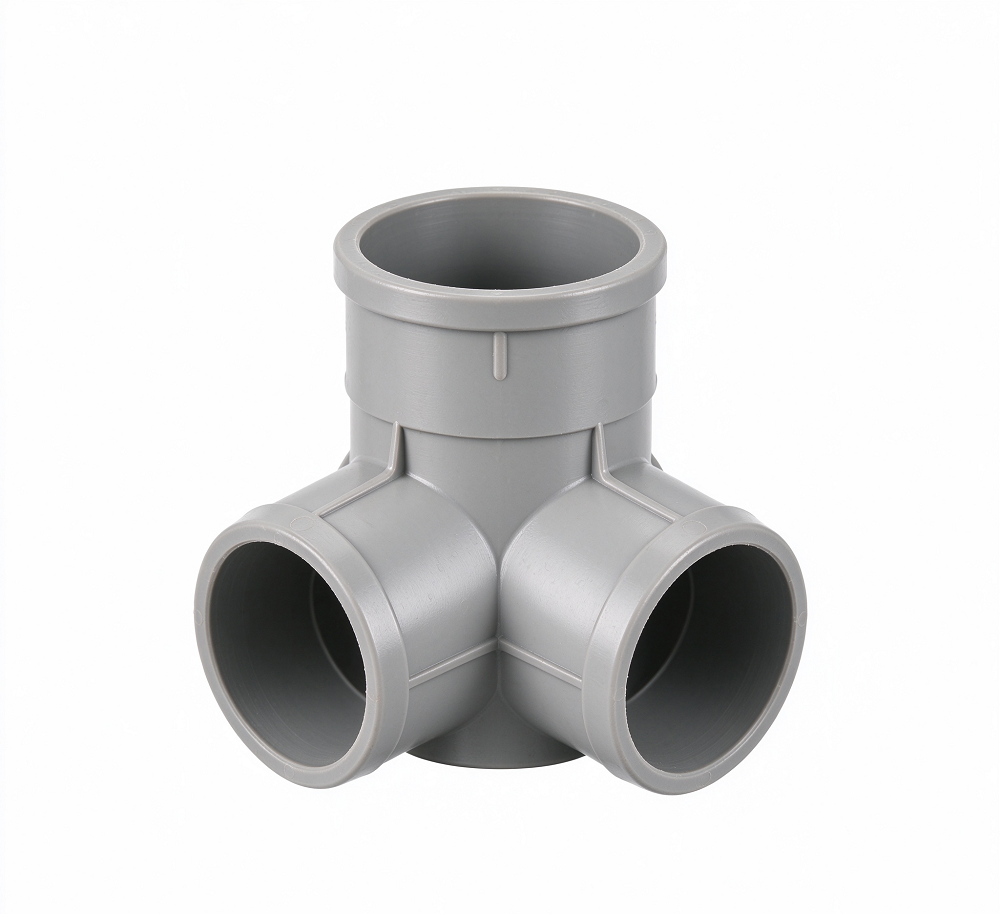
The 63mm tee pipe fitting is a core component in water supply, drainage, and irrigation networks, used to branch flow at 90° from a main pipeline. Compared with elbows, tees present a more demanding moulding challenge: three socket ends must be formed simultaneously, two opposing cores must retract along the same axis without interfering with the branch core, and all three sealing surfaces require identical dimensional accuracy for leak-free assembly.
At SINOMOULD, we specialise in multi-direction core-pulling systems for tee fittings. Our moulds are engineered to keep the three sockets dimensionally consistent, minimise internal parting lines, and support stable multi-cavity layouts for high-volume production. The following outlines the key specifications, quality priorities, and manufacturing essentials.
63mm Tee Pipe Fitting Mould Parameters
| Mould Cavity Steel | DIN 1.2316, S136, 4Cr13 | Recommended Injection Machine | 250T – 650T |
|---|---|---|---|
| Mould Core Steel | DIN 1.2316, S136, P20 | Plastic Material | PVC, PP, PE, ABS |
| Mould Base Standard / Steel | LKM standard / S50C, S45C | Ejection System | Hydraulic core‑pulling + ejector pins + stripper plate |
| Sliders, Inserts, Lifters Steel | High‑strength tool steel, nitrided | Injection Process | Precision injection molding, cold/hot runner optional |
| Number of Cavities | 1-8 cavities | Injection Cycle Time | 20 – 50 seconds |
| Hot Runner System | Hot runner + local cold runner (PVC‑specific) | Mould Manufacturing Lead Time | 40–65 days |
Supplementary Notes:
- Core‑pulling configuration: Three‑way independent core‑pulling – the two straight‑through ends are pulled coaxially, the branch end is pulled vertically, with action sequencing precisely controlled by the hydraulic system.
- Cavity recommendation: 63mm is a medium diameter; 2–4 cavities are typically used, balancing output and mould stability.
- Mould life: 500,000 – 1,000,000 cycles.
63mm Tee Pipe Fitting Mould Quality Control Points
- Coaxiality and Perpendicularity of Tee Sockets
The sockets at both straight‑through ends must be strictly coaxial, and the perpendicularity between the branch end and the straight‑through axis must be controlled within 0.05mm. Any angular deviation will cause stress concentration or sealing failure during pipe assembly. We ensure these three positional accuracy requirements through single‑setup machining and full CMM inspection.
- Inner Diameter Consistency of the Three Ends
The inner diameter and taper of the three sockets must be consistent to ensure that pipes of the same specification can be interchangeably inserted. Core machining uses a unified datum, with inner diameter deviation at each end controlled within ±0.02mm.
- Inner Wall Parting Line and Flow Mark Control
The intersection area of the tee inner wall is prone to parting lines and flow marks, affecting fluid smoothness. By optimizing the parting line position and core‑pulling sequence, the inner wall parting line flash height is controlled within 0.03mm, with smooth transition at the intersection area – reducing turbulence and scale buildup.
- PVC Material Thermal Stability Adaptation
PVC is prone to decomposition and carbonization at high temperatures. The mould adopts a local cold runner design at the end of the hot runner, maintaining low temperature near the cavity – enabling quick production resumption after machine stops without lengthy purging, reducing scrap rates.
- Core‑Pulling Action Sequence Reliability
If the three‑way core‑pulling sequence is incorrect, mutual interference and product damage can occur. We use dual control via the hydraulic system and limit switches to ensure that both straight‑through ends retract first, followed by the branch end – ensuring accurate action and no jamming during long‑term operation.
63mm Tee Pipe Fitting Mould Manufacturing Highlights
- Three‑Way Core‑Pulling Mechanism Design
The core of the 63mm tee is the core‑pulling system. The two straight‑through ends use a coaxial opposing core‑pulling structure, sharing one set of guides and drives; the branch end uses vertical core‑pulling, with timing offset from the straight‑through core‑pulling. Rack‑and‑pinion or hydraulic motor drive options are available – offering precise stroke and smooth action, preventing inner wall damage.
- Runner Balance and Multi‑Cavity Layout
The filling path of a tee is asymmetric, making it prone to under‑filling at the branch end or over‑packing at the straight‑through end. We optimize gate location through mould flow analysis (typically near the intersection of the branch and straight‑through ends), and use hot runner valve pins to adjust the filling volume of each cavity – achieving part weight deviation between cavities ≤0.3%.
- PVC‑Specific Runner and Temperature Control
For PVC material, a local cold runner is provided at the end of the hot runner – preventing high‑temperature material decomposition while facilitating purging and colour changes. The mould water circuits are independently zoned, with mould temperature fluctuation within ±2°C, ensuring stable product dimensions.
- Precision Machining and Assembly
Cavities, cores, and core‑pulling slides are all machined by CNC fine milling and wire EDM, with critical mating surface tolerances ≤ ±0.01mm. During assembly, sliding clearances are inspected piece by piece to ensure the three‑way core‑pulling mechanisms do not interfere with each other.
- Mould Trial Verification
Each mould is trial‑run on an injection machine before delivery, simulating mass production conditions to verify the dimensions of the three ends, inner wall quality, and core‑pulling action stability. Only after passing inspection is the mould delivered – ensuring the customer can achieve stable production immediately upon start‑up.