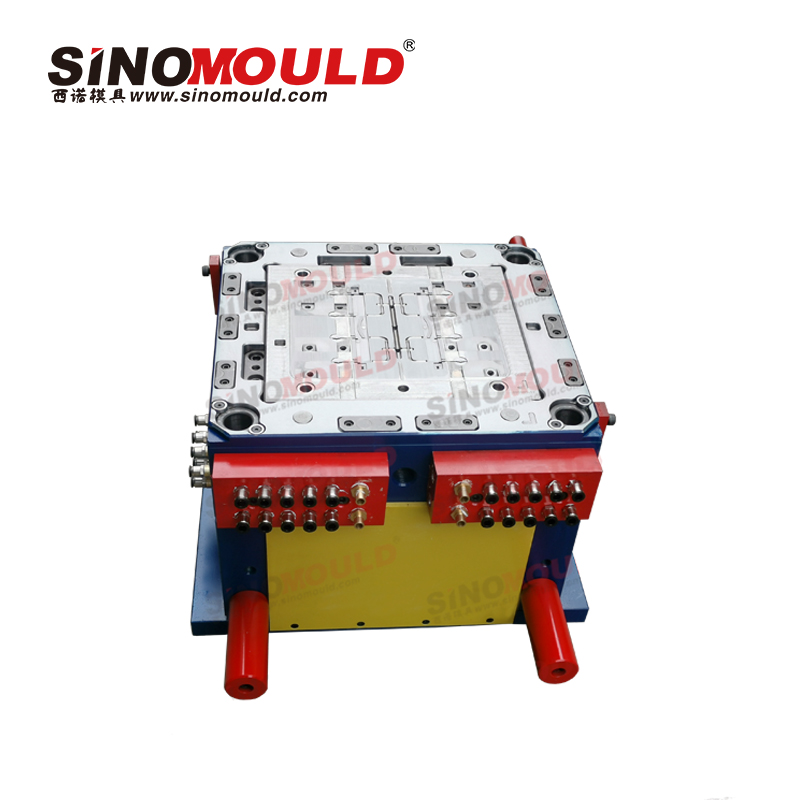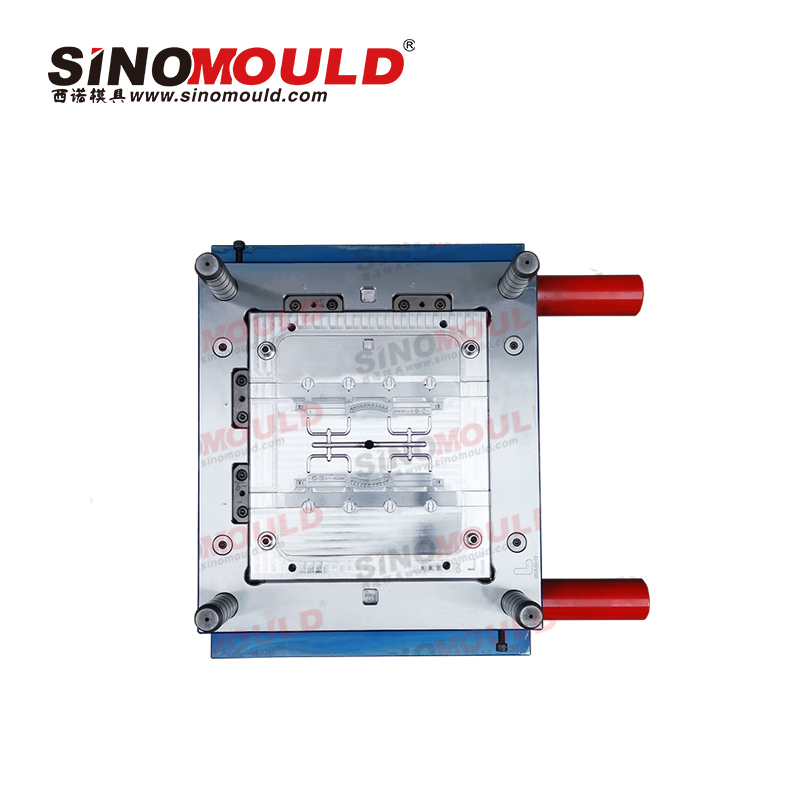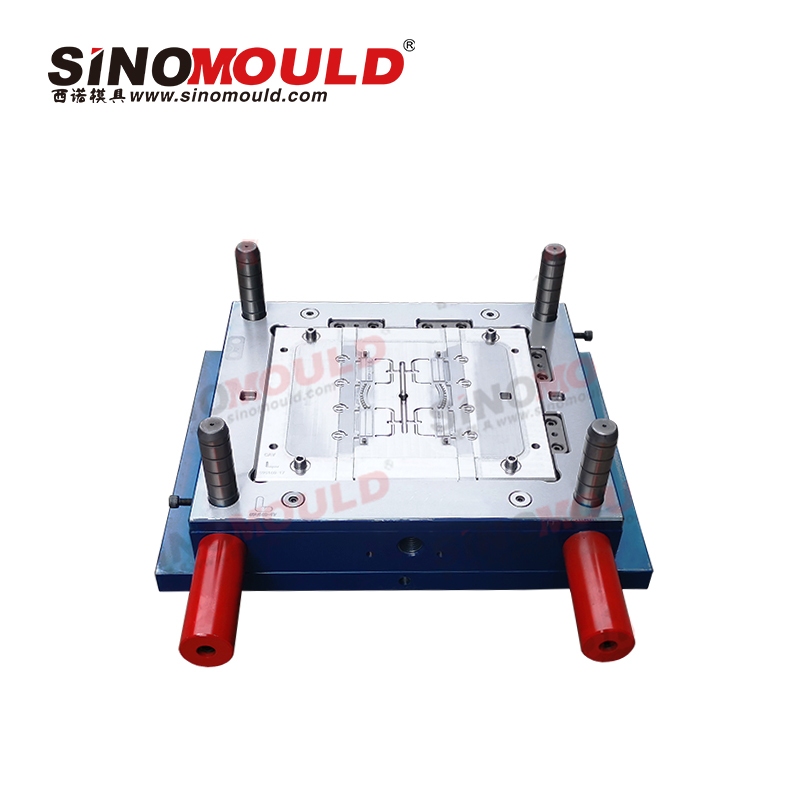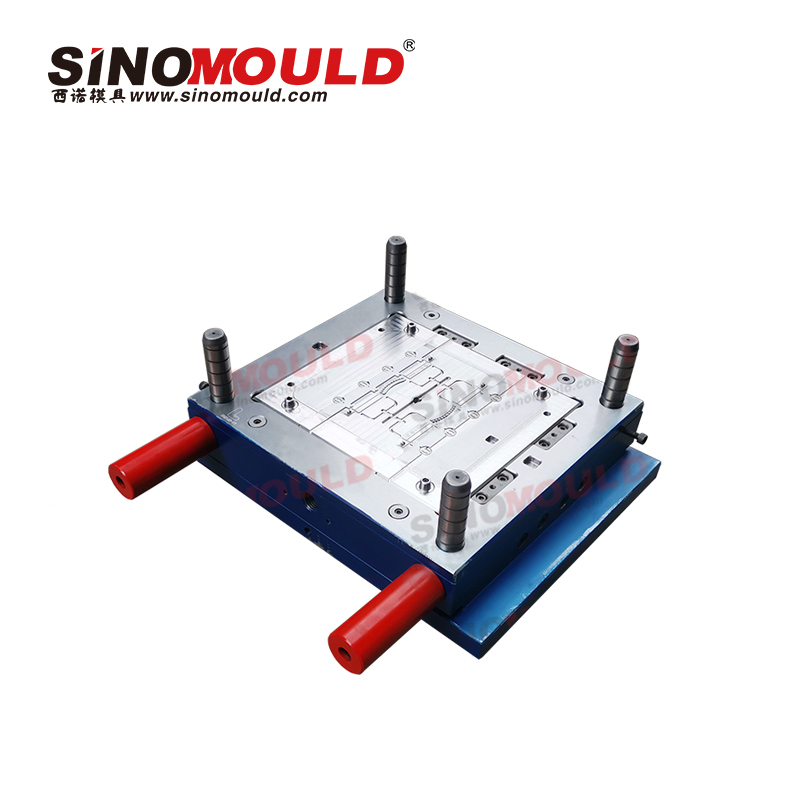
Air Conditioner Small Lower Flap Mould
The air conditioner small lower flap (also referred to as the lower swing vane or small louver) is a precision component typically positioned at the lower air outlet of indoor AC units. Responsible for directing airflow downward and enabling fine-tuned vertical air distribution, this small but critical part directly influences user comfort, draft sensation, and overall energy efficiencyAir Conditioner Flap Mould – sinomould.com.
Unlike larger swing plates, small lower flaps are characterized by their compact dimensions, thin-wall construction, high cavity count requirements, and extremely tight tolerances on vane angle and rotational shaft concentricity. Even minor deviations in vane geometry can cause airflow imbalance, increased noise, or mechanical binding during oscillation.
With over 20 years of expertise in precision home appliance mould manufacturing, SINOMOULD specializes in the design and production of high-performance small lower flap moulds. Leveraging advanced five-axis CNC machining, precision EDM, comprehensive mold-flow analysis, and rigorous quality control systems, we deliver turnkey solutions from product optimization to mass production. Below is a comprehensive overview of our small lower flap mould specifications, quality control protocols, and manufacturing highlights.
Air Conditioner Small Lower Flap Mould Parameters
| Mould Cavity Steel | S136, NAK80, 718H, P20 | Recommended Injection Machine | 160T – 350T |
|---|---|---|---|
| Mould Core Steel | S136, NAK80, 718H, P20 | Plastic Material | ABS/PP/ASA |
| Mould Base Standard / Steel | LKM Standard / P20, 50C | Ejection System | Ejector pins + stripper plate, optional flexible demoulding sheets |
| Sliders, Inserts, Lifters Steel | High-strength tool steel, nitrided / surface hardened | Injection Process | Precision injection, mould temperature control ±2°C |
| Number of Cavities | 1×4, 1×8, 1×16 | Injection Cycle Time | 20–35 seconds (depending on part size and material) |
| Hot Runner System | Valve gate hot runner / needle valve sequential control | Mould Manufacturing Lead Time | 35–55 days |
Air Conditioner Small Lower Flap Mould Quality Control Points
- Vane Angle Accuracy & Rotational Precision
Small lower flap angle accuracy directly impacts airflow distribution uniformity and noise control. Industry data shows that vane angle deviation exceeding ±1° reduces air distribution uniformity by 15% and increases noise by 3–5 decibels. Our moulds employ precision indexing mechanisms with servo motor-driven rotational positioning (resolution 0.01°) and rigid locking to ensure angle deviation ≤ ±0.15°, with rotational shaft hole concentricity maintained at ≤ 0.015mm. All critical mating surfaces are machined to ±0.02mm accuracy.
- Dimensional Stability & Warpage Control
Small lower flaps are thin, elongated components susceptible to warpage from uneven cooling and internal stress. All critical dimensions are controlled to ±0.02mm precision. Advanced mould temperature control (accuracy ±2°C) and optimized conformal cooling channel design ensure uniform cooling rates across the entire part, minimizing internal stress and preventing warpage.
- Surface Finish & Flash Control
Due to the material characteristics of PP/ABS, poor mould fitting can easily produce burrs or flash on the blade edges. Any burrs will cause abnormal noise during swinging operation or binding in the assembled unit. Our moulds feature high-precision mating surfaces with tight slide and lifter coordination to prevent interference and ensure burr-free, smooth-surfaced products.
- Material Selection & Process Stability
Material selection directly affects flap performance. For outdoor-exposed flaps, ASA offers superior weatherability (heat deflection temperature 90–100°C); for high-strength requirements, PP+20%GF provides excellent rigidity (bending modulus 4000–5000 MPa); for standard indoor applications, ABS is the cost-effective choice All materials are strictly dried and MFI-controlled to ensure consistent melt flow. The dynamic balance yield rate must be consistently maintained above 99%.
- Comprehensive Testing & Validation
Full-scale trial moulding is conducted in our in-house injection workshop under actual production conditions. Each batch undergoes rigorous angle measurement, shaft hole concentricity inspection, and functional assembly testing to ensure 99%+ first-pass yield rate.
Air Conditioner Small Lower Flap Mould Manufacturing Highlights
- High-Precision Five-Axis Cavity Machining
Small lower flap blades feature complex curved surfaces requiring extremely high machining precision. We employ five-axis simultaneous CNC milling for blade profile machining, using 0.5mm ball-end cutters (cutting speed 200m/min, feed rate 0.02mm/rev) to achieve surface roughness Ra ≤ 0.15μm and profile accuracy within ±0.02mm. For critical vane edge regions with sharp angles (down to 15°), swing-angle machining techniques are applied to avoid tool interference. Critical mating surfaces are finished with wire EDM to ensure uniform blade thickness and spacing.
- Precision Gating System Design
To ensure balanced filling across all cavities and consistent blade density—especially critical for high-cavity (8–16 cavity) small flap moulds—we utilize valve gate hot runner systems with radially symmetric runner layouts. Multi-point sequential control allows dynamic adjustment of injection volume to fine-tune dimensional consistency. Temperature differential across runners is controlled to ≤1°C, with pressure loss differential ≤5%, ensuring cavity density uniformity above 98%.
- Optimized Conformal Cooling System
Uniform cooling is essential to prevent warpage in thin, small lower flaps. We implement conformal cooling channels using 3D-printed spiral waterways positioned 3–5mm from the blade surface Dynamic mould temperature control with ±0.5°C accuracy ensures cooling rate differential <10% across all regions, reducing residual stress by up to 40%.
- State-of-the-Art Manufacturing Equipment
All critical components are machined on high-speed five-axis CNC machining centers, precision EDM, and wire EDM equipment with machining accuracy up to ±0.01mm. Comprehensive dimensional inspection is performed using CMM (coordinate measuring machines) to verify every critical dimension before mould assembly.
- 5. Rigorous Quality Management System
We implement a four-stage quality control system: incoming material inspection (IQC), in-process quality control (IPQC), finished product inspection (FQC), and outgoing quality control (OQC). Every mould undergoes full-scale trial moulding and dimensional validation before delivery, ensuring trouble-free production startup for our customers.