Plastic Toy House Mould
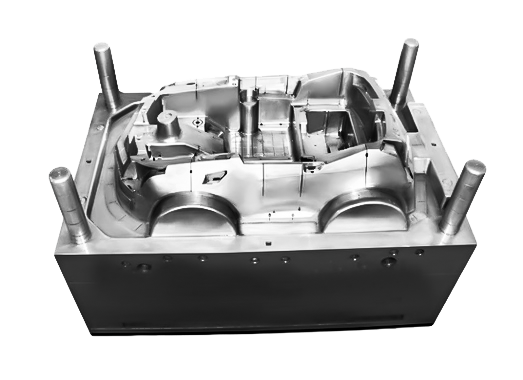
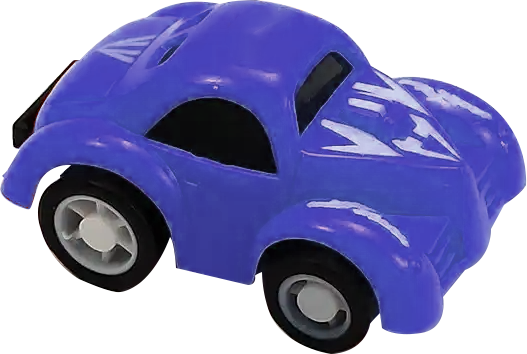
SINOMOULD has over 20 years of experience in the plastic products mould industry, specializing in the development and manufacturing of Plastic Toy House Mould and assembled Plastic Toy House Mould. We provide stable, durable, and production-ready mould solutions for plastic products manufacturers worldwide, adapting to the production needs of plastic house products for various scenarios such as children’s toy houses, outdoor simple houses, and storage simple plastic houses.
For plastic house products with different specifications, assembled structures and application scenarios, SINOMOULD offers not only standalone moulds for single components such as house body panels, doors, windows and splicing buckles, but also combined mould solutions for integrated moulding of multiple components according to the customer’s production strategy. This approach ensures precise fit of all assembled components while improving production efficiency and reducing overall investment.
In addition, SINOMOULD supplies fully automated plastic house production line solutions. By integrating robotic take-out systems to realize immediate part removal and initial positioning after injection moulding, products are handled without manual contact, significantly enhancing moulding consistency and production efficiency in the production of plastic house components—especially suitable for applications with high requirements for production capacity, product standardization and assembly adaptability.
Standard Plastic Toy House Mould Details
Plastic House Below are examples of the most common parameters for moulds.
| Plastic Toy House Mould Cavity Steel | H13/2344 | Recommended Injection Machine | DKM Large Servo Injection Moulding Machine |
|---|---|---|---|
| Plastic Toy House Mould Core Steel | H13/2344 | Plastic Material | PP/HDPE/ABS/PC |
| Mould Base Standard / Steel | 45# Steel/SS400 Thick Plate Customization | Ejection System | Ejector pin + stripper plate + hydraulic core pulling composite ejection |
| Sliders, Inserts, Lifters Steel | High-strength tool steel with surface nitriding + quenching treatment | Injection Process | Low pressure and low speed filling, pressure holding and shrinkage compensation, precise temperature control |
| Number of Cavities | 1-4 cavities | Injection Cycle Time | 30-60 seconds |
| Hot Runner System | Open/Valve gate Hot Runner System (Optional on Demand) | Mould Manufacturing Lead Time | 70-90 days |
Key Quality Points of Plastic Toy House Mould
- Dimensional Accuracy and Assembly Adaptability
Precisely control the length and width dimensions of each component of the plastic house, the fit tolerance of splicing buckles and slots, and the positioning accuracy of hole positions to ensure that the finished components are assembled without gaps, clamped firmly, without loosening or falling off, and ensure the structural stability of the overall house body.
- Surface Quality and Structural Strength
The mould cavity adopts high-precision polishing and sandblasting processes (optional on demand) to reduce appearance defects such as weld lines, flow marks and material shortage; optimize the structural design of the mould cavity to ensure uniform wall thickness of plastic house components, improve the impact resistance and deformation resistance of finished products, and adapt to indoor and outdoor use needs.
- Consistency and Matching of Multiple Components
Optimized runner balance and gate layout guarantee consistent dimensions, weight and appearance of all plastic house components produced in the same batch and multi-cavity, ensure precise matching between different components, and support large-scale continuous production.
- Long-Term Stable Operation and Wear Resistance
Critical stress-bearing parts of the mould, core-pulling sliders and moulding parts of splicing structures use wear-resistant and impact-resistant steel with multiple surface hardening treatments, guaranteeing sustained, stable performance of the Plastic Toy House Mould during mass, high-frequency production cycles, and reducing mould maintenance frequency and repair costs.
Machining Highlights for Plastic Toy House Mould
Plastic Toy House Mould are large-size, multi-structure, complex assembled plastic moulds, including a variety of structures such as large-area panels, special-shaped doors and windows, and precision splicing buckles. Some products also have arc, hollow and embossed texture designs. Their machining accuracy directly affects the assembly performance, structural strength and production stability of the finished products. SINO MOULD focuses on the following key machining aspects:
- Geometric Tolerance Control of Large Cavities
Use large high-precision CNC machining centers for integral processing, precisely control the flatness, perpendicularity and coaxiality of the mould cavities for plastic house panels and house body frames to ensure that the finished components are free from skew and deformation, and ensure the overall squareness of the assembled house body.
- Machining Precision of Precision Splicing Structures
For precision structures such as splicing buckles, slots and positioning holes, high-precision EDM and WEDM-LS are adopted to ensure that the dimensional tolerance of each structure is controlled within 0.02mm, and the moulded components are spliced accurately, clamped smoothly and firmly.
- Machining Consistency of Special-Shaped and Textured Parts
For plastic house components with arcs, hollows and embossed textures, customized processing tooling and cutters are used to ensure consistent textures and smooth arcs of components formed in the same cavity and multi-cavity, improving product appearance and use experience.
- Assembly Precision of Large Mould Components
The mould base and cavity components of Plastic Toy House Mould are large in size and heavy in weight. High-precision assembly platforms and positioning tooling are used for assembly to ensure the tight fit and smooth operation of the mould parting surface, sliders and core-pulling mechanisms, reduce flash and material overflow problems, and lower the probability of failures in the production process.
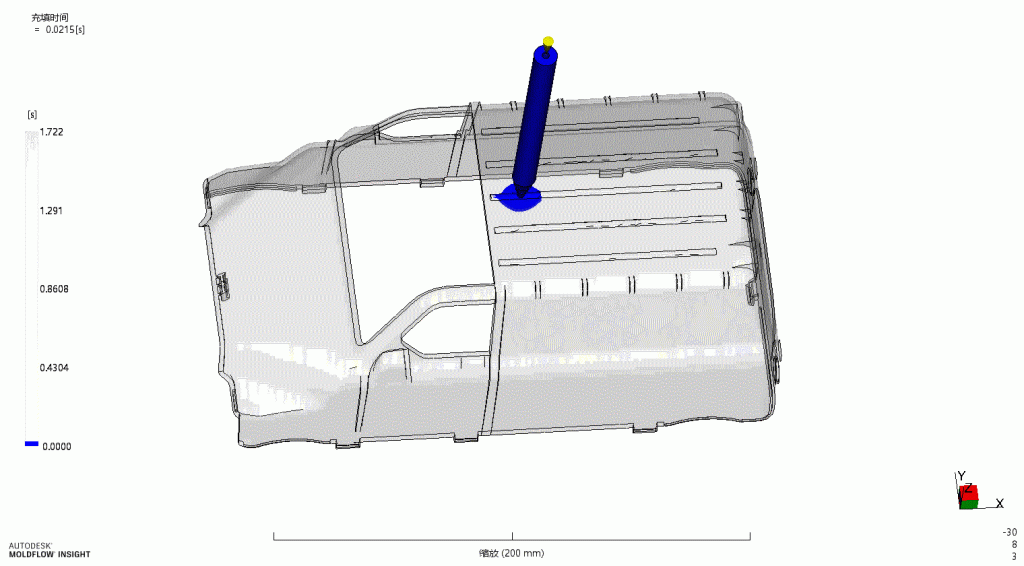
Mould Flow Analysis for Plastic Toy Mould
Using Mouldflow analysis, the filling, pressure-holding and cooling processes of the Plastic Toy Mould are simulated. Aiming at the structural characteristics of the Plastic Toy Mould such as large size, large-area panels and the combination of thick and thin walls, the gate position, runner structure and cooling water circuit layout are optimized, and the pressure-holding time and pressure parameters are reasonably planned to ensure uniform melt filling, reduce defects such as air bubbles, shrink marks, warpage and deformation, and improve the structural integrity, appearance quality and assembly adaptability of the finished product.