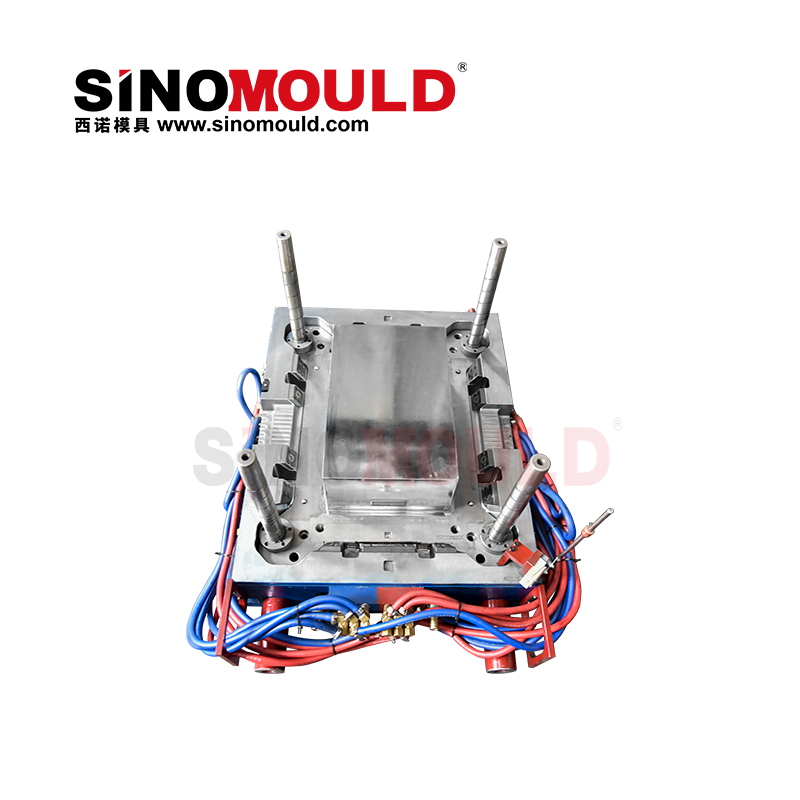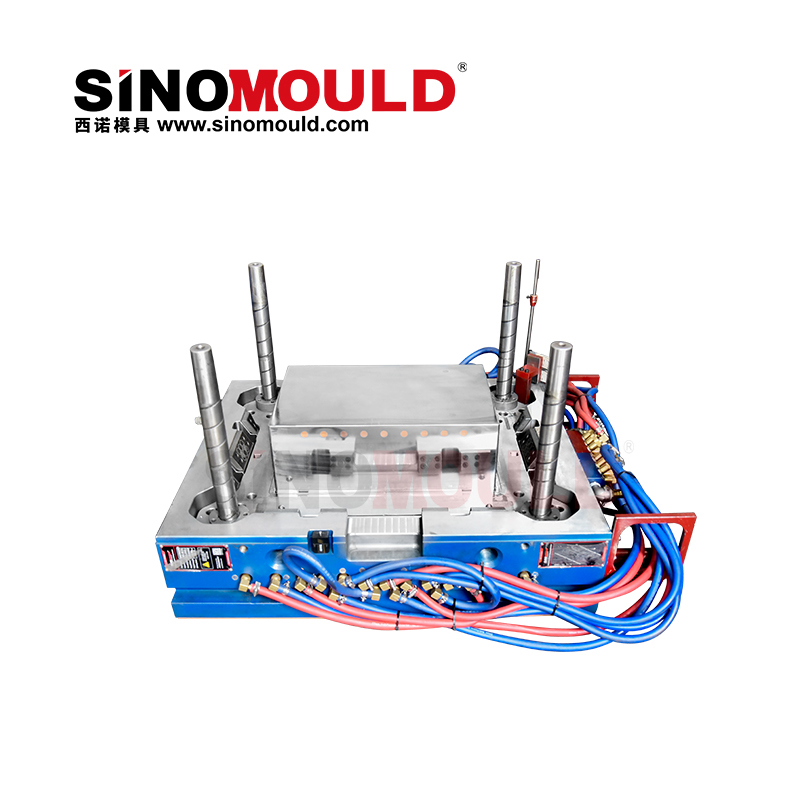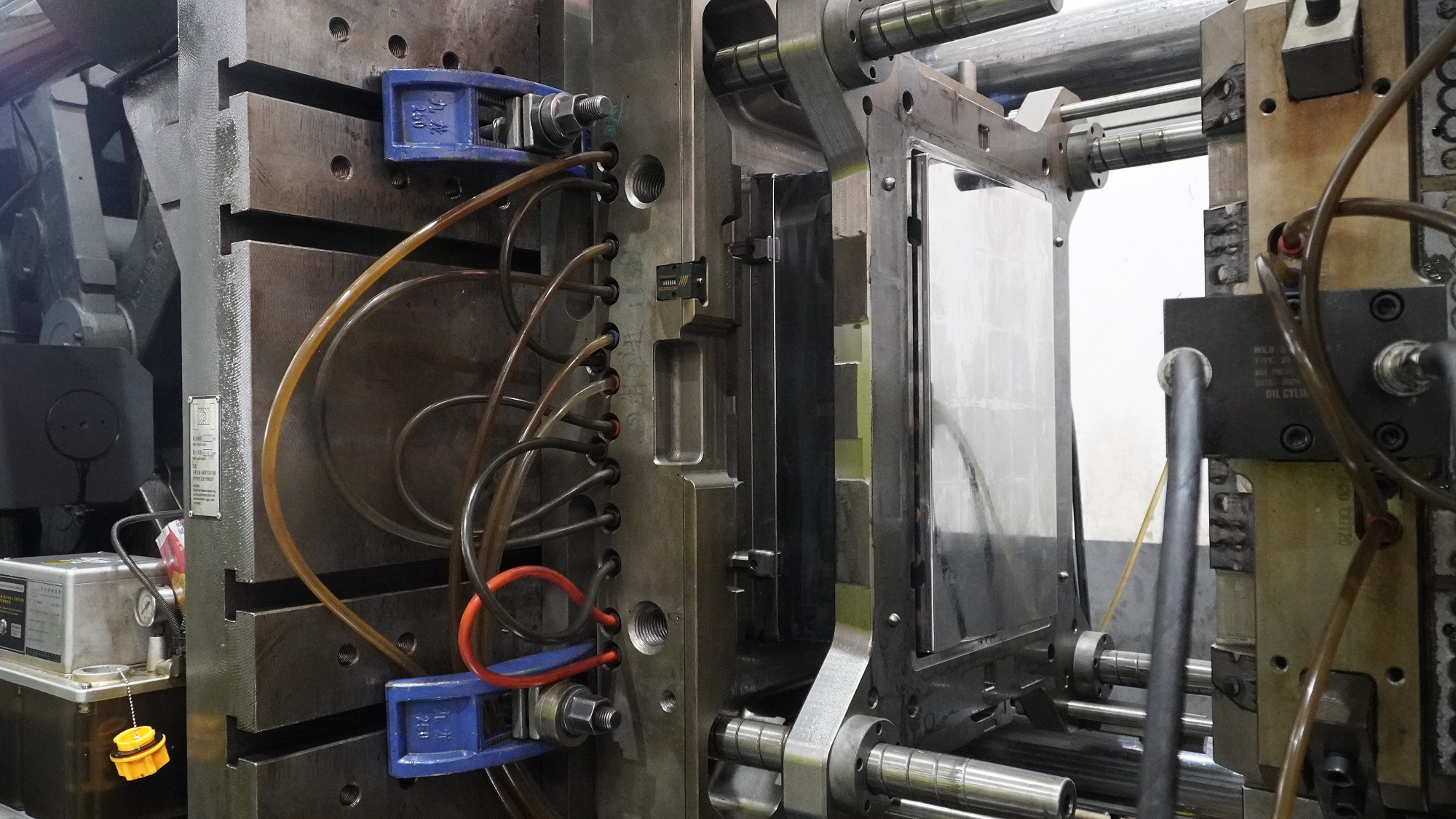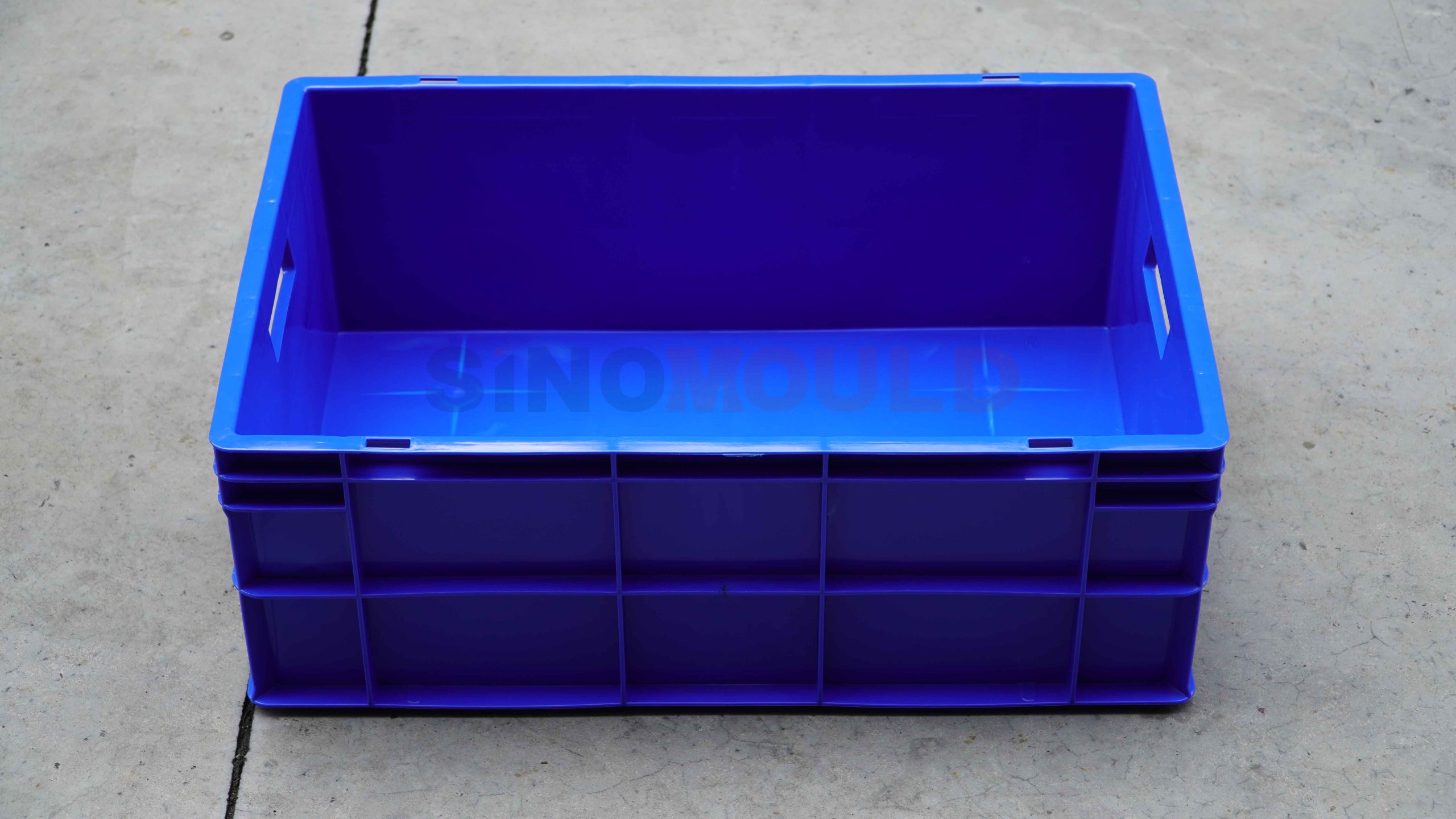
Fish & Seafood Crate Mould
SINOMOULD is a professional mould manufacturer specializing in large stacking logistics containers, with deep technical expertise in the field of fish and seafood crate moulds.
For the demanding applications of the seafood industry—high humidity, salt spray corrosion, frequent washing, and cold‑chain environments—the moulds must produce crates with strong corrosion resistance, a non‑slip grid bottom structure, and efficient drainage.
SINOMOULD’s fish crate moulds focus on full‑open‑grid hollow forming of HDPE/PP materials. By deeply integrating gas‑assist / water‑assist co‑injection technology with multi‑stage composite guided demoulding mechanisms, we ensure that the finished seafood crates excel in stacking load capacity, quick‑freeze preservation, and cleaning residue‑free performance.
Fish & Seafood Crate Mould Specifications
SINOMOULD provides fully non‑standard customized mould solutions based on the special ventilation, drainage, and anti‑slip requirements of fish & seafood crates. The following are the core technical specifications for a typical fish & seafood crate mould:
| Applicable Product | Standard Euro / Japanese seafood crates, volume 20L – 60L | Main Product Features | Full drainage holes on bottom, double‑sided anti‑slip texture, four‑side reinforced ribs, wide handles |
|---|---|---|---|
| Number of Cavities | 1 cavity (large foldable / one‑piece crate) or 2 cavities (medium‑temperature quick‑freeze crate) | Mould Overall Dimensions | Customized based on cavity structure and projected area |
| Compatible Injection Machine Tonnage | 650T – 2800T (considering both multi‑cavity and deep‑cavity clamping requirements) | Core Mould Steel | Cavity / Core: S136 ESR stainless steel (high corrosion resistance); Mould Base: S50C / Q235 heavy‑duty base |
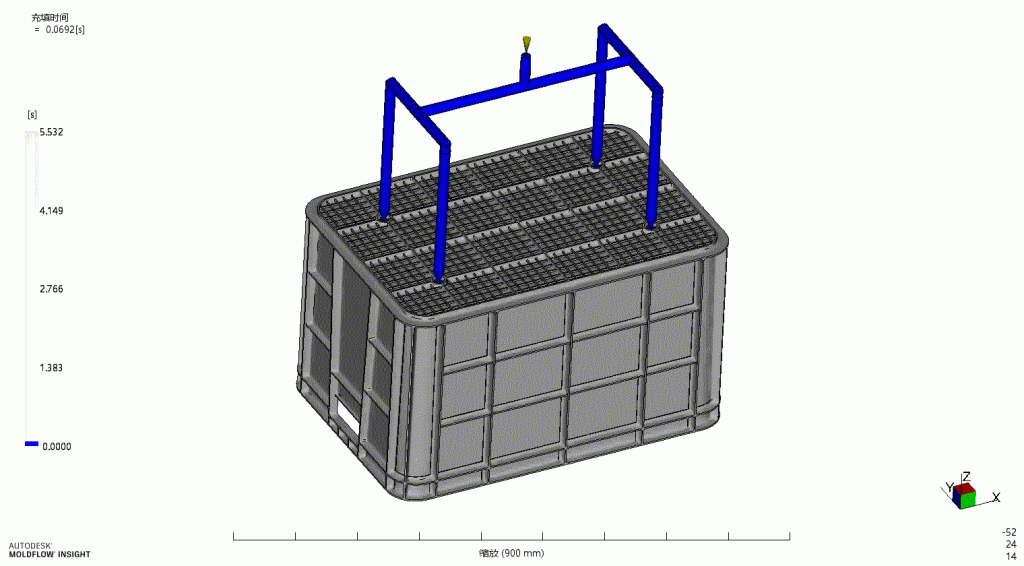
| Gating & Injection System | Multi‑drop sequential valve‑gated hot runner (optional wide‑gate open nozzle for glass fiber materials) | Ejection & Demoulding System | Hydraulic cylinder‑driven angled lifters + high‑strength ejector pins + two‑way stripper plate secondary ejection |
| Cycle Time | 15 – 30 seconds (optimized for 3mm wall thickness and polyolefin characteristics) | Expected Mould Life | Over 1 million cycles (critical wear parts designed as quick‑change inserts) |
| Delivery Time | 60 working days | Core Process Integration | Zero‑flash through‑hole grid technology, deep‑cavity high‑efficiency conformal cooling, food‑grade rust prevention |
Fish & Seafood Crate Mould Quality Essentials
- Zero‑flash through‑hole grid precision interlock design
For the hundreds of dense drainage holes on the bottom of a seafood crate, SINOMOULD uses a hole‑to‑hole precision interlock parting line design on the core inserts. Combined with moving/fixed plate tapered locking blocks to achieve ultra‑high‑rigidity zero‑gap fit, the flash rate at through‑holes is reduced to 0.01%, ensuring that the product is demoulded with fully open drainage holes—eliminating secondary processing.
- Consistent texturing for anti‑slip surfaces and markings
We combine Mould‑Tech texture etching with laser engraving to produce deep anti‑slip bumps on the bottom and scale markings on the side walls. This ensures that after millions of high‑pressure washings and rough handling, the texture does not trap dirt (if too deep) nor lose its anti‑slip friction coefficient (if too shallow).
Fish & Seafood Crate Mould Machining Essentials
The machining challenges of a fish & seafood crate mould lie in the precise manufacturing of ultra‑deep cavities and dense micro‑holes.
- High‑speed milling & EDM micro‑forming
We use a 5‑axis high‑speed graphite machining center to produce graphite electrodes for fine anti‑slip textures. EDM finishing uses orbiting EDM and mirror discharge processes to accurately replicate the anti‑slip texture onto the cavity surface, ensuring no sticking during demoulding. For deep‑cavity handle undercuts, precision wire EDM is used to machine integral lifter slots, guaranteeing smooth movement.
- Full dynamic mould trial with actual media testing
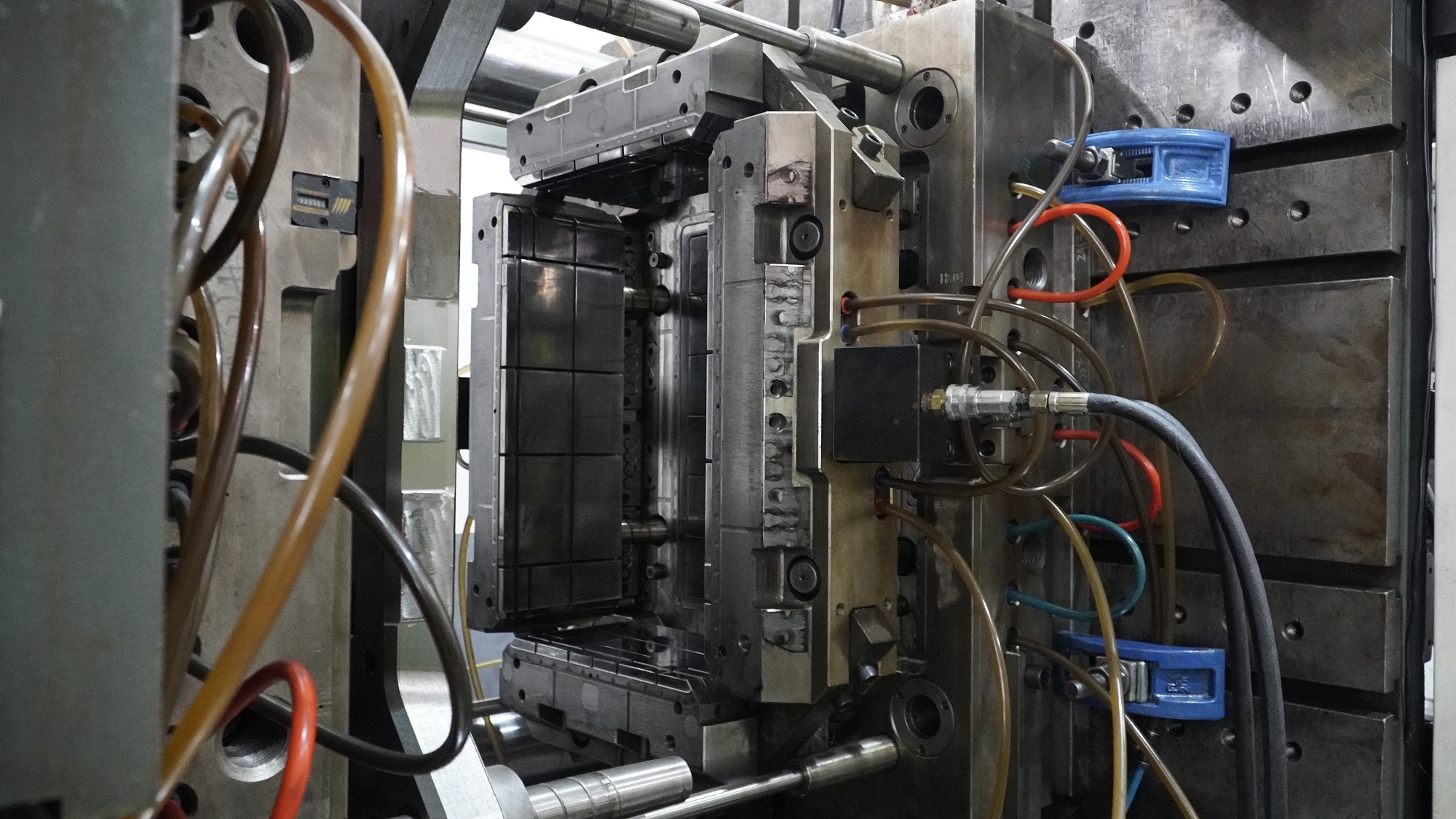
Before delivery, SINOMOULD runs the mould on a large‑tonnage servo injection machine for a 72‑hour overload dynamic simulation. The trial covers not only fully automatic mould opening/closing but also tests the flowability of glass‑fiber‑reinforced materials and wear conditions.
Fish & Seafood Crate Mould Flow Analysis