Cutlery Mould (Knife, Fork, Spoon Mould)
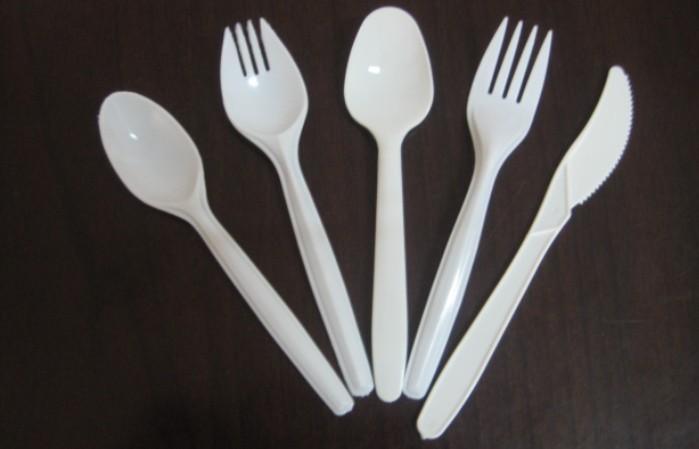
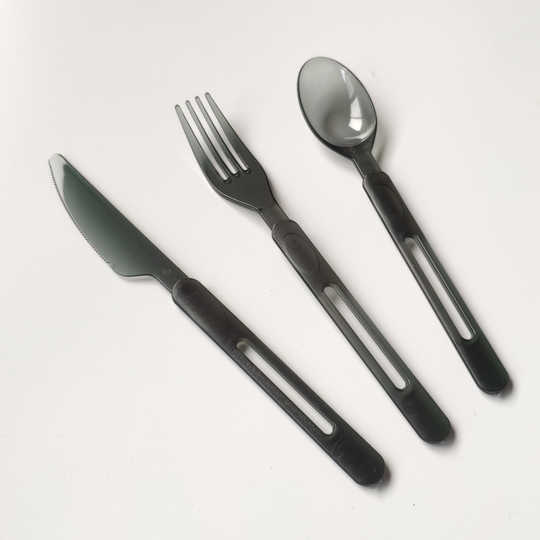
For over 20 years, SINOMOULD has specialized in the R&D and manufacturing of high‑precision, long‑life cutlery moulds for the global disposable tableware and durable plastic cutlery industry. We provide state‑of‑the‑art high‑speed injection moulding solutions specifically optimized for food‑grade materials such as PS, PP, and PET.
Cutlery Mould Specifications
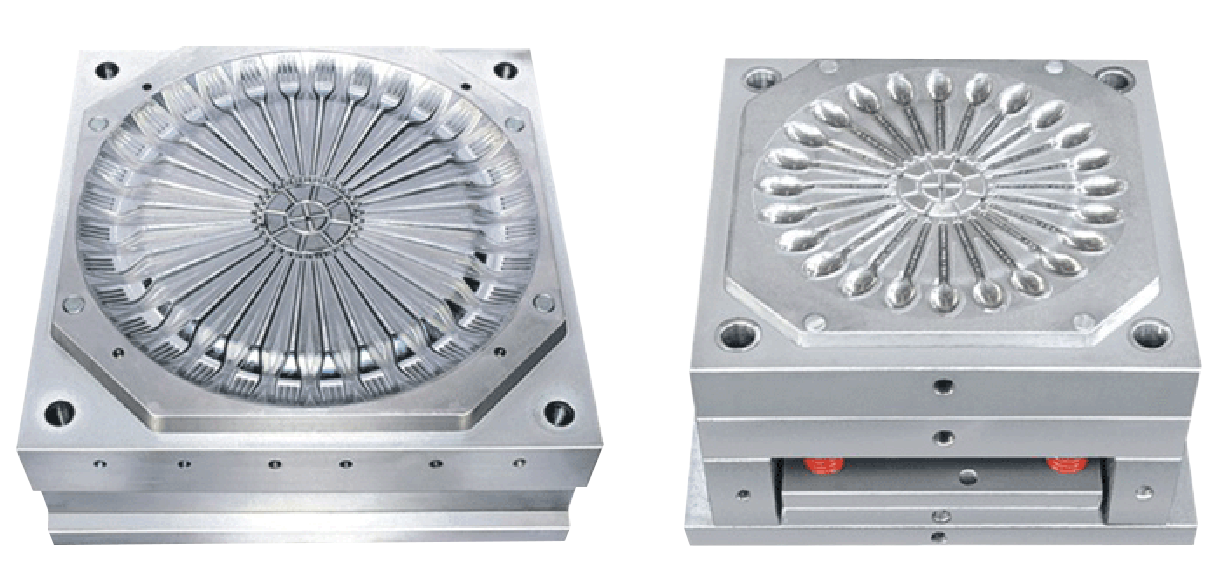
The following are the core technical specifications of SINOMOULD’s high‑precision disposable plastic cutlery moulds, deeply optimized for high‑speed thin‑wall injection moulding of PS material.
| Product Dimensions | 16 cm (example length) | Number of Cavities | 48 cavities |
|---|---|---|---|
| Mould Overall Dimensions | 750mm × 550mm × 600mm | Compatible Injection Machine Tonnage | DKM‑450 Ton |
| Main Mould Steel | S136 mirror‑finish stainless steel | Injection System | 48‑drop valve‑gated full hot runner |
| Ejection System | Precision ejector pins | Cycle Time | 5.5 seconds |
| Design Life | Over 3 million cycles | Standard Delivery Time | 55 working days |
| Core Process Features | High‑speed thin‑wall moulding, flash‑free high‑precision fit, food‑grade anti‑corrosion treatment |
Key Quality Points of Cutlery Mould
The core of disposable cutlery moulds lies in the perfect combination of efficiency and cleanliness. To ensure extreme stability and yield under ultra‑high‑frequency opening and closing (close to one cycle per second), SINOMOULD has established the following core quality control standards:
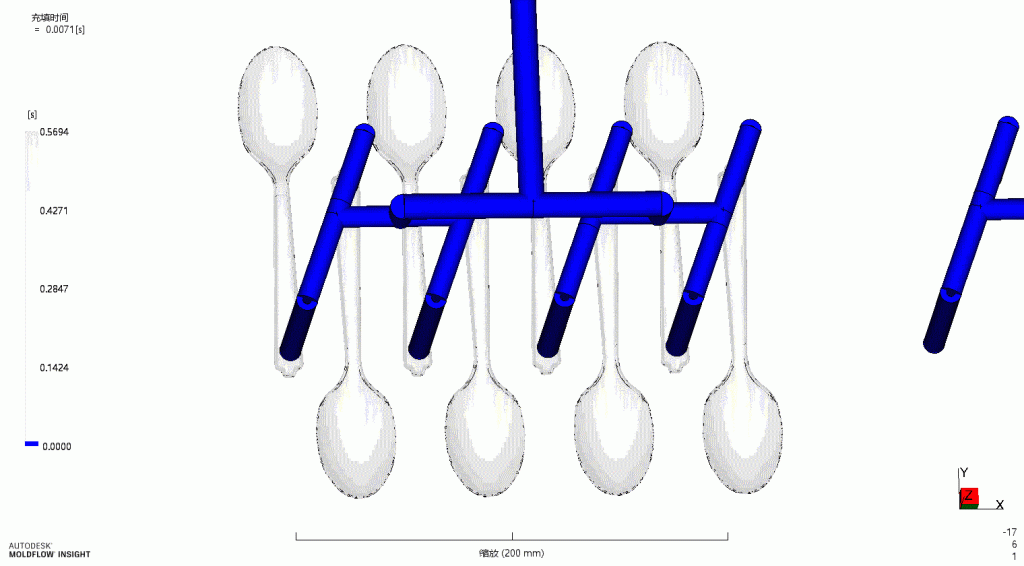
- 48‑Cavity Fully Natural Balance Runner System & Mould Flow Validation
For multi‑cavity, small‑part cutlery moulds, we use Mouldflow to analyze flow length ratio and shear heat. The runner system must achieve rigorous dual natural balance (rheological and thermal) , ensuring that all 48 knife and fork parts fill, cool, and shrink simultaneously within a 5.5‑second cycle. Part weight tolerance is controlled within ±0.05g, eliminating short shots or flash caused by unbalanced filling.
- S136 Mirror Steel Cryogenic Treatment and Edge Hardening
Cavity and core steel strictly comply with the S136 ESR (electro‑slag remelting) stainless steel standard. After rough machining, the steel undergoes ‑80°C cryogenic treatment to eliminate retained austenite, ensuring the mould does not rust or develop black spots in long‑term humid environments. For the serrated edges of knives, we use wire EDM followed by precision grinding to ensure a sharp edge with no plastic residue.
- High‑Precision Composite Guiding & Wear Plate Positioning
Under the demanding condition of a 5.5‑second cycle with high‑speed mould opening/closing on a 450‑ton machine, we employ a three‑level composite positioning system consisting of ball guide pins, precision square guides, and tapered locking blocks. Graphite‑bronze wear plates and oil grooves are embedded on slides and parting lines, coupled with an automatic lubrication system. This ensures the mould maintains positioning accuracy within 0.02mm even under more than 10 impacts per minute, making flash occurrence virtually zero.
Precision Machining Highlights for Cutlery Mould
A cutlery mould designed for 3 million cycles must be manufactured to micron‑level precision. SINOMOULD’s high‑precision mould manufacturing process includes the following key steps:
- S136 High‑Gloss Mirror Polishing Process
Disposable plastic tableware requires extremely high transparency or gloss. SINOMOULD performs top‑grade A1 mirror polishing (Ra ≤ 0.025μm) on the cavity surfaces of spoons and forks. By combining mechanical polishing with electronic polishing, we eliminate any microscopic machining marks, minimizing flow resistance for the PS melt during ultra‑fast filling. This results in excellent part gloss and easy demoulding.
- 48‑Drop Hot Runner Thermal Balance & Valve Pin Tuning
For full hot runner cutlery moulds, we conduct independent thermocouple inspections and manifold high‑temperature load tests in our assembly workshop. We ensure that the temperature of all 48 nozzle tips is perfectly uniform. Combined with precise valve pin timing, this eliminates material stagnation and stringing in the runner system, enabling fully automated, unattended production without manual gate trimming.
Mould Flow Analysis for Cutlery Mould