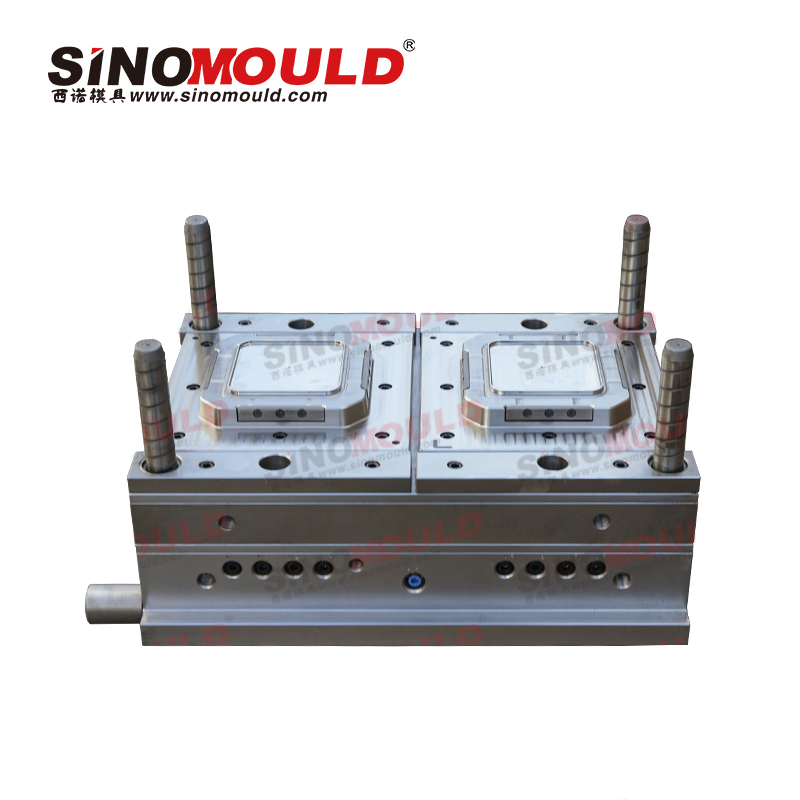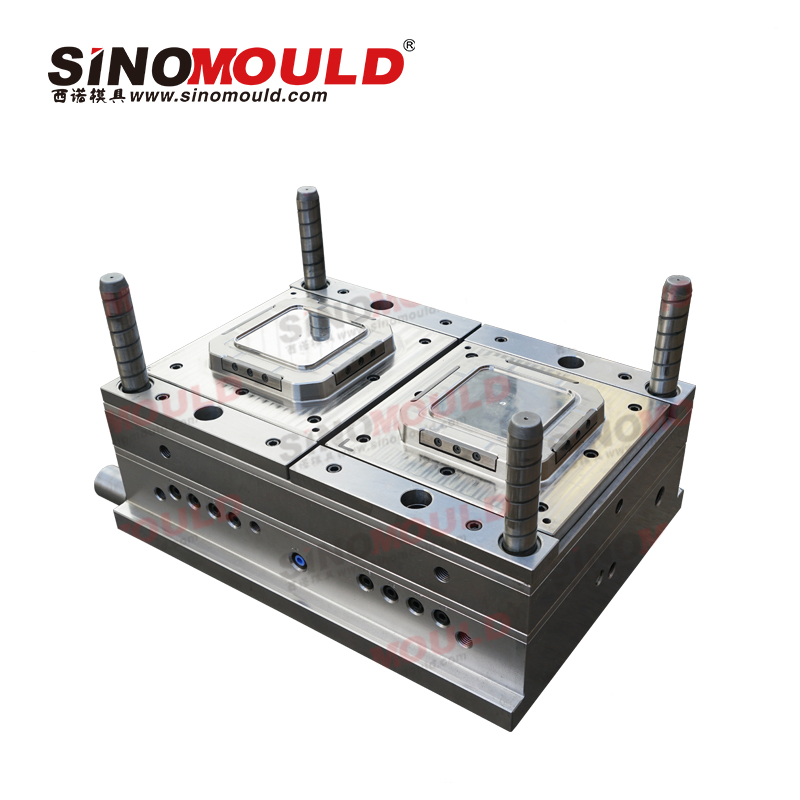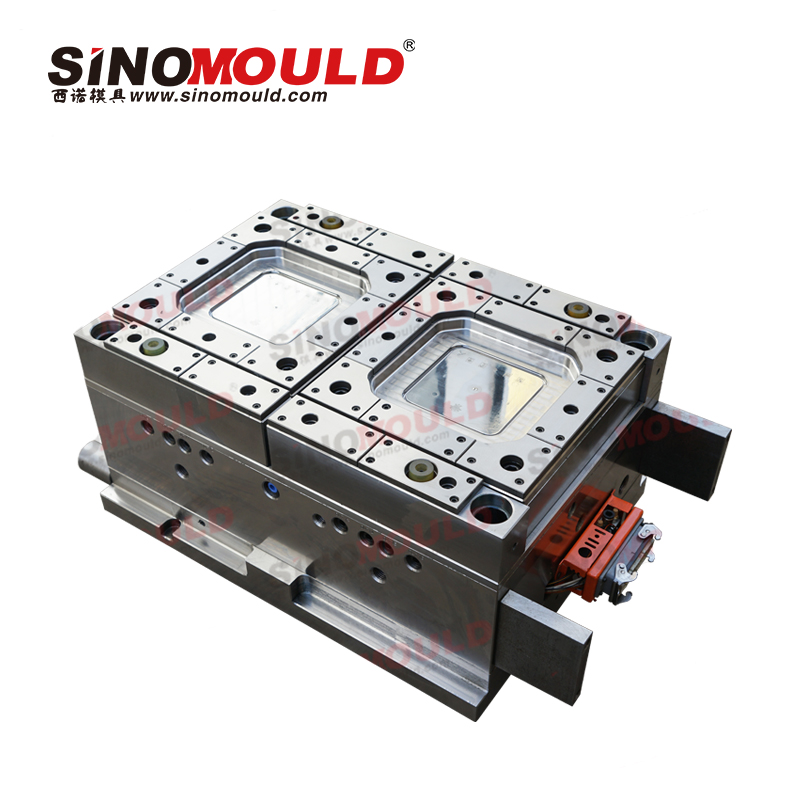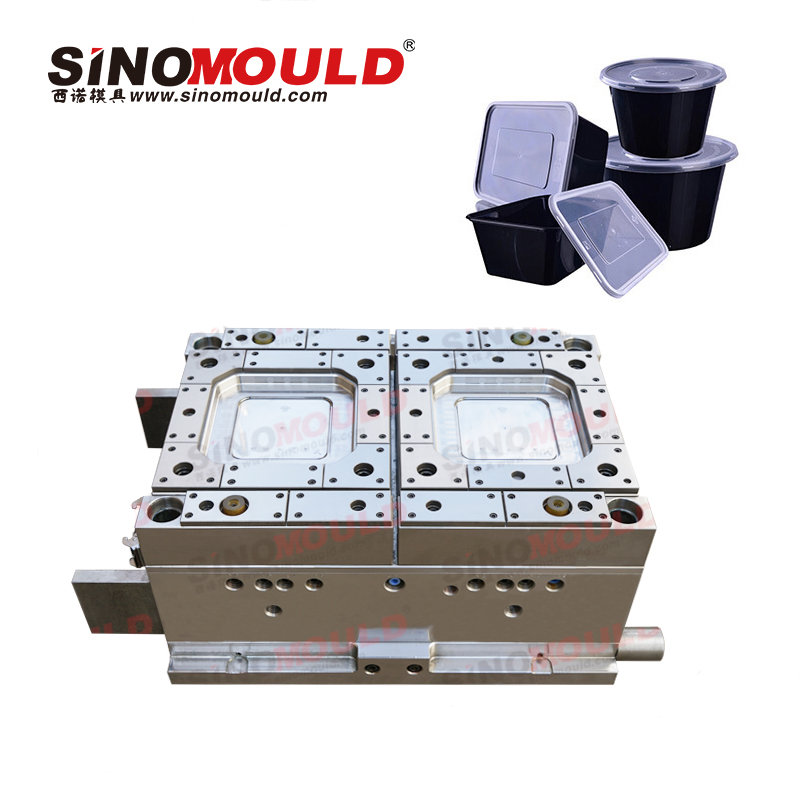
1500ml Square Box Mould
The 1500ml square box is a commonly used container in food packaging, fresh produce cold‑chain logistics, and home storage. Typical dimensions are approximately 195mm × 195mm × 61mm, with a part weight of about 53g (PP material). It offers a medium‑to‑large capacity with convenient stacking characteristics, and is widely used for takeaway packaging, fruit and vegetable preservation, frozen storage, and dry goods organization.
With the rapid growth of the food delivery and fresh e‑commerce sectors, the market demands extremely high daily output for this type of container. High‑speed thin‑wall injection molding is generally adopted, with cycle times compressed to 5‑8 seconds. At the same time, the product must have smooth edges, stable stacking, good sealing, and comply with food‑contact safety standards.
With over a decade of experience in thin‑wall packaging moulds, our company has developed a dedicated mould solution for the 1500ml square box. From multi‑cavity runner balance and conformal cooling optimization to high‑speed ejection systems, we ensure mould stability and high yield during long‑term, high‑rhythm production.
The following is a detailed presentation from three perspectives: mould parameters, quality control, and manufacturing highlights.
1500ml Square Box Mould Parameters
| Mould Cavity Steel | S136 / H13 / 718H (beryllium copper inserts optional) | Recommended Injection Machine | 200T – 350T |
|---|---|---|---|
| Mould Core Steel | S136 / H13 / 718H | Plastic Material | PP/PE: 10–30 g/10min (220°C, 10kg) |
| Mould Base Standard / Steel | LKM standard / P20, 50C | Ejection System | Ejector pins + stripper plate + air assist (optional) |
| Sliders, Inserts, Lifters Steel | High‑strength tool steel, nitrided | Injection Process | High-speed injection, short cycle time, precise temperature control |
| Number of Cavities | 1‑out‑of‑1 / 1‑out‑of‑2 / 1‑out‑of‑4 / 1‑out‑of‑6 | Injection Cycle Time | 5–8 seconds (high‑speed production) |
| Hot Runner System | Valve‑gated hot runner, multi‑point pin gates | Mould Manufacturing Lead Time | 40–65 days |
1500ml Square Box Mould Quality Control Points
- Wall Thickness Uniformity and Stacking Height Consistency
The sealing and stacking stability of the square box are highly dependent on wall thickness consistency, especially at the four corners and side‑wall transition areas. We use mould flow analysis to predict filling balance and control the matching clearance between cavity and core during machining, ensuring that wall thickness deviation between cavities in the same mould is ≤ ±0.005 mm. This guarantees consistent stacking height across batches and uniform lid closure tightness.
- Warpage and Flatness Control
Thin‑wall, large‑area flat surfaces are highly prone to warpage due to uneven cooling, which can cause out‑of‑round box openings or uneven bottoms. The mould features zoned independent temperature‑controlled cooling circuits, keeping the temperature difference between the moving and fixed halves within ±1°C. Combined with CAE simulation to optimize shrinkage compensation, the box opening flatness is maintained at ≤0.15 mm, ensuring effective sealing for heat‑seal films or snap‑on lids.
- Zero Tolerance for Appearance Defects
Food packaging has stringent requirements for surface defects – flow marks, sink marks, silver streaks, fish eyes, etc., are all unacceptable. We optimize gate location (typically at the center of the bottom or evenly distributed on the side walls) and venting design to prevent melt front stagnation. The cavity surface is mirror‑polished to Ra ≤ 0.05 μm, and venting slot depth is strictly controlled to 0.02–0.03 mm to prevent flash.
- Dimensional Thermal Stability Under High‑Speed Production
A 5‑8 second cycle means the mould is subjected to high‑frequency thermal shocks, and dimensions tend to drift with mould temperature fluctuations. We use hot runner valve‑gate timing control, supplemented by closed‑loop mould temperature controller regulation, ensuring that the length and width dimensions of the box remain within ≤ ±0.03 mm over 24 hours of continuous production, meeting the positioning requirements of automated packaging lines.
- Hygiene and Ejector Mark Control
Ejector marks must not damage the smoothness of the inner wall and must have no sharp edges or oil contamination. We use a combination of stripper plate and air‑assisted ejection to avoid the white marks left by conventional ejector pins. The mould material and anti‑rust treatment comply with FDA/EU food‑contact standards, ensuring that the finished product can directly contact food.
1500ml Square Box Mould Manufacturing Highlights
1. Multi‑Cavity Balanced Runner and Valve‑Gate Timing Design
For high‑cavity configurations such as 1‑out‑of‑4 or 1‑out‑of‑6, we adopt an “H”‑type or radial runner layout, combined with Moldflow simulation optimization to ensure a cavity filling pressure difference of ≤3%. The hot runner system is equipped with independent valve gates, allowing per‑cavity injection volume adjustment to compensate for machining deviations, keeping part weight deviation between cavities ≤0.2% and effectively preventing over‑weight or under‑fill issues.
2. Enhanced Mould Rigidity for High‑Speed Injection
Thin‑wall injection pressures can reach 150‑200 MPa, and mould base deformation can lead to flash. We use thickened mould bases (platen plate thickness increased by 30%), with wear plates and locking bevels on the parting line, combined with precision guiding mechanisms (guide pin/bushing clearance ≤0.01 mm) to ensure precise positioning and no deflection during high‑speed mold opening and closing.
3. Mirror Finish and Anti‑Stick Surface Treatment
After 5‑axis high‑speed milling, the cavity and core are finely polished to a mirror finish (Ra ≤ 0.05 μm) to ensure smooth demolding. Additionally, the cavity surface is treated with DLC (diamond‑like carbon) or PVD coating, which improves wear resistance and reduces the coefficient of friction, effectively preventing sticking and reducing the need for release agents.
4. Rigorous Machining and Inspection Process
All critical components are finished using wire EDM and jig grinding to ensure hole position and parting line accuracy. Each cavity’s profile and positional accuracy are fully inspected using CMM, and dimensional reports are issued in accordance with the ISO 9001 quality system. Before delivery, a 72‑hour uninterrupted mould trial is conducted to simulate mass production conditions, ensuring that the mould can be immediately put into high‑speed production upon arrival at the customer’s facility.